
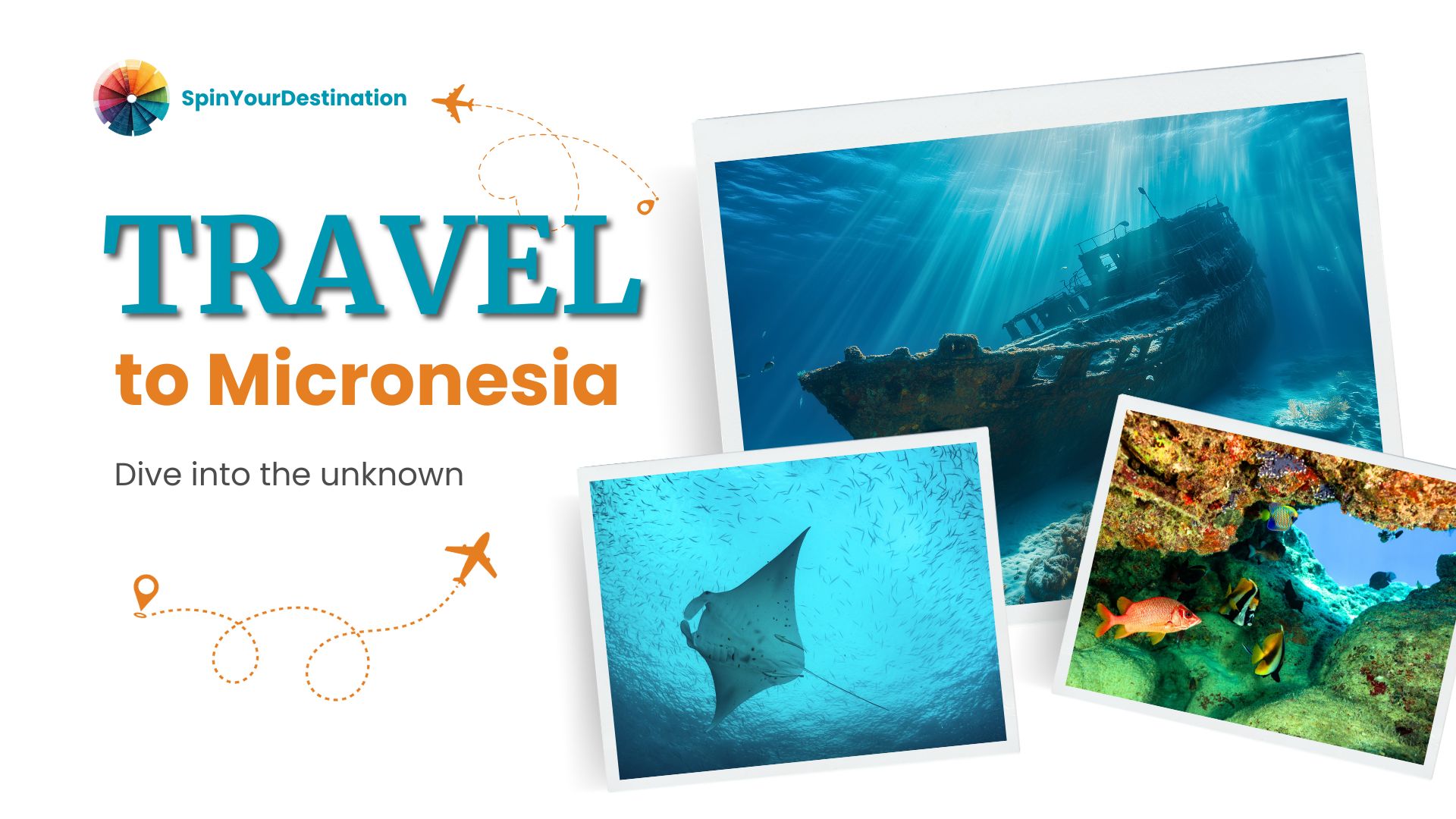
Beach & Sun Micronesia
Your complete guide to tropical beaches, snorkeling, and lagoon life
It’s 8am and the lagoon is already turquoise. The tide is out. The reef flat ahead is knee-deep, warm, and absolutely clear. A small boat is anchored off the sand. Nobody else is here. Micronesia’s beaches do not feature in glossy resort brochures—and that is precisely why they are still like this.
The Federated States of Micronesia is not a beach destination in the usual sense. You won’t find infinity pools and sunlounger rows. What you will find is something rarer: beaches shared with no one, reef flats rich with marine life, and lagoons so protected and so clear that snorkeling here produces encounters that divers elsewhere pay serious money for.
Yap’s fringing reef beaches are quiet and wild. Kosrae’s black sand and coral sand shores back straight onto jungle. Pohnpei’s Ant Atoll—a day trip from Kolonia—is a ring of white sand over turquoise water that would be famous if more people knew it existed. The lagoon at Chuuk, with its WWII history and extraordinary marine biodiversity, can be explored by snorkeler almost as well as by diver.
Ant Atoll—Pohnpei’s uninhabited paradise
Ant Atoll is a small ring of coral reef and white sand islands about 20 kilometres southwest of Pohnpei’s main island. The lagoon inside the atoll is protected and incredibly clear—teeming with reef fish, sea turtles, and rays in water shallow enough for snorkeling throughout. The atoll is uninhabited. No hotels, no shops, no people except whoever you brought with you.
Day trips leave from Kolonia by speedboat (45–60 minutes). Most operators will take you out and collect you in the afternoon. Bring everything you need: food, water, snorkel gear, sunscreen, shade. There is nothing on the atoll except sand, coconut palms, and extraordinary nature.
Sea turtles nest on the outer sand banks. Spinner dolphins are frequently spotted in the channel approaches. The reef wall on the ocean side of Ant drops sharply and is excellent for snorkeling in good conditions. Check swell direction with your operator before planning an ocean-side visit.
Pakin Atoll, slightly further from Pohnpei, offers similar conditions. Fewer day trips go there, meaning even more solitude. Arrange with operators in Kolonia—you may be the only visitors that day.
Bring your best waterproof camera. Ant Atoll produces the kind of snorkeling photos that seem too good to be real.
Yap—reef lagoon beaches and mangrove shores
Yap’s main island is not famous for beaches in the way that Caribbean islands are, but it offers something different: fringing reef beaches with excellent snorkeling directly from shore, and the knowledge that you are likely the only visitor on that beach today.
The reef flat on Yap’s western coast is accessible from several points near Colonia. Snorkeling here reveals reef fish, the occasional manta ray, and the same healthy hard coral that makes Yap’s diving so good. The water is warm and clear. Bring your own gear—mask, fins, and snorkel.
Small uninhabited islands within Yap’s barrier reef offer complete solitude. Ask Manta Ray Bay Hotel or your operator about arranging a day trip to a specific island within the lagoon. These trips are informal, memorable, and often entirely empty of other visitors.
The beaches on Yap’s main island vary from coral rubble to white sand depending on location. Ask locally which beach is best for the current tide conditions—the reef flat changes significantly between high and low tide.
Sunset from Yap’s western beaches can be spectacular. The equatorial sky turns orange and pink over the open Pacific, with the barrier reef visible as a white line of breaking waves in the middle distance.
Kosrae—beaches backed by jungle
Kosrae’s coastline alternates between coral sand beaches and black lava rock, backed always by dense jungle that pushes almost to the water’s edge. The combination is dramatic—particularly where waterfalls reach the coast or where mangrove channels meet open beach.
Walung, on the remote western coast of Kosrae, is accessible only by boat or by a long hike through the jungle. The beach is extraordinary—completely untouched, with a healthy reef just offshore. Kosrae Village Resort can arrange boat access. The remoteness is not a drawback; it is the whole point.
The house reef at Kosrae Village Resort is accessible directly from the overwater bungalows. Snorkel off the dock at any time of day. Sea turtles are common visitors. The coral health here reflects the island’s low visitor numbers—it is some of the most pristine reef in Micronesia.
Lelu Harbour has calm, protected water suitable for swimming even when conditions elsewhere are rough. The view across to the Lelu ruins from the harbour water is unique—ancient basalt walls rising from the water’s edge.
Tafunsak and Utwe—villages on Kosrae’s southern and eastern coasts—have beaches accessible by road. Ask your guesthouse for current recommendations; conditions and access vary seasonally.
Chuuk Lagoon—snorkeling the wrecks from above
Chuuk Lagoon’s beaches are simple and functional rather than resort-grade, but the snorkeling available directly from boats or from shallow reef edges is exceptional for non-divers. Several of the most accessible wrecks in the lagoon have their upper superstructures in snorkeling depth—5–10m. The Kiyosumi Maru and the San Francisco Maru both have sections reachable by confident snorkelers.
The lagoon itself—60km across and sheltered by a barrier reef—is calm, warm, and almost always flat. Boat travel across the lagoon is comfortable even for those prone to seasickness. Day trips to nearby islands outside the wreck zone offer genuine beach time.
Etten Island, accessible by short boat transfer from Weno, has a small beach and a shallow reef suitable for snorkeling. Far less visited than the main wreck sites, it offers a quieter side of Chuuk.
Sunset from the Weno waterfront over the lagoon—with the outlines of barrier reef islands visible at the horizon—is one of the most atmospheric ends to a dive day in the Pacific.
Note: Chuuk’s beaches are not its primary appeal. If beach-focused travel is your priority, Pohnpei’s Ant Atoll or Kosrae are more suitable bases.
🌟 Top Beach & Sun Experiences
🏝 Ant Atoll day trip — Pohnpei
Uninhabited atoll ring with turquoise lagoon, white sand, sea turtles, and reef fish. 45–60 min by speedboat from Kolonia. Bring all supplies. No infrastructure. Completely wild. The kind of atoll that other destinations name their resorts after and charge a premium to simulate. More info →
🐠 Yap reef flat snorkeling
Snorkel the fringing reef along Yap’s western coast from shore. Excellent reef fish diversity, occasional mantas and turtles in shallower water. Bring your own gear. Accessible from points near Colonia. The kind of snorkeling that elsewhere requires a boat. Free once you’re there. More info →
🌞 Kosrae house reef — Kosrae Nautilus Resort
Snorkel the pristine house reef directly from the dock at any time. Sea turtles daily. Healthy hard coral untouched by mass tourism. No boat needed. Arrange through Kosrae Nautilus Resort in Tofol—the main full-service resort on Kosrae with dive facilities, restaurant, and guided reef access. Sunrise and dusk snorkeling sessions particularly magical. More info →
🌴 Walung beach — Kosrae remote coast
Completely isolated beach on Kosrae’s western coast accessible only by boat or jungle hike. Untouched reef offshore. Arrange boat access through Kosrae Nautilus Resort in Tofol. Full day required. Bring food, water, snorkel. Zero other tourists. The most remote beach in FSM accessible by day trip. More info →
🌅 Yap lagoon sunset island
Charter a small boat to a lagoon island inside Yap’s barrier reef for a private sunset. Arrange through your accommodation or a local operator in Colonia. Bring drinks and food. The equatorial Pacific sunset is extraordinary—no light pollution, no crowd, just you, the lagoon, and the sky turning orange. More info →
🚶 Chuuk lagoon snorkeling tour
Non-divers can snorkel shallow sections of Chuuk’s WWII wrecks—several have superstructures at 5–10m depth. Organised snorkel tours from Weno visit accessible sites. Warm water, calm lagoon, extraordinary visibility. WWII history from above the water. USD 50–80. More info →
💡 Insider Tips
- ☔ Micronesia is equatorial—UV intensity is extreme year-round. Reef-safe sunscreen is essential (standard sunscreens harm coral). Cover up when snorkeling rather than relying on sunscreen alone. A UV shirt is one of the best investments for a Micronesia trip.
- 🏝 Ant Atoll is uninhabited and unsupported. Bring at least 2 litres of water per person, all food, and first aid. Check weather before departure—a rough crossing can make the 45-minute boat ride significantly less pleasant.
- 🐠 High tide is best for snorkeling on reef flats—more water above the coral means more reef to explore and lower risk of damaging coral by standing on it. Ask your operator or accommodation about current tide times.
- 🌴 Coconuts are freely available on uninhabited islands. Opening a green coconut for fresh water is a practical skill worth having before your atoll day trip. Watch how locals do it.
- 🌅 December–May is dry season and the calmest time for beach and lagoon activities. June–November is typhoon season—seas can be rough and some outer island day trips cancelled. Build flexibility into typhoon-season itineraries.