
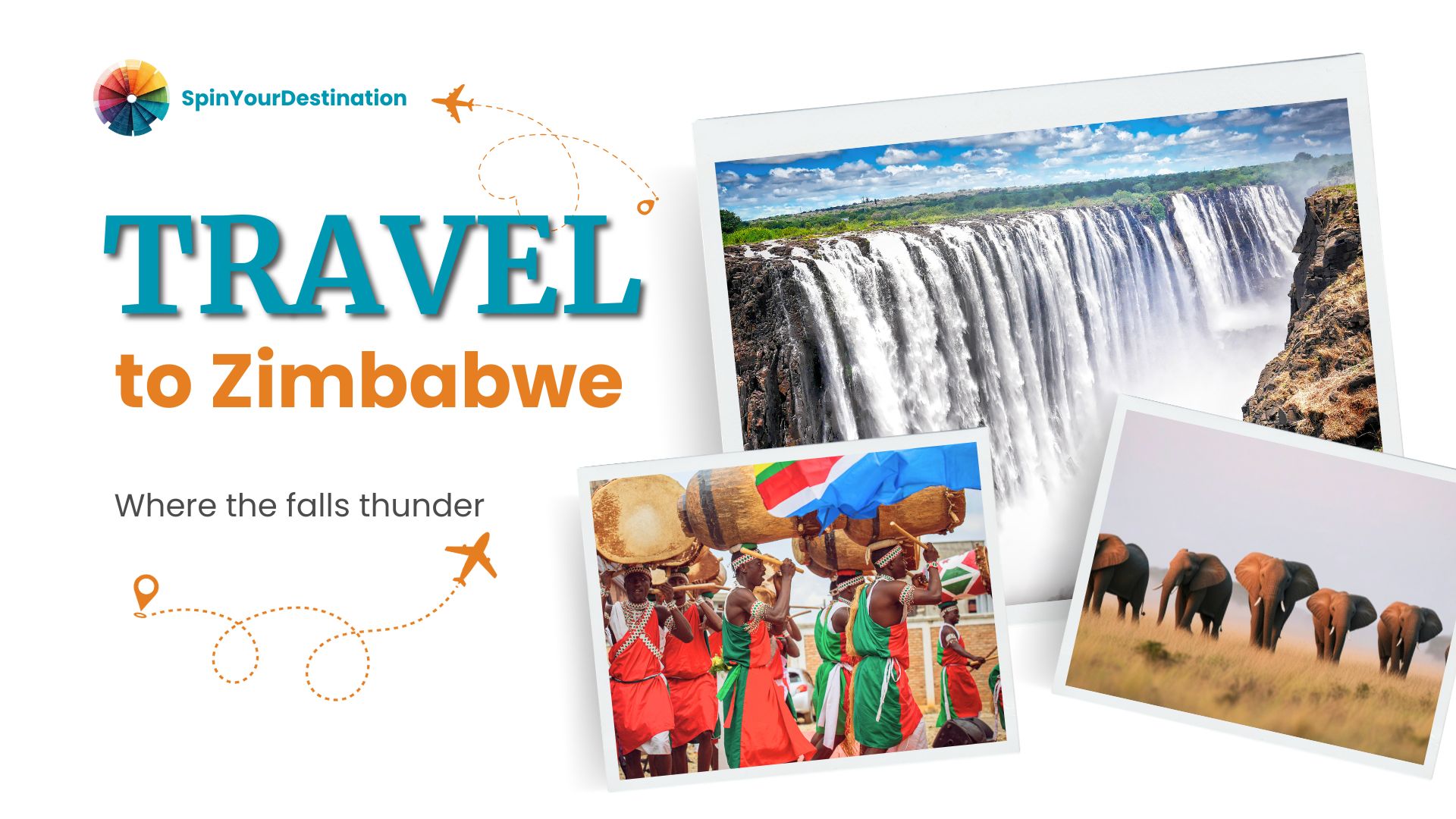

At 1,708 metres wide and 108 metres tall, Victoria Falls is the largest waterfall on Earth by combined width and height. The Zambezi River pushes over a million litres of water per second over the basalt lip during peak flow. The spray rises 400 metres and is visible from 50 kilometres away.
The Zimbabwean side offers the most dramatic viewpoints — Knife-Edge Bridge, Devil's Cataract, and the Main Falls overlooks give close-up views from inside the spray zone. April to June delivers maximum volume; September to December offers clear views into the gorge.
Livingstone Island, accessible only at lower water (August to January), allows swimming in the Devil's Pool — a natural rock infinity pool at the very edge of the falls. A guide escorts small groups out to the pool by boat.
The town of Victoria Falls has grown around the attraction with excellent accommodation, adventure operators, and restaurants. Bungee jumping off the bridge between Zambia and Zimbabwe, white-water rafting on the Zambezi gorge, and helicopter flights over the falls are the big-ticket activities.
The falls are shared with Zambia — the Zambian side offers different views and a quieter experience. Many visitors cross the border for a morning and return. The bridge itself is worth walking for the gorge views and the bungee spectacle below.

Hwange National Park holds one of the largest elephant populations on Earth — around 40,000 animals in a single park, the biggest concentration in Africa. During the dry season (May to October), herds of several hundred gather at artificial waterholes pumped by solar power, a programme that has run since the 1930s.
Alongside the elephants, Hwange supports all of the Big Five plus wild dogs, cheetah, 400+ bird species, and one of Zimbabwe's strongest lion populations. The park covers 14,650 square kilometres of Kalahari sand forest and mopane woodland — vast, uncrowded, genuinely wild.
Mana Pools National Park on the Zambezi escarpment is UNESCO World Heritage listed for good reason. Walking safaris here are conducted without fences and without vehicles — guides lead small groups through floodplain and riverine forest where buffalo herds, elephant, hippo, and lion move freely. It is considered one of the greatest walking safari destinations in Africa.
The Zambezi National Park adjacent to Victoria Falls gives guests the chance to see the Big Five within reach of the falls — lions and elephants roam between the river and the park boundary, and self-drive visitors regularly encounter animals without leaving the road.
Zimbabwe's national parks are managed by Zimbabwe Parks and Wildlife Management Authority. Entrance fees are paid in USD. The infrastructure varies by park — Hwange has good camps and lodges, while Mana Pools requires fly-in or 4WD overland access.

Great Zimbabwe is one of Africa's most significant archaeological sites — a stone-walled city covering 7.22 km² built by the Shona people between the 11th and 15th centuries. At its peak, the city housed 18,000 people and controlled the gold trade across southern Africa. The Great Enclosure's walls, 11 metres high, were built without mortar using interlocking granite blocks.
The site gives the country its name. "Zimbabwe" derives from the Shona dzimba-dze-mabwe — "houses of stone." The museum on site contextualises the archaeology and the kingdom's history, including the famous soapstone Zimbabwe Birds found here and now displayed in Harare's National Museum.
The Eastern Highlands — stretching along the Mozambique border through Nyanga, Vumba, and Chimanimani — are Zimbabwe's green lung: montane forests, waterfalls, trout streams, and hiking routes through the Chimanimani Mountains at 2,436 metres. The climate is fresh, the landscapes are dramatic, and tourist pressure is minimal.
Harare, the capital, rewards a day or two of exploration. The National Gallery of Zimbabwe holds the continent's finest collection of Shona stone sculpture. Mbare market is one of southern Africa's most characterful urban markets. The Harare Gardens and the National Botanical Garden provide green breathing space in a city that is smaller and more manageable than its reputation suggests.