
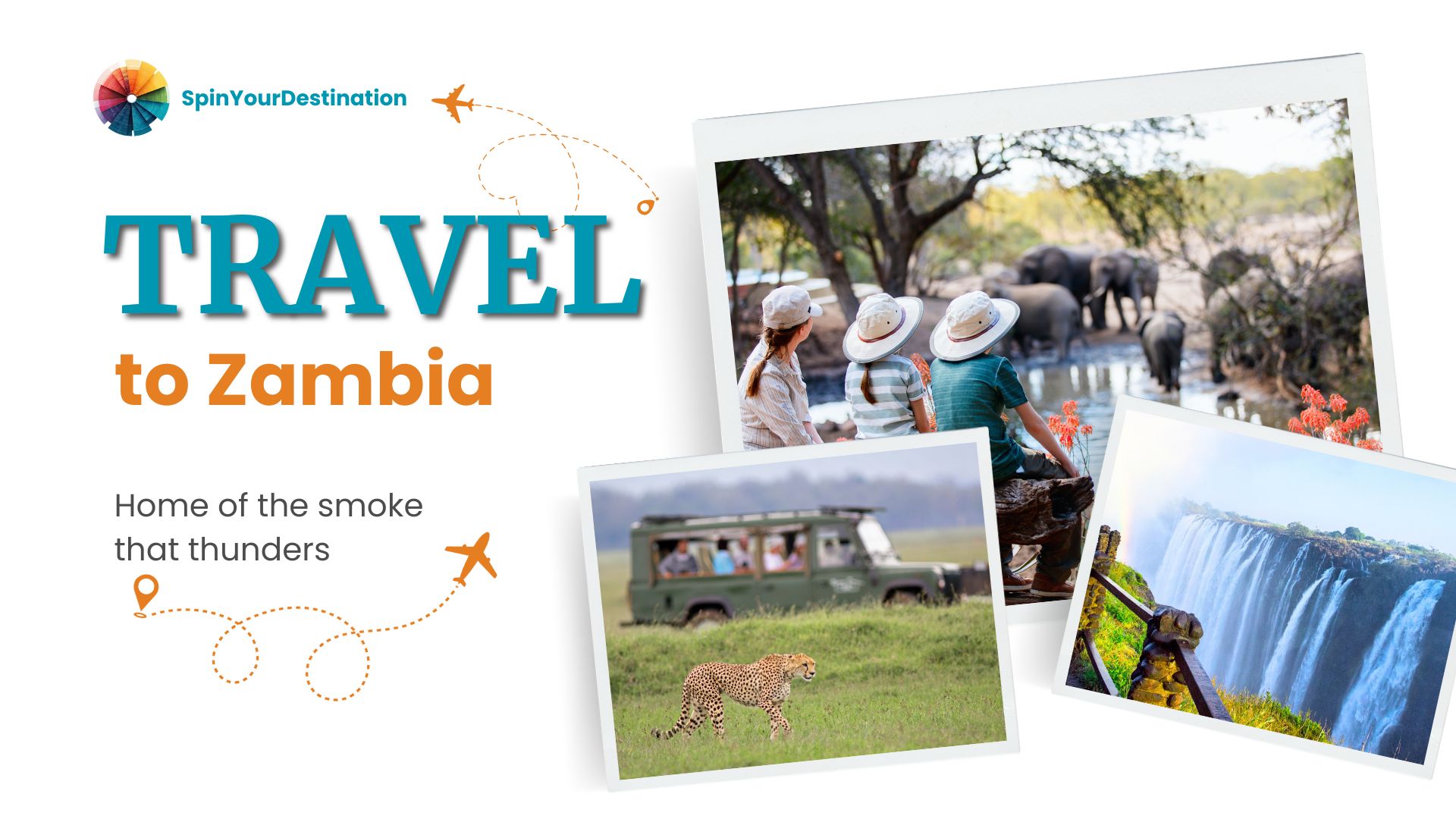
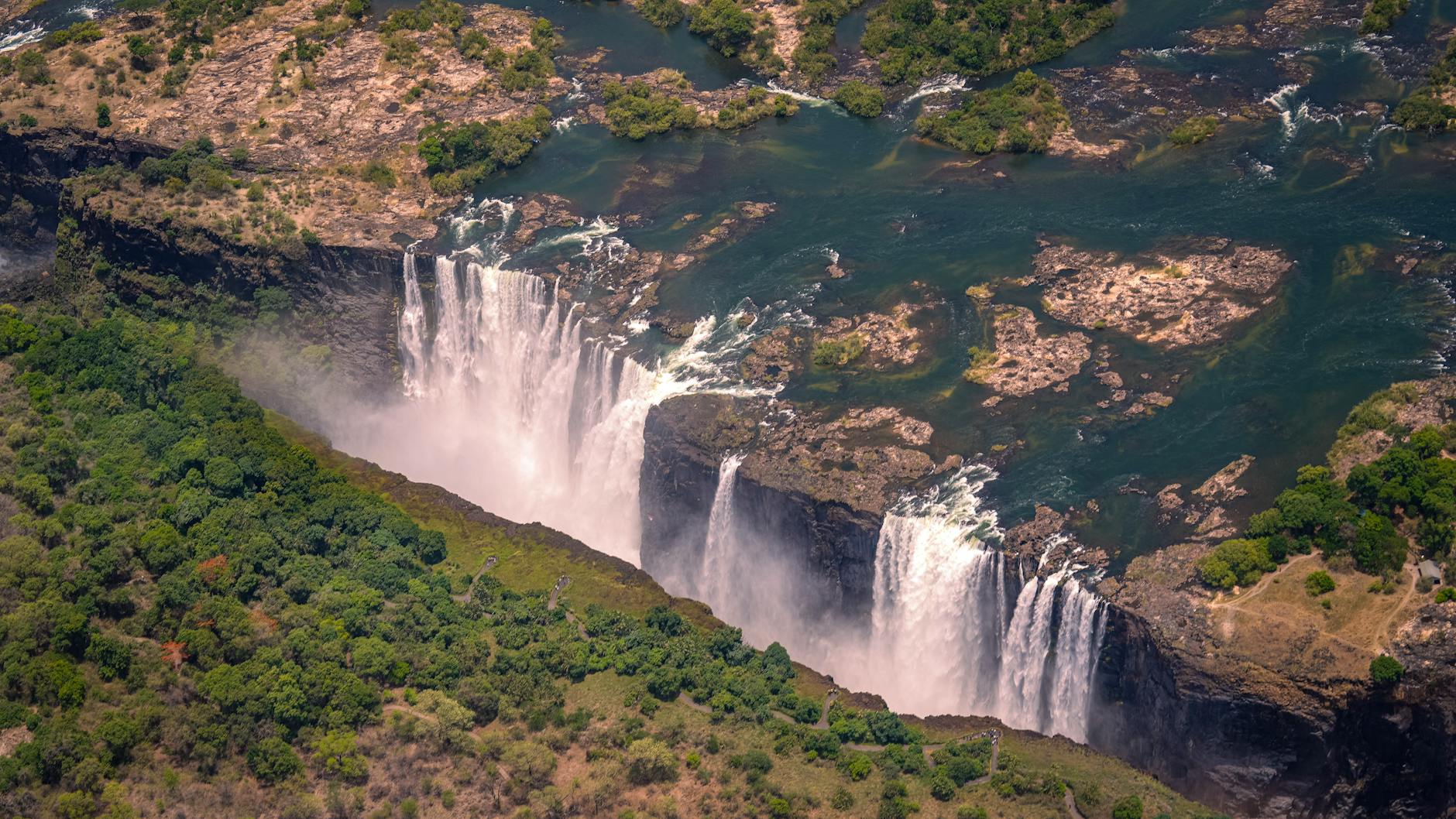
One of the Seven Natural Wonders of the World. The statistics don't prepare you.
You stand on the Knife-Edge Bridge, soaked in spray, looking straight down into the Batoka Gorge. The sound is physical. The mist visible 50 km away.
Below: the world's best white water river. 25 rapids, Grade 3–5. Bungee jump from the Victoria Falls Bridge—111 metres into the gorge.
Livingstone town, 10 km away. Adventure Capital of Africa. The title is earned daily.
Above the falls, the upper Zambezi flows broad and slow. Elephants wade between islands. Hippos surface at eye level. Canoe safari—unexpectedly peaceful.
This is where the walking safari was pioneered in the 1950s by Norman Carr. It remains the finest place in Africa to walk with wildlife.
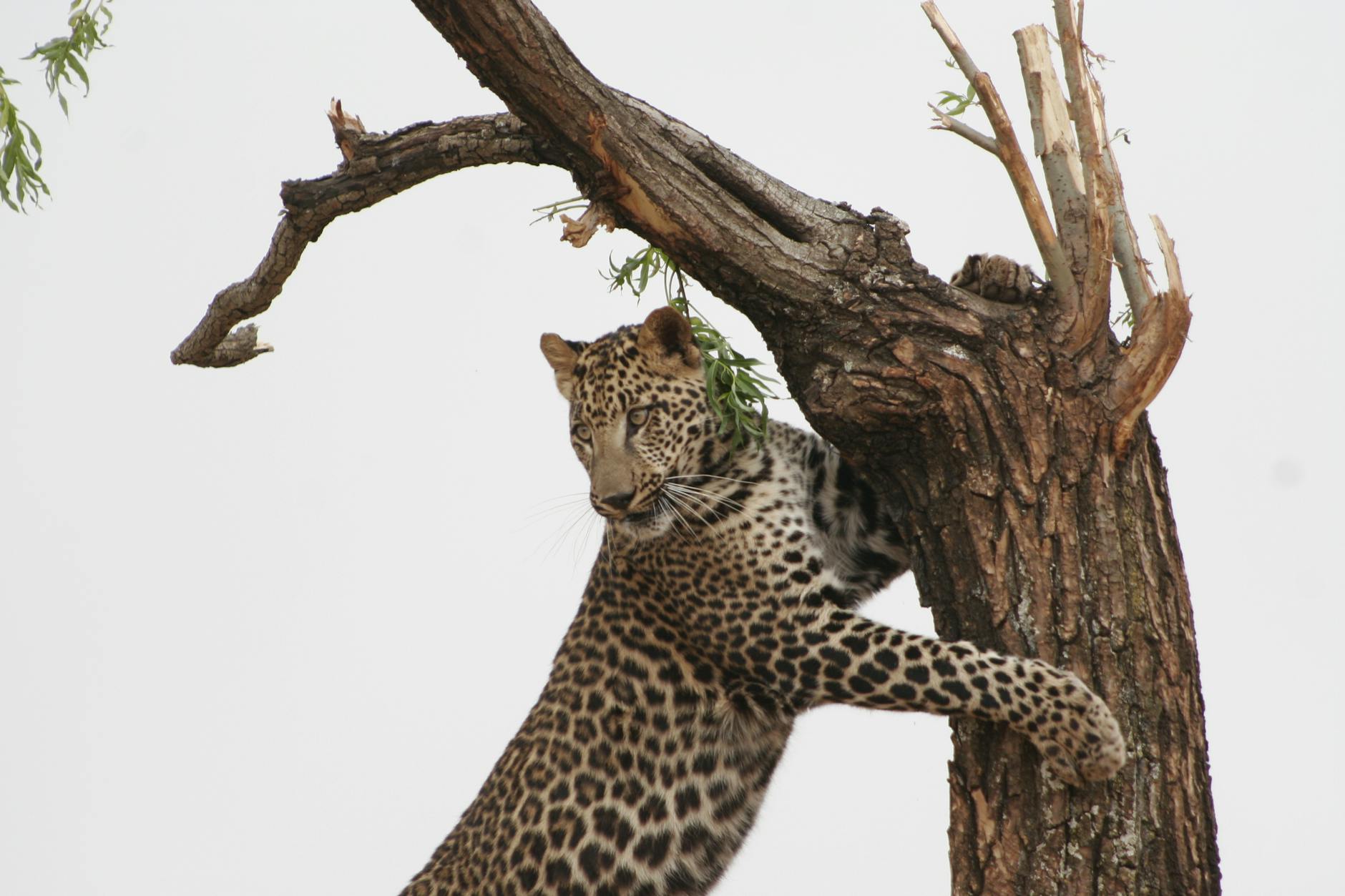
ZAWA-certified guides and armed scouts. Open floodplains, riverine forest, jesse bush. Leopards hunt here. Lion prides sleep in the shade.
One of Africa's highest concentrations of leopard. Game density is extraordinary.
Camps sit on the Luangwa riverbank. Open-fronted. The sounds of the night come in unfiltered. 4–8 guests. Campfire dinners.
Season: May to October. Dry season. Wildlife concentrates at water. Best walking conditions.
The Lower Zambezi National Park faces Zimbabwe across the river. Canoe safaris. Game drives on the floodplains. Tiger fishing—one of the world's great freshwater sport fish.
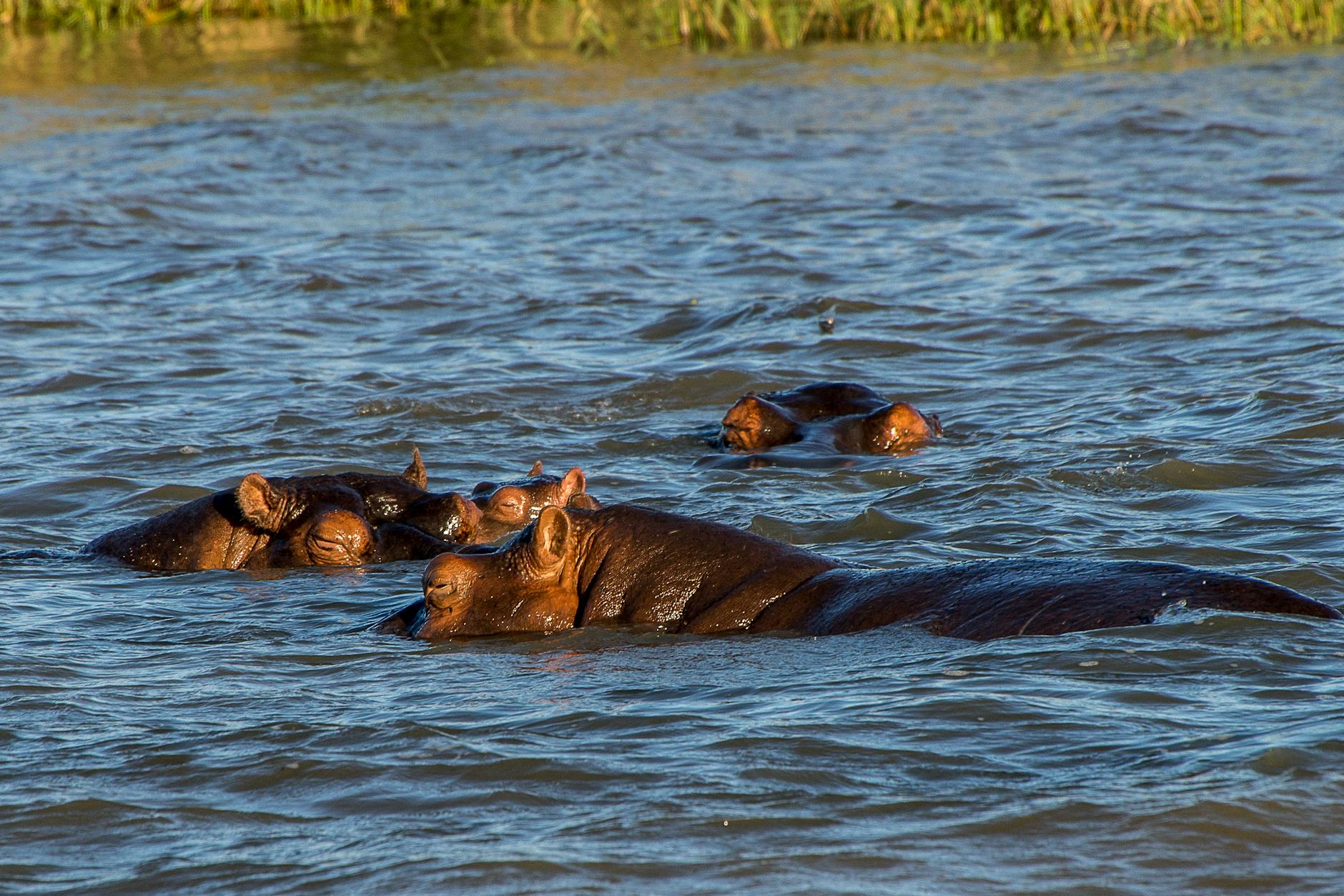
The river is the highway here. Elephants swim across. Hippo pods block the channel. Crocodiles sun on every sandbank.
Evening: sundowners on the water. Hippos grunt. Fish eagles call. It's Africa without the crowds.
Mana Pools is across the river in Zimbabwe—combined trips possible. Two national parks, one river.
Best reached by light aircraft from Lusaka. Worth every minute of the flight.
Kafue National Park. 22,400 km². Africa's largest. A fraction of South Luangwa's visitors. Comparable wildlife.
Busanga Plains in Kafue's north: lion, cheetah, wild dog. Open floodplain. Few travellers have seen it.
Kasanka, November–December: 8–12 million straw-coloured fruit bats. The world's largest mammal migration by biomass. They blot out the sky at dawn.
Mutinondo Wilderness: granite inselbergs, crystal rivers, 70 km of hiking trails. Swim in bilharzia-free water. Orchids everywhere.
Zambia is not easy to travel. Distances are vast. Roads are rough. The remoteness is genuine. That is exactly the point.