
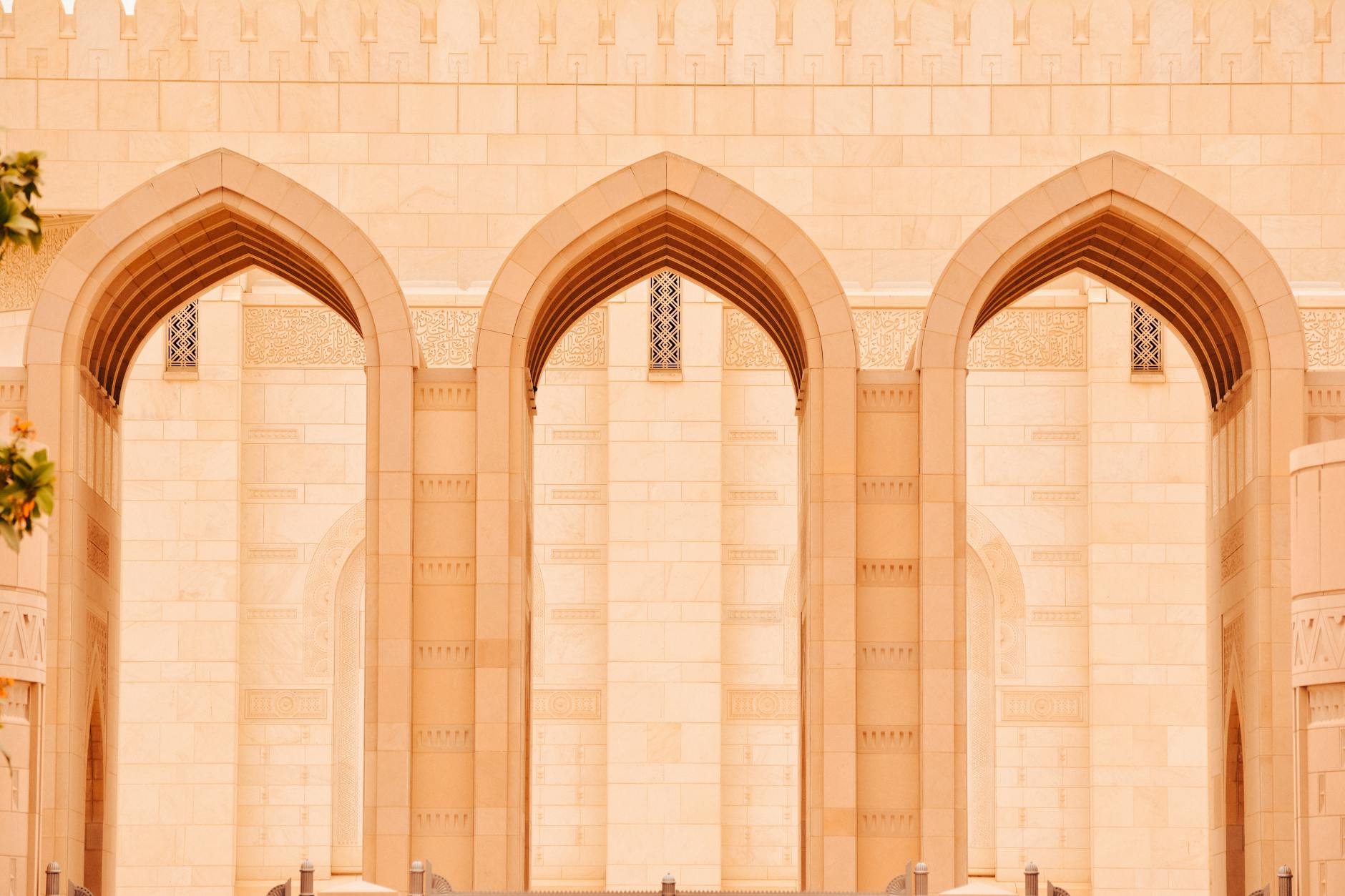
Muscat spreads across a dramatic coastline where the Al Hajar Mountains meet the Gulf of Oman. Unlike most Gulf capitals, it has kept its low-rise skyline and strict building rules—nothing taller than a minaret.
The Sultan Qaboos Grand Mosque is Oman's architectural centrepiece. Built over six years and inaugurated in 2001, it holds one of the world's largest hand-woven Persian carpets—70 metres across, 21 tonnes of wool. Entry is free; modest dress required.
Mutrah Souk is one of the oldest markets in the Arab world. Silver khanjar daggers, frankincense, rose-water, and hand-embroidered textiles fill the lanes. Bargaining is expected. Take your time—merchants here are never in a hurry.
The Corniche walkway follows the waterfront past wooden dhows and the 16th-century Portuguese forts of Mirani and Jalali, both still standing sentinel over the harbour entrance.
In the evenings, Muscat quietens remarkably fast. Find a restaurant in the Qurum district or a waterfront café at the Muttrah fish market to watch the sun drop behind the mountains.
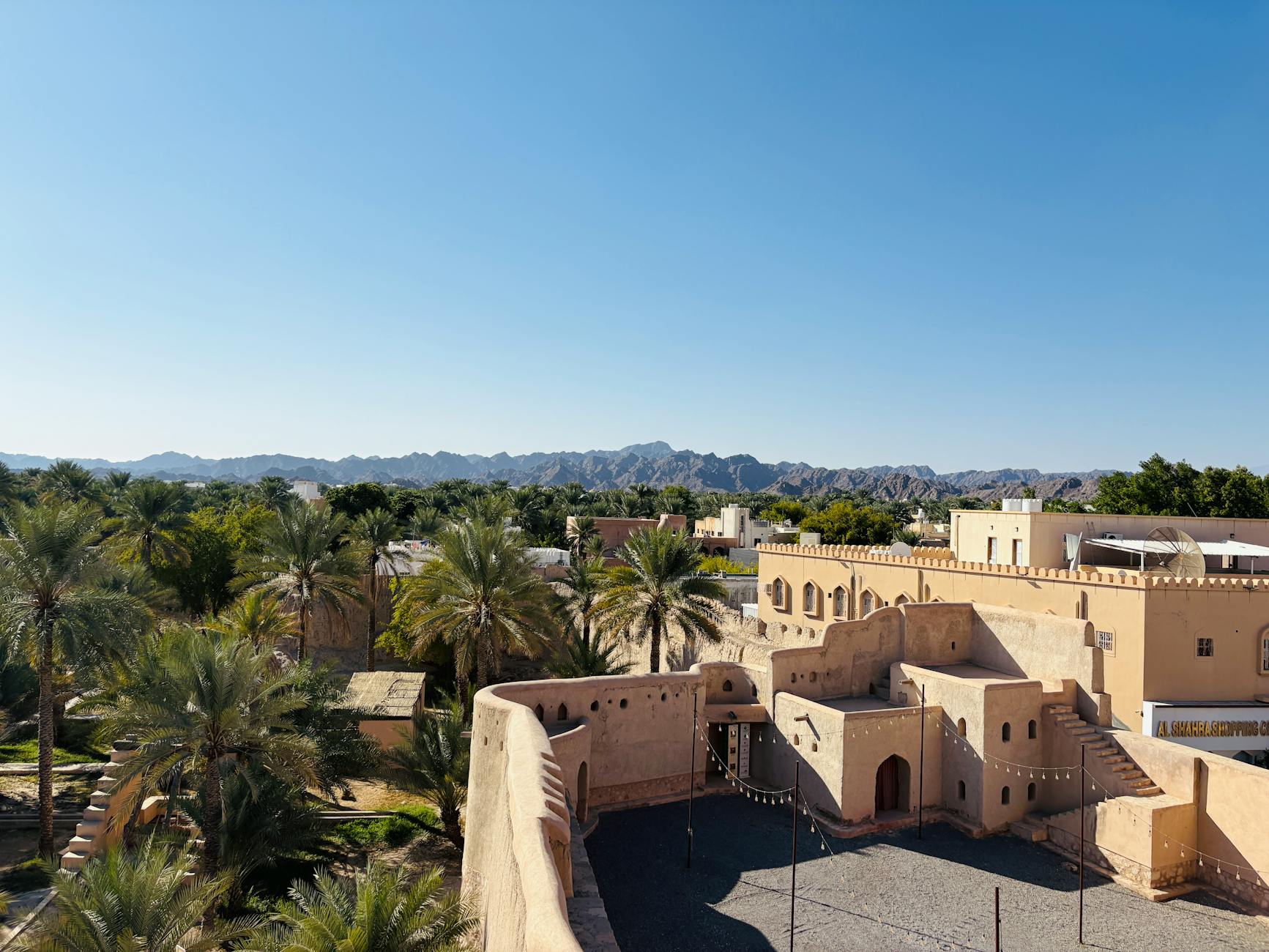
Nizwa sits 160 km inland from Muscat, surrounded by date-palm oases and the rocky walls of the Hajar range. It served as Oman's capital in the 6th and 7th centuries and still feels like the cultural centre of the country.
Nizwa Fort was completed in 1668. Its massive circular tower—30 metres in diameter—took 12 years to build. Climb to the roof for views across the palm groves and the mountains beyond. Entry costs around $7.8.
The adjacent Nizwa Souk is the best in Oman for traditional goods. Friday mornings bring the goat and cattle market, where Omani farmers in white dishdashas trade livestock exactly as their grandfathers did. It is genuine, not staged for tourists.
From Nizwa, the road leads into the Hajar Mountains and Jebel Shams—Oman's highest peak at 3,009 metres. The "Balcony Walk" trail follows the rim of a canyon 1,500 metres deep. At sunrise, the rock walls turn orange and copper.
The village of Misfah al Abriyyin clings to a cliff above a wadi, its stone houses unchanged for 400 years. A falaj (traditional irrigation channel) still carries water through the terraced gardens. It is one of the most photogenic places in the entire country.
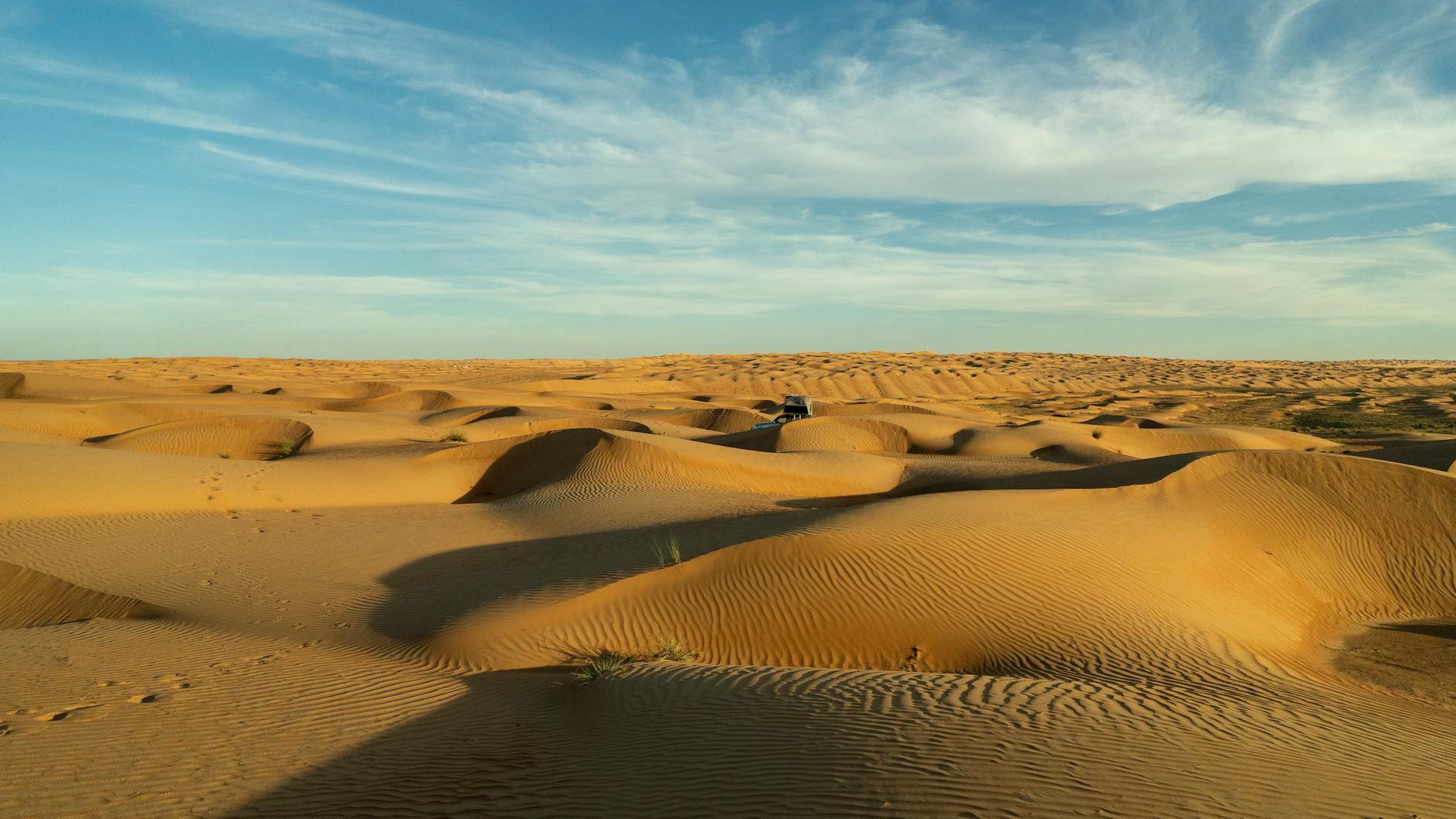
The Wahiba Sands begin about 200 km south of Muscat. Red and gold dunes rise up to 150 metres, stretching over 12,000 square kilometres to the Arabian Sea coast. This is proper desert—vast, silent, and humbling.
Bedouin camps inside the sands offer overnight stays in traditional tents. Camel rides at sunset, barbecued lamb, and clear skies without a trace of light pollution. The dunes glow deepest red in the last 20 minutes before dark.
An hour from the sands, Wadi Bani Khalid is the most accessible of Oman's wadis. Crystal-clear turquoise pools sit in a rocky gorge surrounded by date palms. Swimming is possible year-round. No entrance fee.
Wadi Shab, south of Muscat near Tiwi, requires a short motorboat crossing (around $2.6 return), then a 3 km hike along turquoise pools. The final reward: a hidden waterfall inside a narrow cave passage reached by swimming through cold, clear water. Allow at least four hours.
The Sur coastline at the wadi country's edge is Oman's traditional dhow-building centre. Craftsmen still construct the wooden vessels using techniques unchanged for centuries. Watching a 20-metre dhow take shape by hand is an unexpected highlight.