
Beach & Sun Oman
Your complete guide to Oman's coastlines, wadi pools, and turquoise waters
The boat engine cuts out. Around you, nine uninhabited islands sit low on the horizon. The guide hands you a mask — below, you can see the coral clearly from the surface. You slip in. A green sea turtle glides past, unhurried, three feet away.
Oman's coastline runs for nearly 3,000 kilometres along the Gulf of Oman and the Arabian Sea. It is not the beach of beach clubs and sun loungers. It is limestone canyons that plunge into turquoise pools, remote fishermen's bays with no names on maps, fjords so dramatic they earn comparison to Norway, and a monsoon-cooled southern coast where frankincense trees shade white sand beaches.
The sea season runs October to May along the north coast — warm water, calm swells, exceptional visibility. In the south, the Khareef monsoon (June to September) transforms Salalah into a green paradise unlike anywhere else in Arabia. Oman rewards those who come for the water in every season — you just need to know which coast calls to you.
The Gulf of Oman Coast — Marine Reserves and Hidden Bays
The stretch of coast east of Muscat holds Oman's finest marine environments. The Daymaniyat Islands — nine protected islets 18 kilometres offshore — form the crown jewel: a UNESCO nature reserve where green and hawksbill turtles feed year-round, whale sharks pass through October to February, and coral visibility regularly exceeds 15 metres.
Fins Beach near Tiwi is a 500-metre crescent of pale pebbles and turquoise water, ringed by limestone cliffs. It is only accessible by a short scramble down from the road. No facilities, no crowds — just extraordinary colour. Combine it with the Bimmah Sinkhole nearby for a full day of coastal beauty.
Sur, two hours further east, is Oman's traditional dhow-building city. The harbour still sees wooden boats under construction using centuries-old methods. The surrounding coastline is empty and unhurried — long drives past fishing villages where the catch comes ashore at dawn.
Water temperatures along this coast hover between 24°C in winter and 30°C in summer. Visibility is best October through May, when northeast winds keep the sea calm. During summer, occasional upwellings bring cooler water and sometimes reduce visibility — but also bring whale sharks.
Beach access at the Daymaniyat Islands is permitted November through April only, to protect nesting turtles. Snorkelling from the boat is possible year-round at approved sites.
Wadi Pools and the Bimmah Sinkhole
Oman's interior conceals a string of natural freshwater swimming spots that rival any beach. Wadi Shab — an hour and forty minutes east of Muscat — is among the most dramatic: a narrow gorge of emerald-green pools accessed by boat, then on foot past ancient falaj irrigation channels and towering cliffs. The reward is a cool, deep pool inside a waterfall cave at the end of the hike.
Wadi Bani Khalid, 230 kilometres east of Muscat, is the most visited wadi in Oman for good reason. A permanent spring feeds a series of aquamarine pools flanked by date palms and smooth boulders. It is accessible by sealed road — unusual for a wadi — and has basic facilities including a small restaurant. A cave extends 400 metres into the cliff face above the main pools.
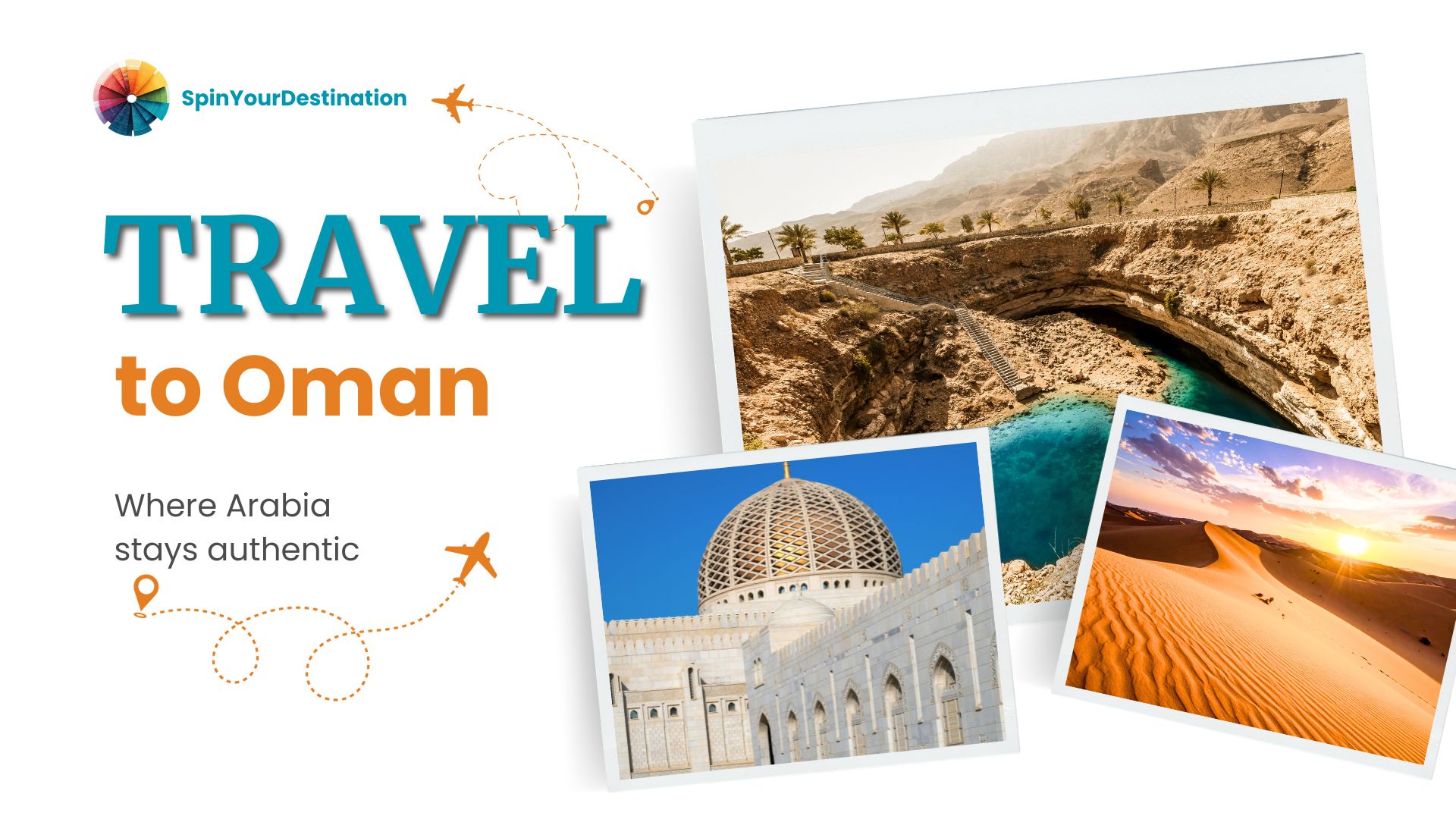
The Bimmah Sinkhole (Hawiyat Najm Park) is a 50 by 70 metre limestone crater filled with turquoise water, half-freshwater, half-seawater. Small fish nibble gently at bathers' feet. A staircase leads down from the car park; the park has shade, picnic tables, and free entry. It is an easy stop on the route between Muscat and Wadi Shab.
These wadis make an ideal combination: most visitors drive east from Muscat doing Bimmah Sinkhole and Wadi Shab in a single day trip. Wadi Bani Khalid is typically combined with a night in the Wahiba Sands desert.
Bring water shoes — the rocks and pool edges are sharp. Modest swimwear is expected; women should not sunbathe in bikinis at wadi pools. Go early to avoid heat and day-trip crowds — most arrive after 10am.
Musandam — The Fjords of Arabia
Musandam is Oman's detached northern enclave, separated from the main country by a strip of UAE territory. Its coastline is one of the most extraordinary in the world: steep limestone cliffs plunge 1,000 metres directly into the sea, forming the Khors — the Arabic word for fjords. The comparison to Norway is not exaggerated.
Khasab is the main town and the base for dhow cruises into Khor Ash Sham. A full day on a traditional wooden dhow covers multiple fjords, Telegraph Island (where a 19th-century British cable relay station still stands), and swimming stops in clear, calm water. Dolphins ride the bow wave — spinner dolphins in groups of fifty are common enough to seem routine.
The drive from Dubai is four hours, making Musandam a popular long weekend from the UAE. Fly directly to Khasab from Muscat (45 minutes) or from Dubai. Oman visa applies — UAE residents still need a separate Oman entry.
Khasab is best April to October when the Gulf of Oman is calmer. During winter, occasional rough seas can cancel dhow cruises. Check conditions before booking.
Beyond the dhow cruises, Musandam's interior mountain roads offer spectacular views: the Jebel Harim plateau at 2,087 metres gives a panorama over the Strait of Hormuz and the mountains of Iran on clear days.
Salalah and the Dhofar Coast — Monsoon Green
Salalah breaks every expectation of what Oman looks like. The Khareef monsoon (June to September) soaks the Dhofar mountains and the coast, turning the landscape deep green, carpeting the cliffs above the sea with mist and waterfalls. Temperatures are a mild 20–25°C while the rest of Oman bakes above 40°C.
Mughsail Beach, 45 minutes west of Salalah, is the coast's showpiece: six kilometres of white sand ending in sheer cliffs, with natural blowholes that shoot seawater skywards during rough swells. The road along the Dhofar coast continues past wild frankincense trees growing from bare limestone, their gnarled trunks resin-white, all the way to the Yemeni border.
Swimming at Mughsail is not recommended — the surf is rough and the seabed rocky. The experience is visual: the drama of the cliffs, the blowholes, the empty beach stretching to the horizon. Fazayah Beach, 30 kilometres further, has calmer water where camels occasionally wander to the shoreline.
Outside monsoon season (October to May), Salalah is hot and the beaches are dry and sunny. The Green Mountain drive to the Dhofar escarpment still gives extraordinary views even without the mist. The frankincense souk in central Salalah operates year-round.
Salalah is a 55-minute flight from Muscat. During Khareef (June to September), all flights and hotels book out early — plan at least three months ahead.
🌟 Top Beach & Sun Experiences
🐢 Daymaniyat Islands Snorkelling
Oman's finest snorkelling — nine protected islands 18km offshore from Muscat. Green turtles year-round, whale sharks October–February, coral visibility up to 15m. Tours depart Seeb Marina at 8:30am. Beach access November–April only. All gear and island permits included. Around $42 half-day. More info →
💦 Wadi Shab
Oman's most spectacular wadi swim — emerald gorge pools accessed by boat then 45-minute hike. The final pool sits inside a waterfall cave: you swim through a narrow gap in the rock to reach it. 140km east of Muscat. Early start essential. Water shoes required. Entry around $2.6 for the boat crossing. More info →
🚢 Musandam Dhow Cruise — Khasab
Full-day traditional dhow cruise through the fjords of Khor Ash Sham. Two snorkelling stops in clear water, dolphin watching, visit to 19th-century Telegraph Island, buffet lunch on board. 4.8/5 from 191 verified reviews. Khasab is a 45-minute flight from Muscat. More info →
🌊 Wadi Bani Khalid
Oman's most accessible wadi — permanent spring-fed aquamarine pools, date palms, and a 400-metre cave above the waterline. Ranked #1 in Al Kamil on TripAdvisor. Sealed road access. Small restaurant on site. 230km east of Muscat. Combine with a Wahiba Sands overnight for the classic east Oman road trip. More info →
💧 Bimmah Sinkhole
A 50×70m turquoise crater — half-freshwater, half-seawater — where small fish provide gentle foot nibbles. Easy staircase access, shade, free entry. 8am–8pm daily. Stop here on the way to or from Wadi Shab — it adds only 20 minutes to the journey. One of Oman's most photogenic stops. More info →
🏖️ Mughsail Beach & Blowholes — Salalah
Six kilometres of white sand backed by sheer cliffs, plus natural blowholes that spray seawater skywards. Best during Khareef (June–September) when the coast turns green and misty. Frankincense trees growing wild on the road to Fazayah Beach. 45-minute drive west of Salalah. More info →
💡 Insider Tips
- 🐢 Daymaniyat Islands beach access closes May–October for turtle nesting season — but snorkelling from the boat continues year-round at designated sites. Book tours early; weekends sell out fast October–April
- 🌧️ Salalah is counterintuitive: the best time to visit is June–September (Khareef), when the rest of Oman is unbearably hot. Flights fill months ahead — book early or pay peak prices
- 👙 Modest swimwear is expected at wadi pools — bikinis are fine on beaches and boat trips but inappropriate at inland wadi spots. Quick-dry clothing over swimwear is practical
- 🚗 Most coastal highlights (Wadi Shab, Bimmah, Wadi Bani Khalid) require a car. Hire a 2WD from Muscat; paved roads reach all these sites. Combine wadi swimming with an overnight in Wahiba Sands for the classic east Oman loop
- 🌊 Musandam requires a separate Oman visa from the UAE — even UAE residents need it. Factor this in if combining a Dubai trip with a Khasab dhow cruise
- ⏰ Arrive at Wadi Shab before 9am. The car park fills by 10am on weekends and the boat queue gets long. By 11am the hike is hot and the cave pool crowded