
🌟 What to Do & Local Tips
Experiences, activities, and essential info for your trip to Oman
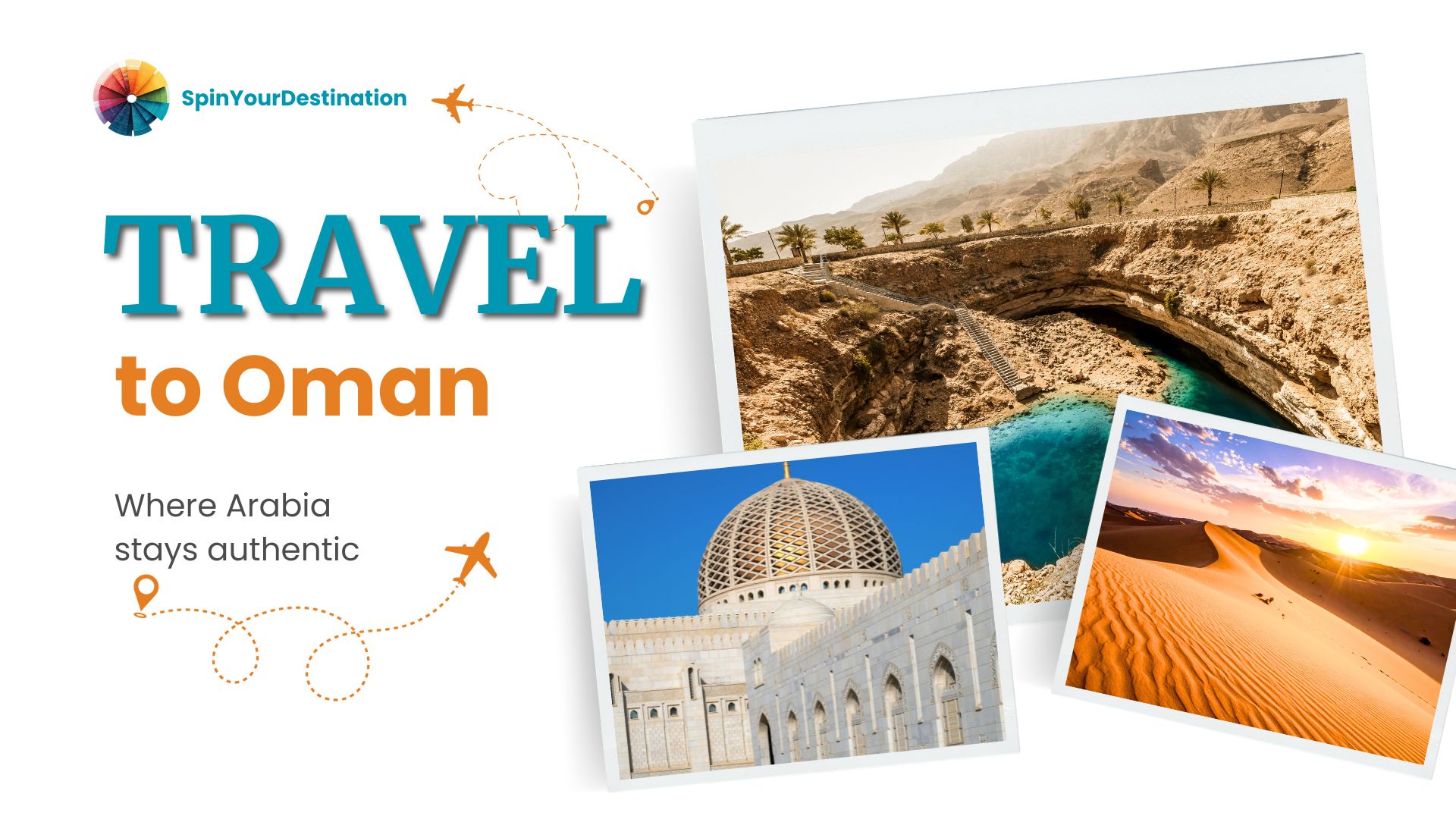
Oman doesn't do theme parks or all-inclusive resorts. What it does: ancient forts, turquoise wadis, golden desert dunes, and some of the most dramatic mountain driving in Arabia.
The country rewards those who leave the capital. Muscat is the gateway — but Nizwa, Wadi Shab, the Wahiba Sands, and Jebel Shams are where Oman reveals itself. Activities range from 4WD mountain tracks and cave swimming to dhow sailing and turtle watching on empty beaches.
October to March is peak season — comfortable temperatures (22–30°C), ideal for everything. Summer (May–September) is brutally hot except in Salalah, where the monsoon (Khareef) brings greenery and cooler air July–August.
📍 Book Activities & Experiences
Muscat Dhow Sunset Cruise
Sail Muscat's harbour on a traditional wooden dhow as the sun sets over the Portuguese forts and Al Alam Palace. Two hours on the water with Omani coffee, dates, and coastal views you can't get from land. Hotel pickup included. Runs daily from Muscat.
More info →Wadi Shab & Bimmah Sinkhole Full-Day Tour
One of Oman's most iconic experiences. A short boat crossing, then a 40-minute hike to turquoise pools and a hidden waterfall inside a cave — reached by swimming through a narrow passage. The Bimmah Sinkhole on the return is a bonus. Highly rated (4.9/5). Includes lunch and pickup from Muscat.
More info →Wahiba Sands & Wadi Bani Khalid Full Day
Experience both sides of Oman's dramatic landscape in one day — golden dunes with dune bashing and camel rides in the Wahiba desert, then a swim in the crystal-clear turquoise pools of Wadi Bani Khalid. Includes pickup from Muscat and lunch. A classic Oman day trip.
More info →Daymaniat Islands Scuba Diving
The Daymaniat Islands are a protected nature reserve off the Muscat coast — among the best diving sites in Arabia. Turtles, stingrays, sharks, tropical fish, and pristine coral. Speedboat from Seeb Marina. Suitable for beginners and certified divers. Small group (max 8). Includes all equipment and lunch.
More info →⭐ Top Experiences in Oman
⭐ Sultan Qaboos Grand Mosque
Muscat's architectural centrepiece — #1 attraction in the city. Persian carpet 70 m x 70 m, weighing 21 tonnes; Swarovski chandelier 14 m tall. Free entry. Open Sat–Thu 8–11am. Modest dress strictly enforced; women must cover hair.
More info →⭐ Nizwa Fort & Souk
17th-century circular tower fort, 30 metres in diameter. Views over palm groves and Hajar mountains. Adjacent souk for silver khanjar daggers, pottery, and dates. Friday morning cattle market — genuine, not staged. Entry around $7.8.
More info →⭐ Jebel Shams Balcony Walk
rim walk above a 1,500 m canyon — the "Grand Canyon of Arabia." Best at sunrise when rock walls turn copper. Oman's highest peak at 3,009 m. 4WD required from Muscat. Easy hike along the rim once on the plateau.
More info →⭐ Mutrah Souk
one of Arabia's oldest markets. Frankincense, rose water, hand-embroidered textiles, silver jewellery. Free to browse; bargaining expected and enjoyed. Best visited in the evening — combine with the Corniche waterfront walk at sunset.
More info →⭐ Ras Al Jinz Turtle Reserve
Green turtles nest year-round on this protected beach near Sur. Guided evening tours watch nesting females come ashore; dawn tours see hatchlings. Book well in advance — group sizes are strictly limited. About 250 km east of Muscat.
More info →⭐ Jebel Akhdar Green Mountain
the "Green Mountain" at 2,000 m — rose terraces, pomegranate orchards, falaj irrigation channels (UNESCO). Cooler temperatures year-round. Rose harvest March–April. Dramatic canyon views. 4WD mandatory — the road is steep and winding.
More info →⭐ West Salalah — Mughsail Blowholes
Mughsail Beach has dramatic limestone blowholes that shoot jets of water skyward. Marneef Cave, frankincense trees growing wild along the coastal road, and the pristine Fazayah Beach where camels rest on the shoreline. A highlight of the Dhofar coast.
More info →⭐ National Museum of Oman
opened 2016 in Muscat — one of the Arab world's finest modern museums. Oman's history from ancient trade routes to the present. 14 galleries across two floors. Free entry on Tuesdays. Allow 2–3 hours. Near Al Alam Palace on the Muscat waterfront.
More info →📋 Booking Tips
- Book wadi tours early in peak season: November–March is busy; popular operators sell out
- Turtle tours require advance booking: Ras Al Jinz limits group sizes strictly
- Desert camps have minimum stays: Most require one night minimum; weekends fill fast
- Tour guides speak English: Almost all activity providers in Oman work in English
- Check cancellation policies: Summer heat or flash floods can affect outdoor tours
💡 Local Tips
Essential information for your time in Oman
💡 Essential Info
OMR / Omani Rial
One of the world's highest-valued currencies. Cards widely accepted in Muscat and tourist areas. Carry cash for smaller shops, souk stalls, and rural areas. ATMs available in all cities.
Arabic
English is widely spoken in hotels, restaurants, and tourist areas. Learning a few Arabic words — "shukran" (thank you), "marhaba" (hello) — is appreciated and often rewarded with warm smiles.
+968
Emergency: 9999 (police/ambulance) or 999 (fire). Good mobile coverage in cities and on major roads. Remote mountains and desert have limited signal. Buy an Omantel or Ooredoo SIM at the airport — tourist SIMs from $13.
No mandatory vaccines. Tap water is technically safe but most locals and visitors drink bottled water. Heat is the main risk — carry 2+ litres of water on all outdoor activities. Sun is intense; sunscreen and a hat are essential.
🤝 Cultural Tips
💵 Tipping
Not obligatory but appreciated. $2.6–$5.2 for restaurant service is common. Tour guides: $7.8–$13 per person for a good full-day tour. Taxis: round up to the nearest rial. Hotels: $2.6 per bag for porters.
👋 Greetings
Formal: "As-salamu alaykum" (Peace be upon you) — the standard greeting. Handshakes common between men. Women: wait to see if a hand is offered. Omani hospitality is genuine and warm — don't rush it.
Informal: Omani coffee (qahwa) and dates are offered as welcome in homes and many shops. Always accept — refusing is impolite.
🍽️ Dining
Etiquette: Traditional Omani restaurants may offer floor seating with shared platters. Eat with the right hand. Alcohol is available in licensed hotel restaurants and some bars — not in souks or local eateries.
Ramadan: Eating, drinking, and smoking in public during daytime is prohibited. Most tourist restaurants remain open. Iftar (breaking fast) meals are special experiences to try.
👔 Dress Code
General: Oman is conservative. Cover shoulders and knees in souks, mosques, and public areas. At the beach or pool, swimwear is fine. In Muscat's modern malls, Western clothing is normal. Women are not required to wear a veil but modest dress is respected everywhere.
📸 Photography
Always ask before photographing people — especially women. Government buildings, military installations, and airports have photography restrictions. Landscapes, forts, souks, and mosques (exterior) are generally fine. Inside mosques: ask permission and be respectful.
🚨 Safety & Health
- Oman is one of the safest countries in the Middle East — low crime, politically stable, welcoming to tourists
- Wadi flash floods can occur after rain — never enter a wadi if rain is in the forecast upstream
- Heat is the main danger May–October — stay hydrated, avoid outdoor activity 11am–3pm in summer
- Carry travel insurance covering medical evacuation — hospitals in Muscat are excellent, rural areas have limited facilities
- Off-road driving without a guide: always tell someone your route and expected return time
- Alcohol laws: only in licensed venues, public intoxication illegal, penalties are strict
📅 Best Time to Visit Oman
Autumn/Winter
October–February ~ 22–30°C coast, 10–20°C mountains, clear skies
✅ Pros: Perfect temperatures for all activities. Wadi hiking, desert camping, diving, city sightseeing. Peak tourist season for good reason — this is Oman at its best.
❌ Cons: Higher prices November–January. Jebel Akhdar and popular desert camps book out early. Turtle tours at Ras Al Jinz need advance reservations.
Spring
March–April ~ 25–35°C, warm but manageable
✅ Pros: Rose season on Jebel Akhdar (March). Fewer tourists than peak winter. Good diving visibility. Reasonable prices.
❌ Cons: Temperature rising — long outdoor hikes become more demanding by April. Heat building noticeably.
Summer
May–September ~ 38–46°C coast, humid; Salalah 22–28°C with monsoon July–Aug
✅ Pros: Salalah during Khareef (July–September) — unique monsoon season, waterfalls, green hills. Very cheap elsewhere. No crowds on beaches or in Muscat.
❌ Cons: Brutal heat in Muscat and northern Oman. Outdoor activities dangerous. Most tour operators reduce schedule or close. Roads to wadis can be risky in flash flood season.
Winter Shoulder
Late February–March ~ warming, 28–34°C
✅ Pros: Post-peak season prices. Still comfortable for most activities. Good for combining Muscat, Nizwa, and coastal areas.
❌ Cons: Wadis can flood unexpectedly after late-winter rains. Increasing heat limits long mountain hikes.
💰 Money-Saving Secrets
- Omani food is excellent and cheap — local restaurants serve lamb, rice, and flatbread from $5.2 to $13
- Fresh fish markets in Mutrah sell the day's catch at $2.6 to $7.8 per kg — worth visiting even just to see
- Petrol is cheap — a full tank costs very little; driving is not expensive
- Combined tours (Wahiba + Wadi Bani Khalid in one day) save money versus separate bookings
- Souk bargaining: start at 50% of the asking price for textiles and silver — sellers expect it
- Avoid the hotel minibar — convenience stores and petrol stations sell cold drinks very cheaply