
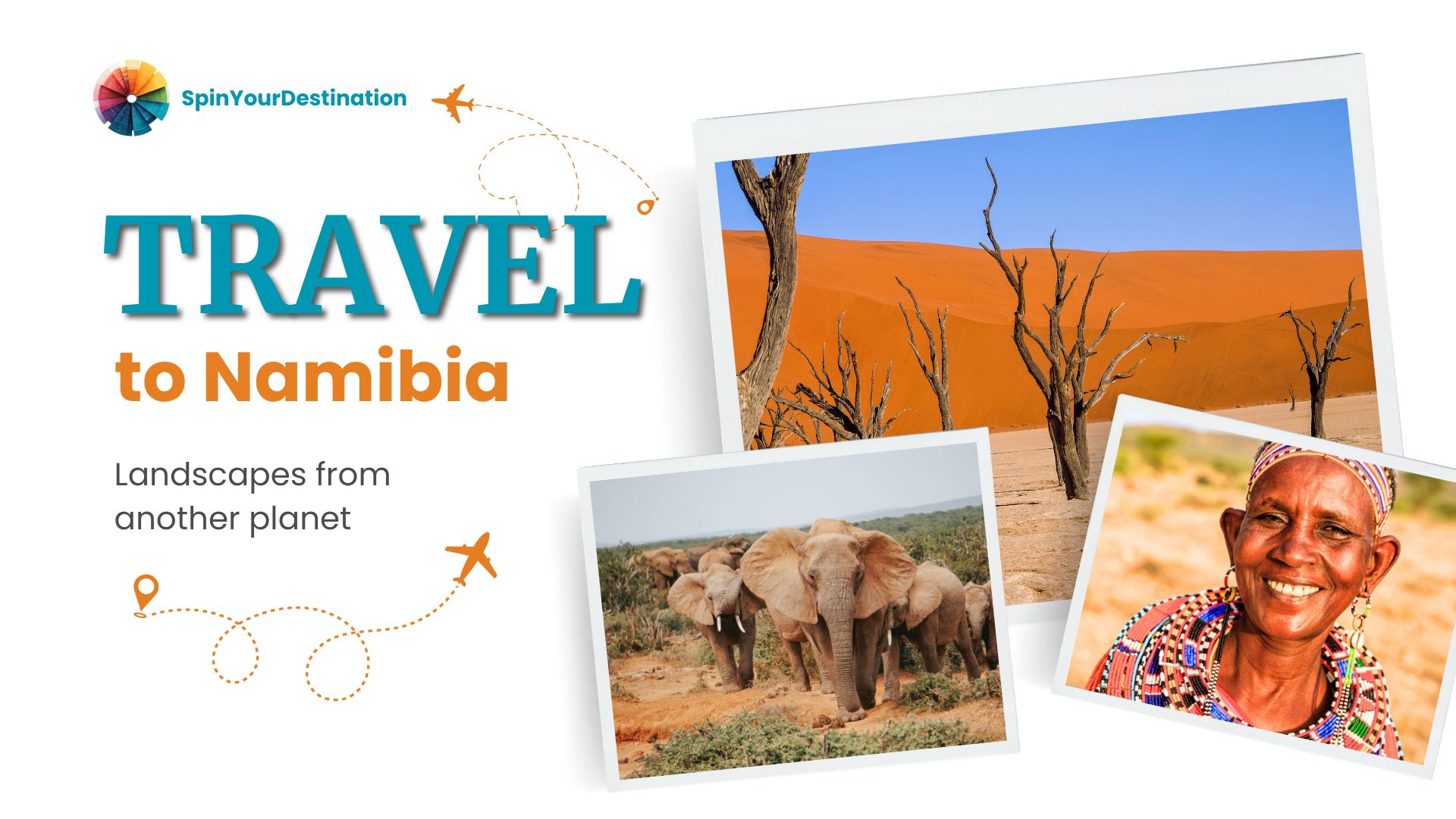
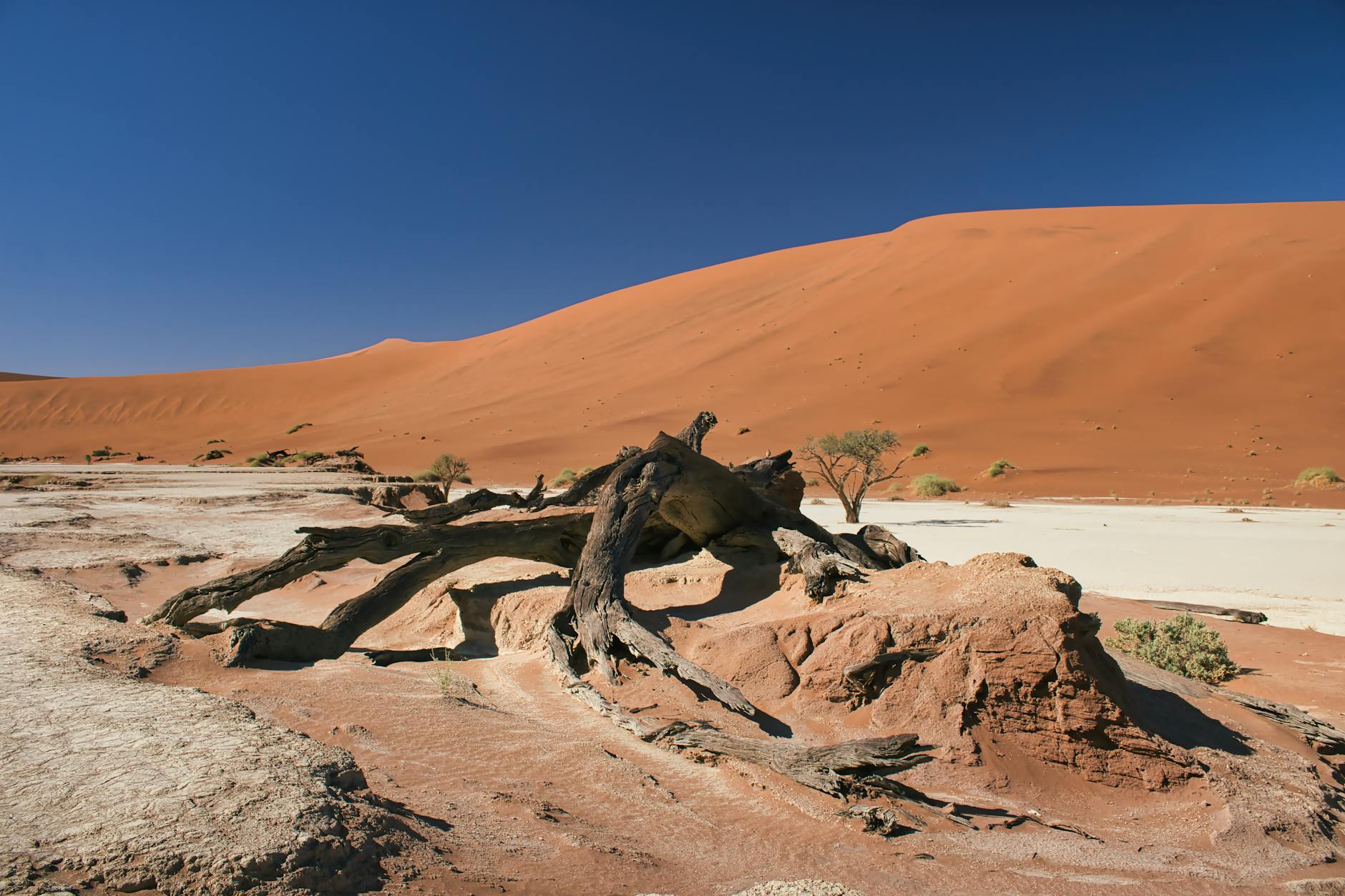
The Namib Desert is the oldest in the world—around 55 million years old. The dunes around Sossusvlei are its showpiece. Dune 45 sits right off the main road and is the most climbed. Big Daddy dune rises 325 metres—the climb takes an hour, the slide down takes seconds.
Dead Vlei is the real prize: a white clay pan ringed by the highest dunes, dotted with blackened camel thorn trees that died 900 years ago and never decomposed in the dry air. Photographers come from across the world for this shot.
The light changes everything. Sunrise and late afternoon turn the dunes from orange to deep red. Midday washes them flat. Time your visit early—and take water. The heat is serious.
Sesriem is the gateway village. Stay nearby to beat the crowds through the park gate at dawn. The N|a'an ku sê Foundation also operates camps in the area for those wanting to combine dunes with wildlife conservation.
The Namib-Naukluft National Park surrounding Sossusvlei is vast. Guided drives, hot air balloon rides over the dunes, and night sky viewing are all available.
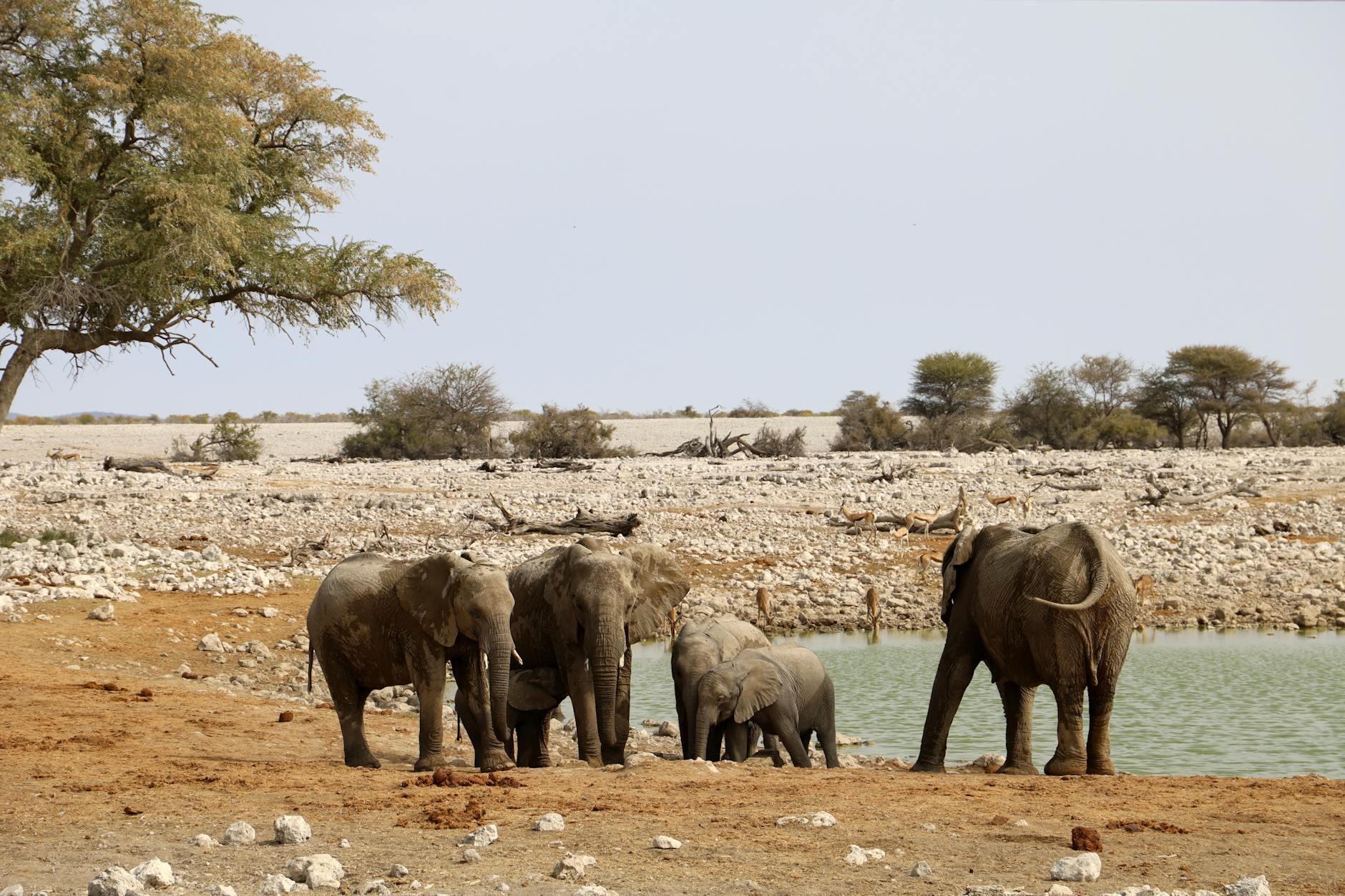
Etosha National Park centres on a vast white salt pan that dominates the landscape from above. The pan is mostly dry, but the waterholes around its edges are where the action happens. Elephants, lions, rhinos, giraffes, zebras, and wildebeest all gather to drink—sometimes at the same time.
The floodlit waterhole at Okaukuejo camp is one of Africa's most famous wildlife-viewing spots. You sit in the dark. Animals emerge from the black. Rhinos wallow. Elephants splash. No guides needed, no jeep—just a fence between you and the wild.
Etosha is self-drive friendly, which makes it stand out among Africa's great parks. Rent a car in Windhoek and navigate the park's 450km of gravel roads yourself. Entry costs around NAD 150 (roughly €8) per person per day.
The dry season (May–October) concentrates animals around waterholes, making sightings near-guaranteed. After rains (November–April), the park turns green and baby animals appear.
Etosha has three rest camps with chalets and campsites: Okaukuejo, Halali, and Namutoni. Book the Nämib Naukluft Lodge or Onguma lodges outside the eastern gate for more comfort.
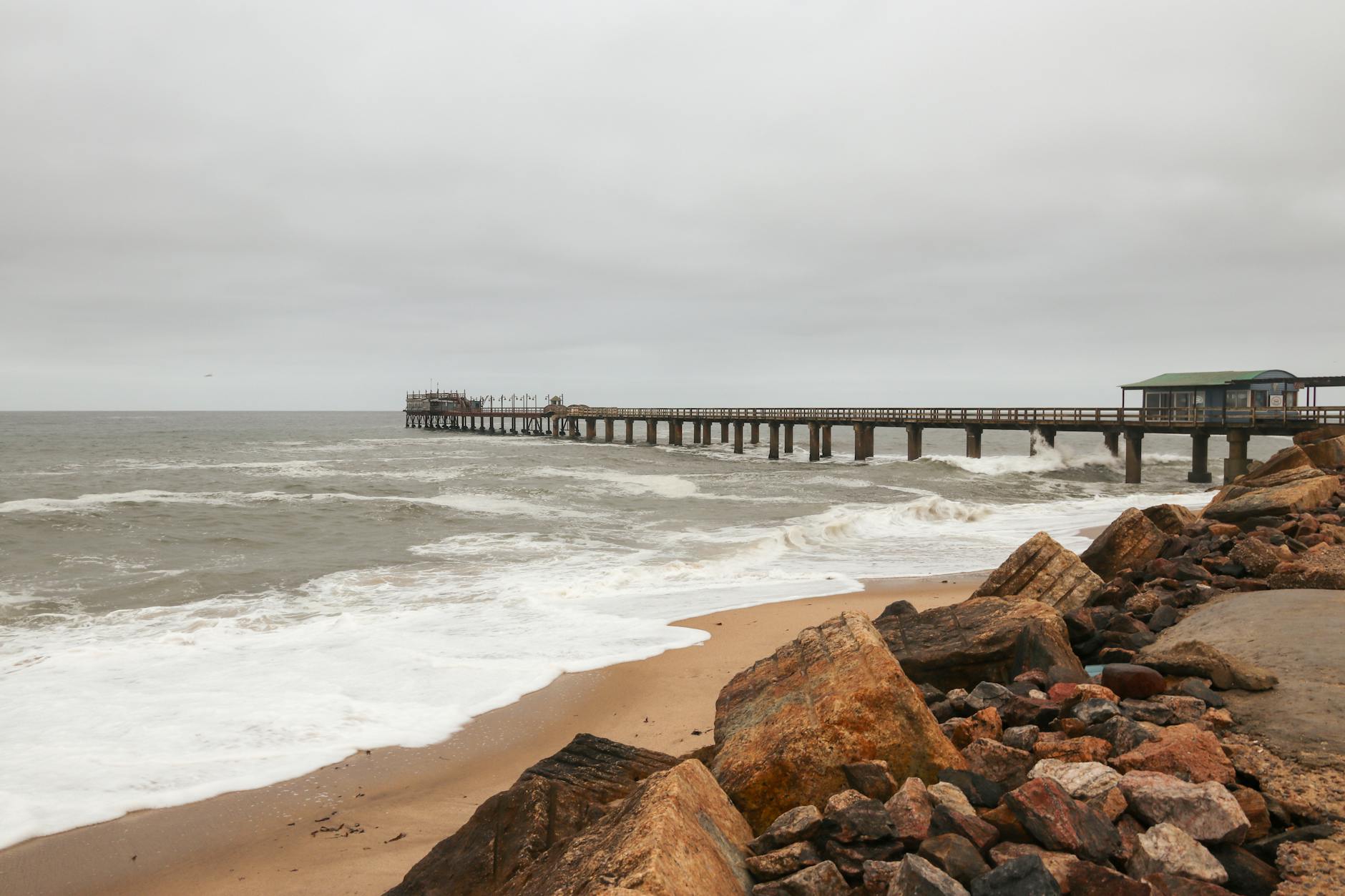
Swakopmund sits where the Namib Desert meets the cold Atlantic. The contrast is jarring: German colonial buildings on wide streets, beach fog rolling in from the ocean, and mountains of orange sand rising just behind town.
The adventure options here are serious. Sandboarding down dune faces, quad biking across the desert, skydiving with views of coast and dune, sea kayaking with seals and pelicans—this is where adrenaline-seekers come in Namibia.
The Swakopmund Museum tells the story of the German colonial period (1884–1915)—a dark history the town is still reckoning with. The architecture of the Woermann House, the Old Barracks, and the Lighthouse makes walking the streets interesting regardless.
Walvis Bay, 30km south, has a famous flamingo lagoon. Hundreds of pink flamingos wade through shallow water with dunes behind them. Boat tours go right up close.
Swakopmund makes an ideal midpoint on a Namibia road trip: dunes to the south at Sossusvlei, wildlife to the north at Etosha. Two to three nights here is enough for most travellers.