
⭐ What to Do & Local Tips
Explore experiences and tips to get the most from your trip in Namibia
Namibia rewards the curious and the patient. Vast landscapes, very few people, and wildlife that comes to you. Etosha's floodlit waterholes at midnight. The dead trees of Dead Vlei at sunrise. Seals playing beside your kayak at Pelican Point.
Most activities here are outdoors and nature-based. Self-drive safaris, dune climbing, sandboarding, kayaking with seals, cheetah encounters, and stargazing in one of the world's darkest skies. The dry season (May–October) is peak time for wildlife and road tripping.
Namibia is not a budget destination — plan NAD 800–2,000 per day for accommodation, food, and park fees on a self-drive trip. But the space, the silence, and the scenery deliver for those who come prepared.
📍 Book Activities & Experiences
Hot Air Balloon Over the Namib
Float at sunrise over the world's oldest desert. Namib Sky Balloon Safaris launches from Sesriem and drifts over the dunes as they turn from orange to gold. Flights last 1 hour. Price around NAD 5,500 (roughly €280). Sparkling wine and snacks on landing. Book well in advance — spaces are limited.
More info →Etosha Wildlife Safari
Self-drive Etosha or book a guided game drive from one of the gate lodges. The park is malaria-free, accessible in a standard car, and delivers lions, elephants, rhinos, and giraffes. Guided game drives available from Okaukuejo, Halali, and Namutoni camps. Entry NAD 150/person per day. Stay 2–3 nights for best sightings.
More info →Seal Kayaking at Pelican Point
Paddle alongside 50,000 Cape Fur seals at the tip of the Pelican Point peninsula near Walvis Bay. Pelican Point Kayaking departs from Walvis Bay at 8am in 4x4 vehicles, then guides you through a flat-water kayak among seals, dolphins, and pelicans. No experience needed. Family-friendly. Around NAD 800–1,200 per person.
More info →Cheetah Conservation Fund — Day Visit
Visit CCF's field research centre near Otjiwarongo to see resident cheetahs up close, watch the daily cheetah run at 8am, and learn about Namibia's conservation work. Guided tours of the enclosures and museum. Cheetah feeding Mon–Fri at 2pm, weekends at noon. Pre-booking required for the Cheetah Run activity.
More info →⭐ Top Experiences in Namibia
⭐ Climb Dune 45 at sunrise
The most climbed dune in Namibia, 45km from Sesriem gate. 80 metres of iron-red sand. Arrive at first light before the heat builds. The view from the top: ridgelines of orange and shadow in every direction. Book a guided Sossusvlei day tour from Swakopmund if self-driving isn’t your plan.
More info →⭐ Dead Vlei — the iconic salt pan
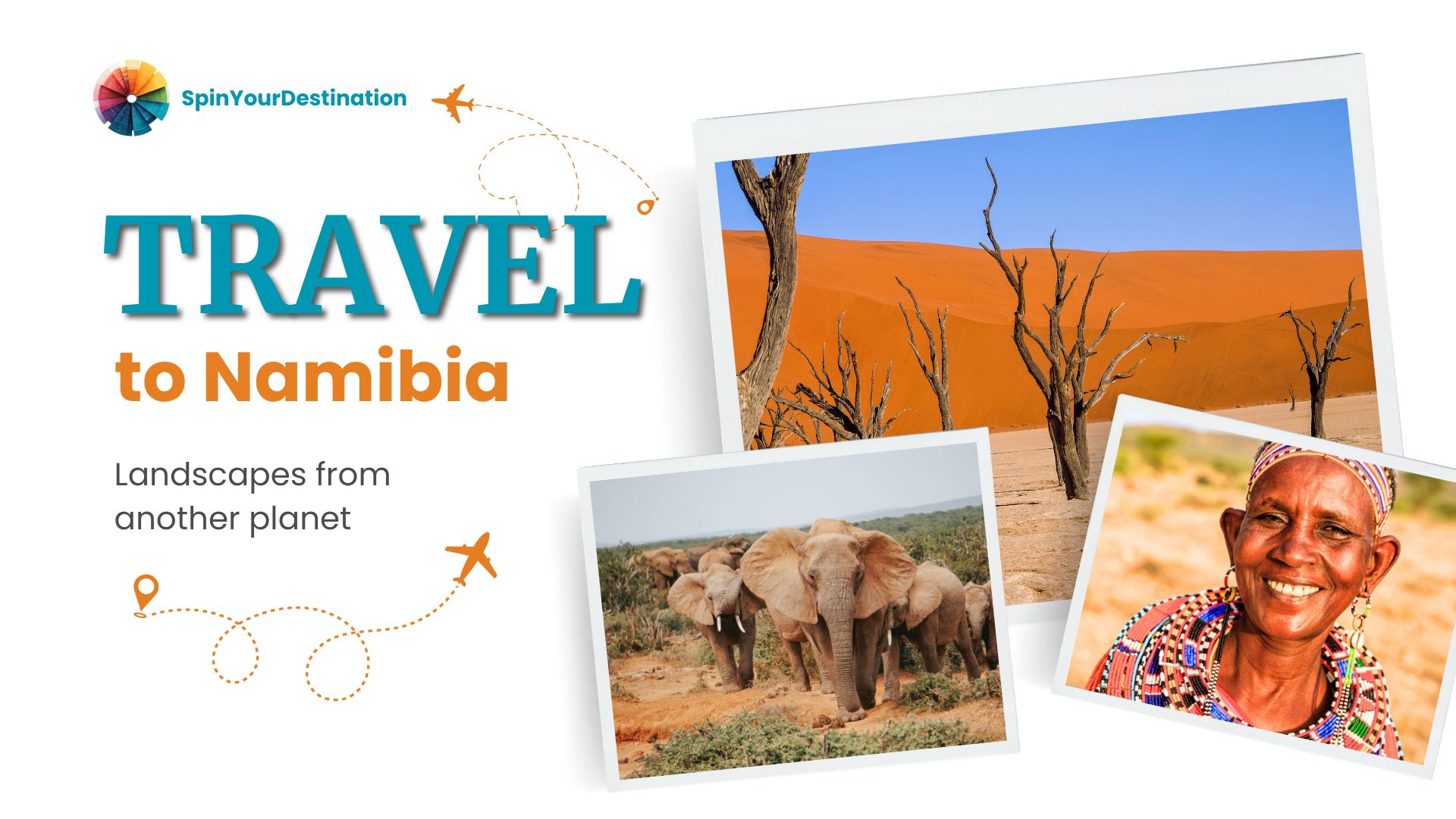
White clay pan, black 900-year-old camel thorn skeletons, red dunes, blue sky. Dead Vlei is one of the world's most photographed landscapes. A 1km walk from the 2x4 parking area (beyond Dune 45). Go early — the clay pan reflects heat brutally by mid-morning. Bring 2 litres of water minimum.
More info →⭐ Etosha waterhole at night
Okaukuejo rest camp has a floodlit waterhole visible from a stone viewing terrace — open all night, free for camp guests. Black rhinos wallow, elephants splash, lions drink. Sit in silence with a cold beer and wait. It’s not guaranteed, but on most nights something extraordinary happens. One of Africa’s great wildlife experiences.
More info →⭐ Sandboarding in Swakopmund
Lie-down or stand-up sandboarding on the dunes outside Swakopmund. Lie-down (face-first) reaches speeds of 80 km/h. Alter Action runs daily trips departing from town. Sandboards and protective gear provided. Half-day around NAD 600–800. No experience needed — just willingness to eat sand.
More info →⭐ Fish River Canyon viewpoint
Second largest canyon in the world — 160km long, 27km wide, 550 metres deep. The main Hobas viewpoint is free and spectacular. The 86km multi-day hike through the canyon floor (May–Sep only) requires a permit from NWR and a medical certificate. Day visitors can walk the canyon rim for sweeping views without hiking down.
More info →⭐ Spitzkoppe rock formations
The Matterhorn of Namibia — 700-million-year-old granite domes rising from the flat desert between Swakopmund and Windhoek. Camp inside the reserve for NAD 300/person. San Bushman rock art. Rock climbing, hiking, and stargazing from the campsite. Some of the best Milky Way views in southern Africa.
More info →⭐ Kolmanskop ghost town
A German diamond-mining town abandoned in 1954, now being slowly buried by the Namib. Sand drifts through broken windows and fills entire rooms. Located 10km from Lüderitz. Morning tours depart at 9:30am and 11am. Photography permit included. Extraordinary and slightly eerie. Book through the official tour operator in advance.
More info →⭐ Cape Cross Seal Reserve
Home to one of the world's largest Cape Fur Seal colonies — up to 100,000 seals on the rocks at peak season (October–November). The noise and smell are extraordinary. Located 120km north of Swakopmund on the C34 coastal road. Day visit with gate fee. No tour needed — drive yourself and walk the viewing boardwalk.
More info →⭐ Stargazing in the NamibRand
The NamibRand Nature Reserve is Africa's first International Dark Sky Reserve. No light pollution for hundreds of kilometres. The Milky Way is visible to the naked eye with startling clarity. Sossusvlei Desert Lodge inside the reserve offers guided stargazing with telescopes. Even campsite stargazing at Spitzkoppe or Sesriem is extraordinary.
More info →⭐ Walvis Bay flamingo lagoon
Thousands of pink flamingos wade through the shallow Walvis Bay lagoon, dunes rising behind them. Drive along the lagoon road (B2 south of Walvis Bay) for free views. Catamaran tours depart from the waterfront and bring you close to the flamingos, seals, and pelicans. A dramatically pink and unexpectedly beautiful spectacle.
More info →⭐ Self-drive Etosha National Park
Etosha is one of Africa’s best self-drive parks. A standard sedan car is sufficient on the main gravel roads. Waterhole maps are available at camp reception — circle the pan and stop at each waterhole to wait. Black rhinos, lions, cheetahs, oryx, springbok, giraffe, and elephants all possible. Entry NAD 150/person/day.
More info →⭐ Swakopmund skydiving
Jump from 10,000 feet over the point where the Namib Desert meets the Atlantic Ocean. The view on the way down: orange dunes on one side, grey ocean on the other, with almost nothing else in between. Skydive Swakopmund operates tandem jumps year-round. Around NAD 3,500–4,500. Book at least a day ahead.
More info →📋 Booking Tips
- Book national park accommodation early: NWR camps at Etosha fill months in advance for peak season (July–September)
- Balloon safaris: Namib Sky has limited capacity — book as soon as your dates are confirmed
- Self-drive: Reserve a 4x4 rental in Windhoek early — stock is limited in peak season
- Check cancellation policies: Weather can affect outdoor activities, especially ballooning
- Download offline maps: Tracks4Africa before departure — mobile data coverage is sparse in parks and remote areas
💡 Local Tips
Everything you need to know before you go
💡 Essential Info
NAD / N$
Namibian Dollar
Pegged 1:1 to South African Rand (also accepted). Cards work in cities and towns. Carry cash for national parks, rural campsites, and smaller guesthouses. ATMs in Windhoek, Swakopmund, Walvis Bay.
English (official)
Namibia's official language is English — almost all signage, menus, and tourism is in English. Afrikaans and German are widely spoken in some communities. Oshiwambo is the most spoken home language in the north.
+264
Emergency: 10111 (police), 061-211-111 (ambulance)
MTC and Telecom Namibia are the main networks. Coverage is good in towns and along main highways. Very limited or no signal in national parks and remote desert areas. Download offline maps before departure.
No malaria in Etosha, Sossusvlei, Swakopmund, or Windhoek — Namibia's main tourist circuit is malaria-free. Malaria risk in far north (Caprivi/Zambezi region) — take prophylaxis if visiting there. Tap water safe in Windhoek and most towns. Carry water in the desert — dehydration risk is real.
🤝 Cultural Tips
💵 Tipping
Expected at lodges and restaurants: 10–15% at restaurants. NAD 50–100/day for lodge staff is standard. Game guides: NAD 100–200 per day. Tipping is genuinely important — service staff rely on it.
👋 Greetings
Formal: Handshake standard. "Good morning/afternoon" used widely. Namibians are generally warm and relaxed.
Informal: "Howzit" (South African-influenced greeting), "Is it?" (acknowledgement). First names common. People are friendly and happy to help with directions.
🍽️ Dining
Game meat: Kudu, oryx, springbok, and warthog are common and excellent. Braai (BBQ) is central to Namibian culture. Try the potjiekos (slow-cooked stew). Local supermarkets stock good produce — self-catering on a road trip is easy and cheap.
📷 Wildlife Photography
Golden rule: Stay in the vehicle in national parks. Do not approach animals on foot unless with a guide. Silence and patience pay off more than rushing. Early morning and late afternoon light is best for photography — and for animal activity.
🚗 Driving Etiquette
Gravel roads: Slow down for oncoming traffic — stones chip windscreens. Wave at every passing car — it’s the Namibian way. Do not speed on gravel — 80 km/h maximum. Watch for livestock and wildlife, especially at dusk.
🚨 Safety & Health
- Namibia is one of Africa's safest countries for tourists — violent crime against visitors is rare
- Exercise normal precautions in Windhoek — avoid walking alone after dark in the city centre
- Carry travel insurance that covers medical evacuation — you can be far from hospitals
- Sun protection is essential — the Namib sun is brutal, especially at altitude on dunes
- Carry at least 5 litres of water per person when driving remote routes
- Tell someone your route plan before heading into remote areas — GPS and satellite phone are advisable in the Skeleton Coast or Kaokoland
💰 Money-Saving Secrets
- Camp inside national parks (NWR) — dramatically cheaper than private lodges and often better located
- Self-cater: stock up at Shoprite or Pick n Pay in Windhoek or Swakopmund before heading into parks
- Visit in shoulder season (April–June or October–November) for lower lodge rates and uncrowded parks
- Drive yourself — guided safaris add significant cost; Etosha self-drive is perfectly manageable
- Avoid internal charter flights unless essential — self-driving costs a fraction of the price
- Fuel up every time you see a station — running dry is expensive and dangerous
📅 Best Time to Visit
Winter (Dry Season)
May–October ~ 15–25°C days, cold nights (can drop near 0°C in the desert), minimal rain, excellent visibility
✅ Pros: Best wildlife viewing at Etosha (animals concentrated at waterholes), dunes at their richest colour, cool comfortable temperatures, no malaria in main tourist areas, roads in good condition, clear skies for stargazing
❌ Cons: Peak season (July–September) = higher prices and advance booking essential, morning desert temperatures can be very cold, some remote lodges fully booked
Summer (Green Season)
November–April ~ 25–40°C, afternoon thunderstorms, lush green landscape, some roads impassable after heavy rain
✅ Pros: Lower prices, baby animals at Etosha, dramatic storm clouds for photography, far fewer tourists, migrant birds arrive, Namibia turns green and surprising
❌ Cons: Extreme heat (Namib can exceed 45°C), some gravel roads flooded or washed out, wildlife disperses away from waterholes, Fish River Canyon hike closed, higher humidity in the north
Shoulder (April & October)
Transitional months ~ 20–30°C, occasional rain possible, good wildlife visibility, pleasant temperatures
✅ Pros: Best value — lower prices than peak, good wildlife sightings as rains end, fewer crowds, green landscapes from late rains still visible in October, comfortable temperatures
❌ Cons: Some uncertainty with weather in April (late rains possible), October can still be warm, some seasonal lodges may not be fully operational