This is your destination guide for Slovenia.
This is your destination guide for Lake Bled & the Julian Alps
📍 Part of SloveniaA glacial lake with a church on an island, rowed to by boatmen who inherit the trade — under the Alps that put a mountain on the flag.


The reality: Lake Bled is the image Slovenia sells itself on, and for once the image is accurate: a small glacial lake the colour of weak jade, a single island in the middle with a church on it, and a medieval castle on the cliff above. What the postcard doesn't tell you is that it's genuinely small — you can walk the whole shore in about an hour and a half — and that in high summer a good part of the country, and half of Europe, is walking it with you.
The thing that keeps Bled from being just a pretty lake is the pletna. These are flat-bottomed wooden boats, rowed standing up with two oars, and the right to row one is inherited — a closed guild of local families that goes back to an 18th-century decree. Your boatman takes you to the island, waits, and rows you back; on the island you climb the 99 steps to the church and ring the bell that's supposed to grant a wish. It's a tradition, it's a tourist ritual, and it's also just a very good way to spend an hour on the water.
But Bled is the front door, not the house. Behind it opens the Julian Alps — Lake Bohinj, three times the size and a fraction as busy; Vintgar Gorge on its boardwalks; the road over the Vršič Pass to the Soča; and Triglav itself, the 2,864-metre peak that sits on the national flag and the coat of arms. Slovenes will tell you, half-joking, that you're not a real Slovene until you've stood on top of it. Base yourself for a few nights, get a car or learn the Bohinj bus, and the lake becomes the smallest part of the trip.
The island and the castle are what you came for — but the way you cross to one and the place you shoot the other are the parts worth getting right.
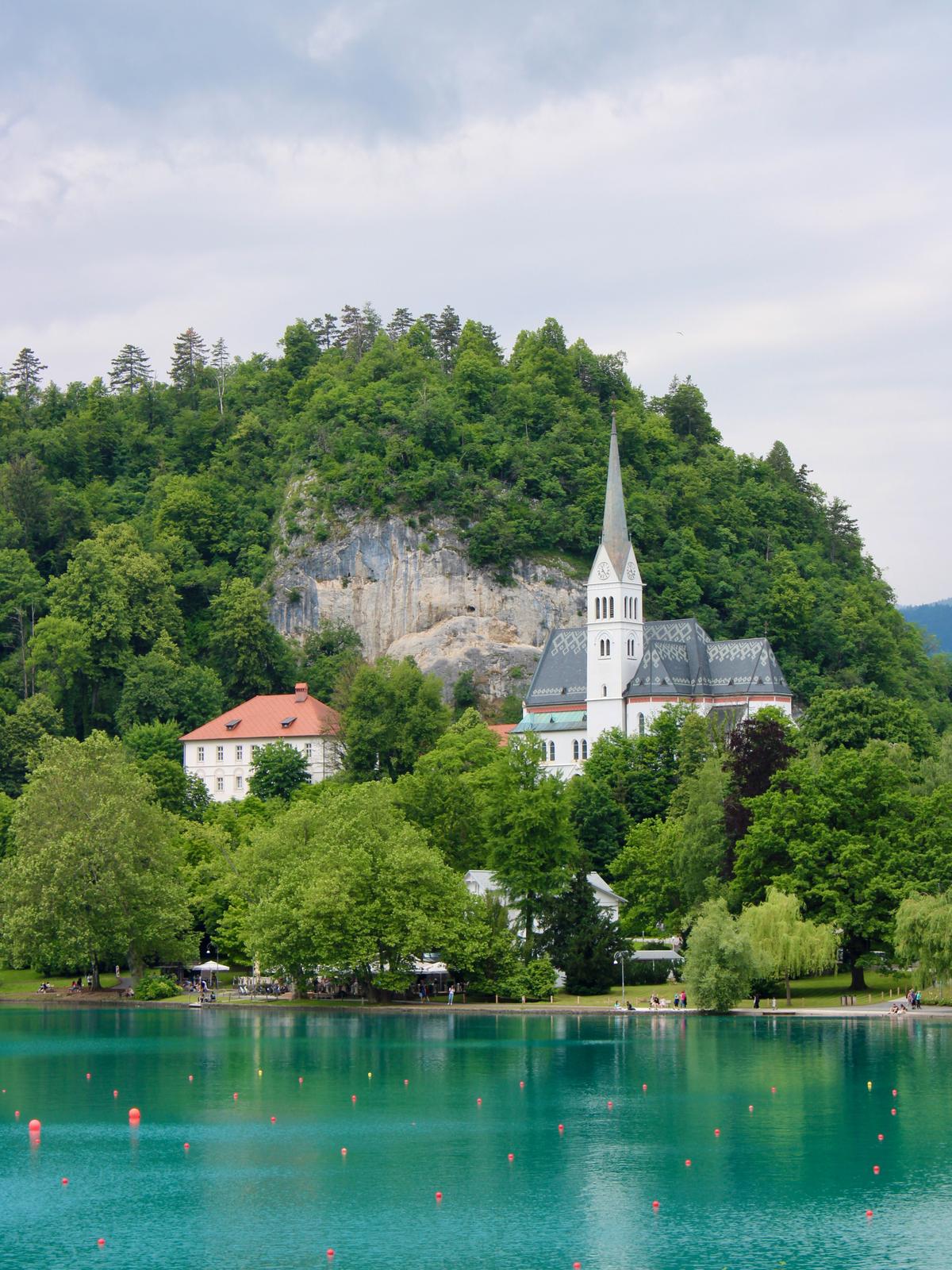
This is the only true island in Slovenia, and the church on it comes with a legend: a widow cast a bell for it that sank in the lake, and the one hanging there now is said to answer a wish if you ring it. Couples marry here on the condition the groom carries the bride up all the steps — plenty don't make it.
If the boatman's queue is long or the fare isn't for you, hire a self-row boat or simply swim out: Bled is one of the few Alpine lakes that turns genuinely warm by mid-summer, and there's a proper lakeside lido to swim from.
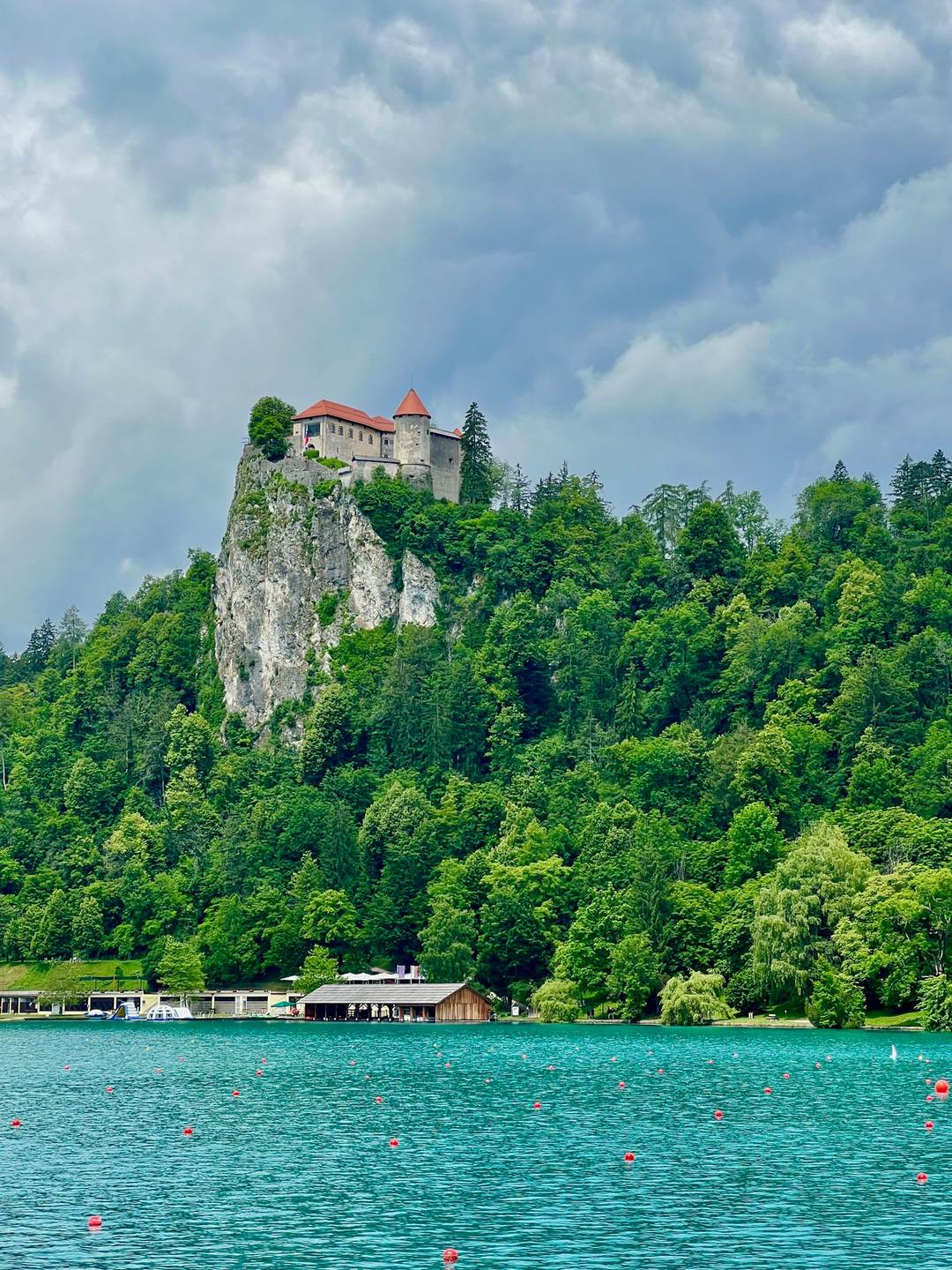
Bled Castle is the oldest in Slovenia, perched about 130 metres up the north shore, with a small museum, a working print shop and a wine cellar you bottle yourself. Pay the entry for the rampart view over the lake — then know the shot everyone recognises is taken from the other side.
That one is Mala Osojnica, a steep twenty-minute scramble up the western shore to a platform that lines up the island, the castle and the peaks in a single frame. Go early: it's a small ledge and it fills.
Where you sleep decides what kind of trip this is. Bled town is the convenient, pricier, busiest choice — everything walkable, and booked out by July. The alternatives sit half an hour away in either direction.
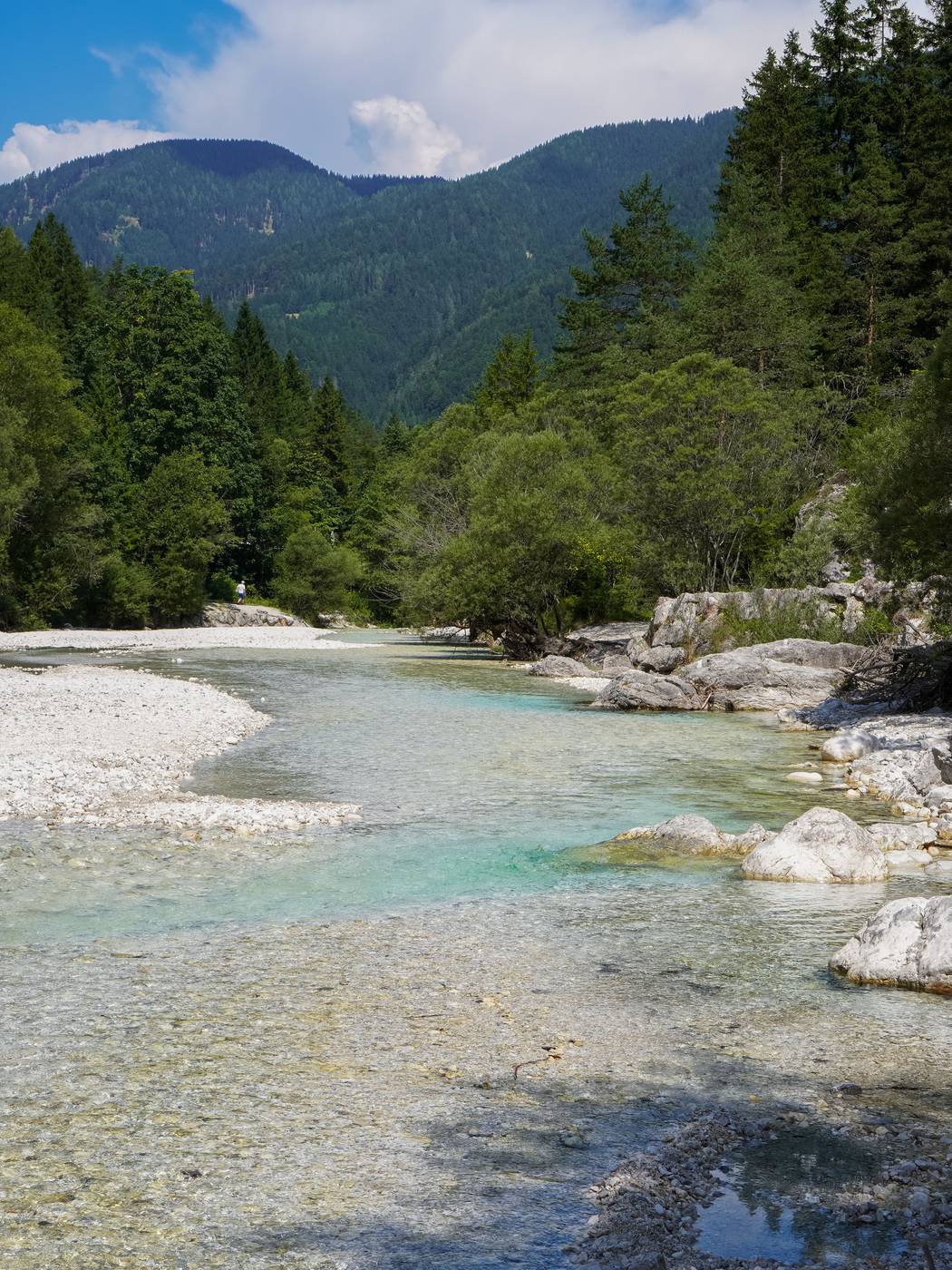
Lake Bohinj is the one to know about: the largest natural lake in the country, sitting fully inside Triglav National Park, ringed by mountains and left mostly to swimmers, paddlers and the odd cow. Base in Ribčev Laz or Stara Fužina, cross the old stone bridge by the lakeside church of St John, and you've swapped the coach parties for quiet.
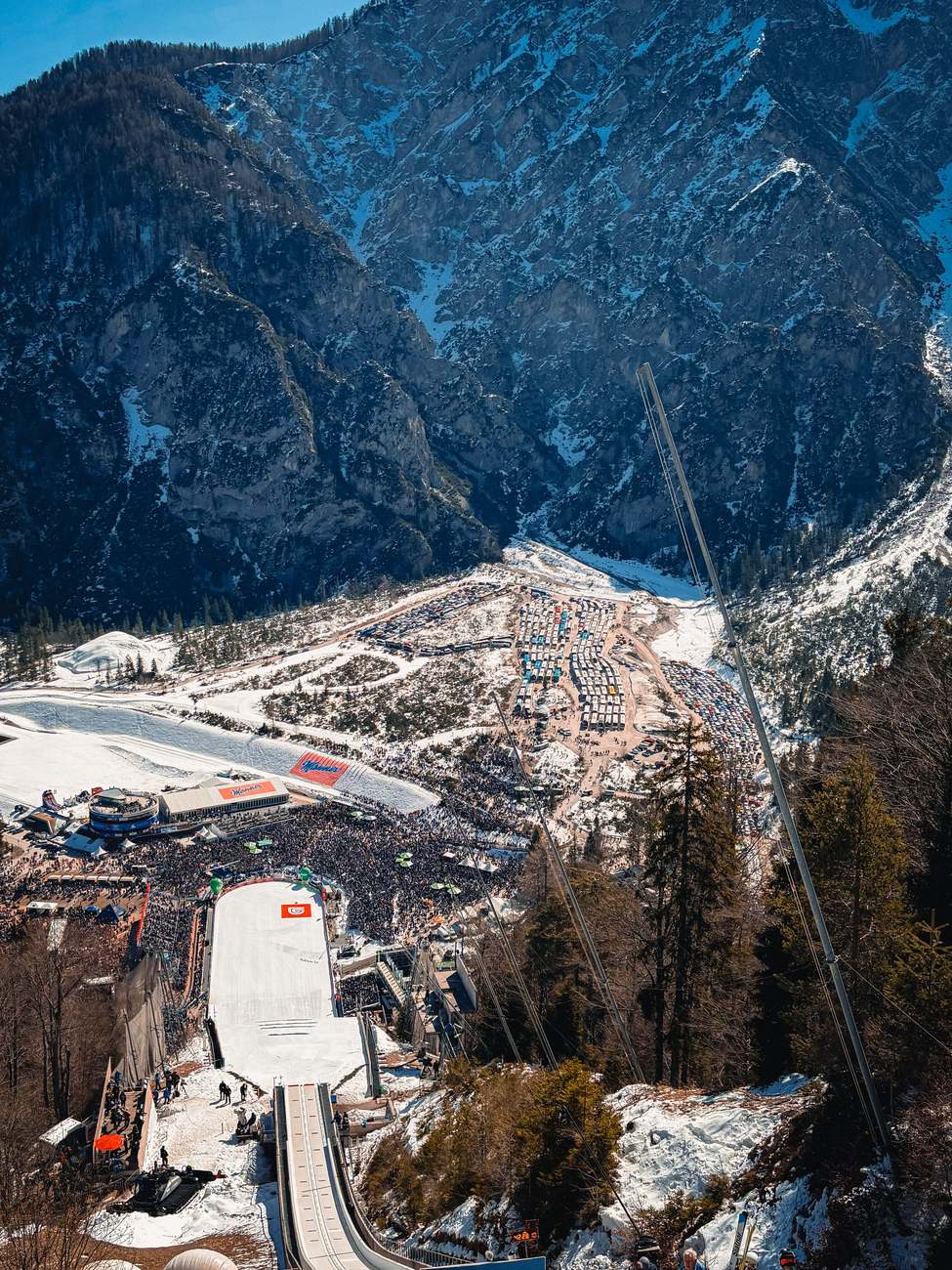
Kranjska Gora, up where Slovenia meets Austria and Italy, is the cheapest alpine base and the winter-sports town — the twin emerald pools of Lake Jasna on its edge, and the Planica ski-flying hills, where the world distance records are set, just up the valley.
A national-symbol summit, gorges on boardwalks, and a fifty-hairpin pass.
The range runs from a flat cliff-side walkway anyone can manage to an exposed summit ridge that needs a rope and a head for it. Pick your nerve.
Slovenia's Alpine cooking is its own crossroads — a bit Austrian, a bit Balkan, a bit Italian, and not the fondue-and-tartiflette page you get further west.
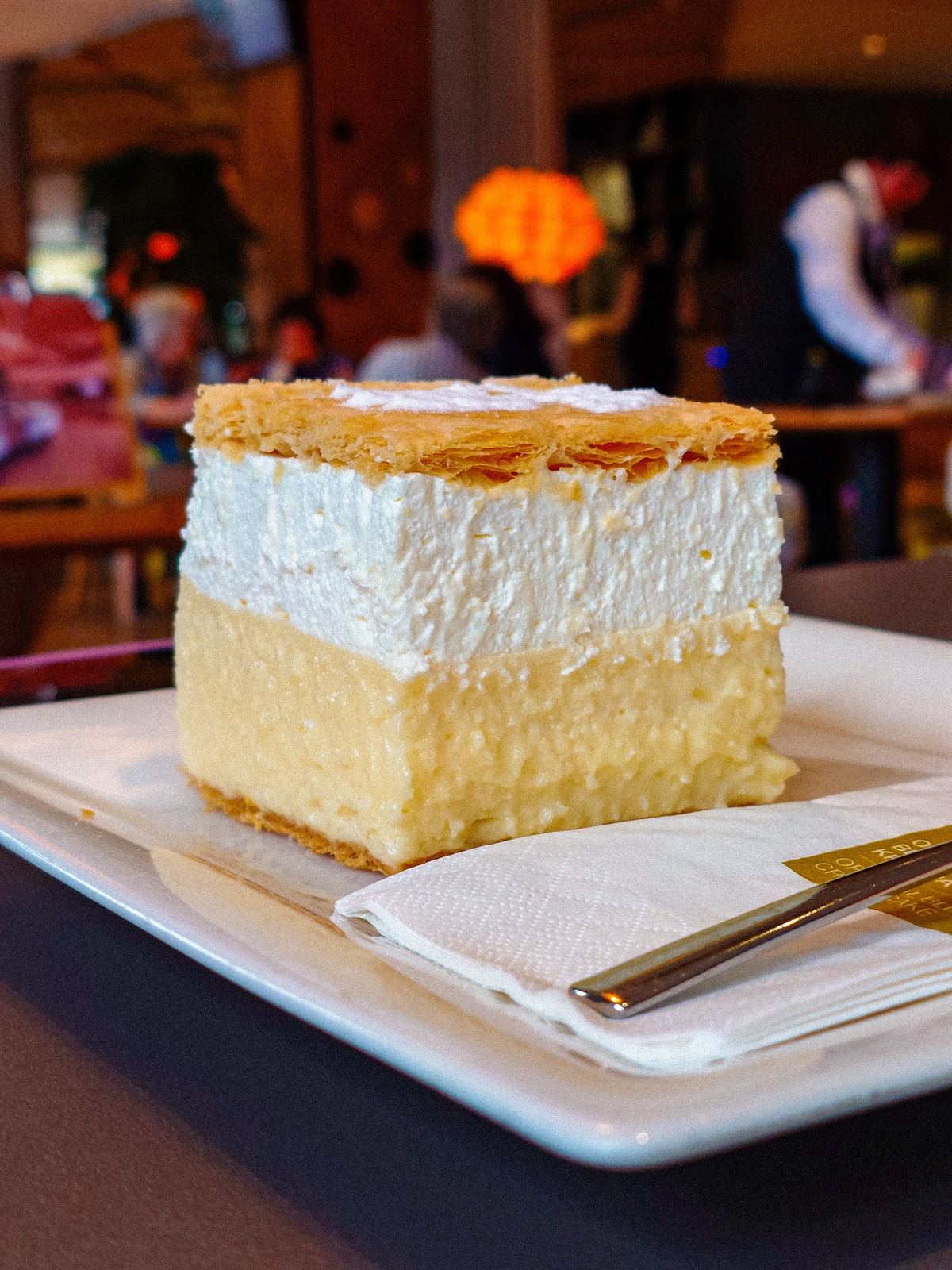
The lake's own cake is the kremšnita (Blejska kremna rezina) — a palm-sized square of vanilla custard and cream between two sheets of crisp pastry, protected by name and sold by the thousand along the promenade in summer. Around it: kranjska klobasa, the Carniolan sausage sold abroad as "Kransky"; štruklji, rolled dumplings that come sweet or savoury; jota, a bean-and-sauerkraut stew for cold days; and lake trout from Bohinj.
Slovenia is also a beekeeping country to its bones — the native grey Carniolan bee, hand-painted hive panels, honey brandies, and the lectar gingerbread hearts you'll see hanging in every stall. The everyday beer is Union or Laško; the festive bake is potica, a tight spiral of walnut and pastry.
The lakes run a summer season and the slopes a winter one, with a quiet golden window in between that's arguably the best time of all.
June to September is lake-and-mountain season: the water reaches a swimmable 22–24°C, the huts are open and the gorges are running. July and August are the hottest and, by a wide margin, the busiest — worth an early start most days.
Mid-September into October is the quiet, golden stretch: clear light, autumn colour on the beeches, and the promenade you can actually breathe on. December to March is skiing at Vogel and Kranjska Gora, with Bled itself freezing hard enough to skate in a good cold snap — while the high passes and top trailheads stay shut under snow until late spring.
A car makes the most of this trip — Bohinj, the gorges, Kranjska Gora and the passes are all quicker and simpler with one, and some trailheads have no other way in.
Without a car you can still manage the core. Ljubljana airport is about 35 minutes away; a regular bus links Bled and Bohinj; and Bled sits on two stations — Lesce-Bled on the main line, and little Bled Jezero on the century-old Bohinj Railway, which threads a six-kilometre tunnel through the mountains to the Soča side and even loads cars onto a shuttle train.
Bled and Bohinj towns are walkable end to end; the passes and higher trailheads are not on any timetable, so save those for the days you have wheels.
Compare rental cars →Everything here is close enough to day-trip from anywhere else — so pick the base that matches the trip you want, not the one with the famous name.
Bled — lakeside convenience and walk-to-everything, at the top prices.
Bohinj — the quiet, in-the-park nights; book Ribčev Laz or Stara Fužina.
Kranjska Gora — the cheapest alpine base, and ski-in once the snow lands.
Ljubljana — sleep in the capital and day-trip out; it's under an hour away.
A farm stay (turistična kmetija) — the good-value local option, best with a car and a couple of nights.
This is the affordable side of the Alps — noticeably cheaper than Austria or Switzerland, a step above inland Croatia, with Bled itself the priciest spot in the region. Everything is in euros.
Prices in 2026 euros. Bohinj and Kranjska Gora undercut Bled; a mountain-hut bunk runs €25–40 a night, half-board on top.
Go if you want the church-on-an-island postcard and the wilder half behind it — a hereditary boatman's oar, a 2,864-metre national symbol, gorges on boardwalks and fifty hairpins over the top — and you'll get a car or a bus timetable to reach it. Skip if you want Bled to yourself in July, or warm mountains you never have to leave.
Found this useful? Share it.
One new way to travel. Every Thursday.
Not deals or destinations — methods. House sitting, night trains, repositioning cruises, and what each one really costs.
Ever thought of travelling this way?
Caretaking
House sitting’s long version: a lodge, an estate or a ranch that needs someone for a whole season, and sometimes pays for it. The job is the place, not the cat.
Read article →Farm Stays
A few hours’ work a day on a farm, and a bed and dinner at the family table in return. Pick grapes in Portugal in September and again in New Zealand in March.
Read article →Repositioning Cruises
Twice a year cruise ships change oceans, and the crossing is sold cheap to fill the cabins. Two weeks across the Atlantic, six days of open sea, and a whole continent at the end of a one-way ticket.
Read article →👇 Tap one, or just type