This is your destination guide for Sweden.
This is your destination guide for Dalarna
📍 Part of SwedenRed cottages round a meteorite lake, the world's loudest maypole, and the little horse Sweden sells itself with.
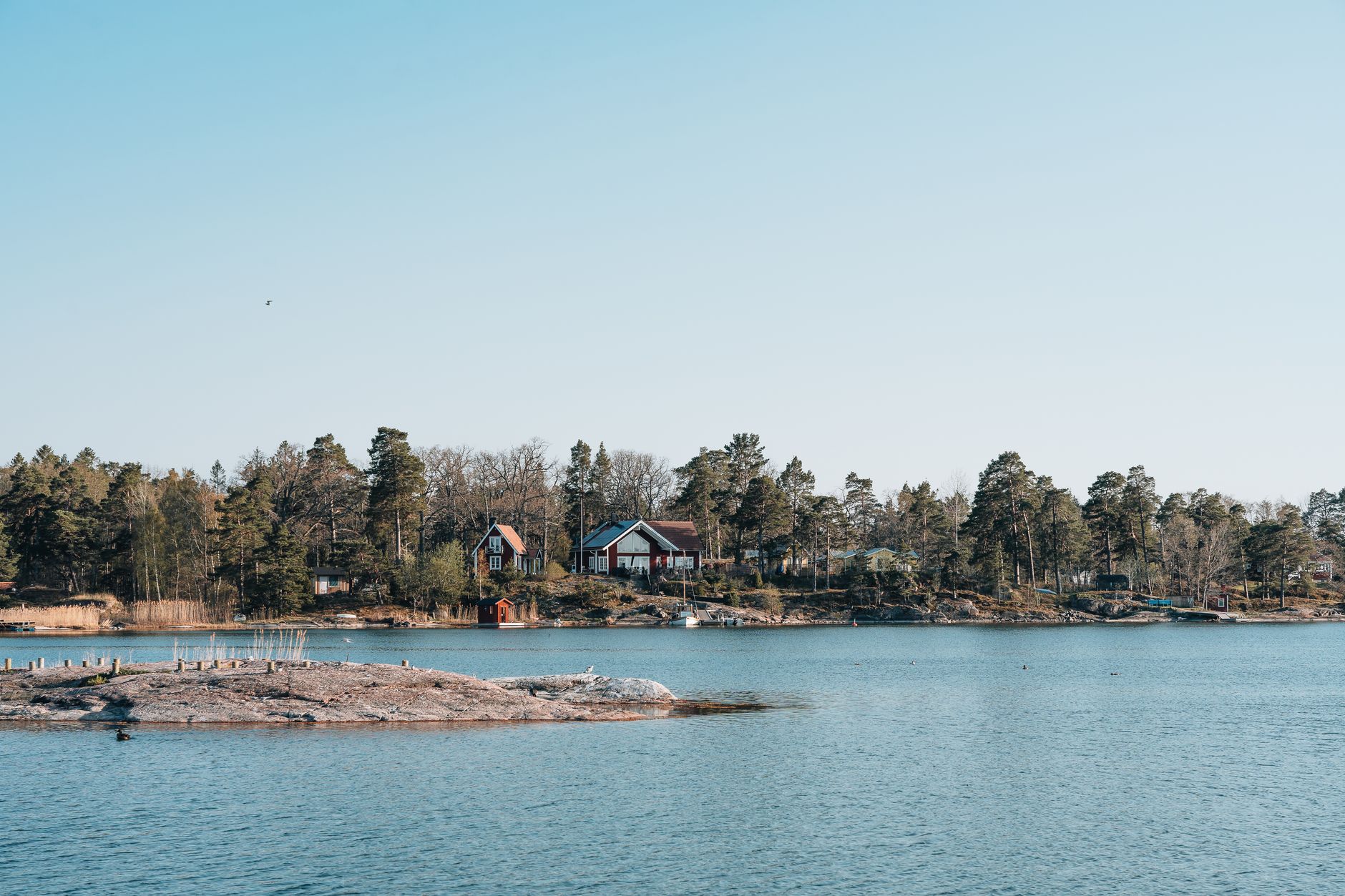

The reality: You come over a rise and there's the lake — Siljan, wide and pale, ringed by low blue hills and red timber cottages that look exactly like the ones on the biscuit tin. This is the Sweden that Sweden puts on its own postcards. The strange part is that the postcard is real, and most of it is clustered around this one lake in the middle of the country.
Dalarna is where a good deal of "Sweden" was invented. The little red horse, the red paint on half the nation's cottages, the fiddle tunes, the folk costume someone's great-aunt got married in — they come from these villages: Leksand, Rättvik, Mora, Nusnäs, Tällberg. The painters Anders Zorn and Carl Larsson lived here and sold the picture of it to the world. It's genuine and it's a brand at the same time, and both are true.
Come for the two weeks that matter most — midsummer, when tens of thousands raise a maypole in a Leksand gravel pit, or the first Sunday of March, when some fifteen thousand skiers pour out of Sälen for the Vasaloppet — and it hums. Come on a grey Tuesday in October and it's a quiet lake and a very good museum. Rent a car, drive the ring road round Siljan, stop where the cottages are reddest. That's the trip.
Siljan isn't just a pretty lake — it's the flooded floor of a crater. About 377 million years ago a five-kilometre lump of rock hit here and left a ring 52 kilometres across, the biggest known impact site in Europe. The lake, its blue hills, the fertile shore where the villages sit — all of it is the scar. The whole area is now Siljan Geopark, Sweden's first, if that's the sort of thing you like knowing while you swim.
Långbryggan, Rättvik — a wooden pier that walks 628 metres straight out into the lake, built so old steamers could dock in the shallows. Now it's the best free thing in town: stroll to the end, jump in, walk back.
Sollerön — the island in the middle of Siljan, joined by a bridge. Farmland, a big Viking-age burial field, and the calmest views of the water. Locals swim off the western shore.
Tällberg's slope — the hillside above the lake where every photo of Siljan seems to be taken. Sunset light on the water, red barns in the foreground. Busy, but the view earns it.
You can see the crater in the rock if you go looking. At Dalhalla, a flooded limestone quarry near Rättvik, the walls are layers the impact stood on end — now an open-air concert arena with acoustics people fly in for. At the old quarries of Skålberget and Amtjärnsbrottet, north of Rättvik, you can put a hand on 400-million-year-old sea-lily fossils. The lake also carries the M/S Gustaf Wasa, on Siljan since 1876 and one of the oldest working ships anywhere — it looks like a steamer but runs on diesel, and does lunch and dinner loops between Leksand, Rättvik and Mora in summer.
The villages round the lake each do one thing. Base yourself in a couple and day-trip the rest — nothing here is more than an hour from anything else.
Leksand — the midsummer village. Its white church sits right on the water, and the celebration happens in "the pit" (Sammilsdal), a natural gravel bowl that fills with tens of thousands of people once a year. Church boats — long rowing boats that once carried whole parishes to Sunday service — bring the maypole wreaths across the lake.
Tällberg — the hotel village on the hill. A dozen old timber inns with lake views, wood fires, and long dinners. It's lovely and it knows it: sedate, not cheap, better for a slow two nights than a base for touring.
Rättvik — the lake pier, and Dalhalla up the road. In early July it's swallowed by Classic Car Week, when the town fills with chrome and thousands of old American cars — great fun, or a good week to be elsewhere, depending on you.
Mora — the working town at the north end. The Vasaloppet finish line and its bell tower are here, along with the Zorn Museum, and it's the gateway to Nusnäs. Bigger and plainer than the lake villages — a place you use more than admire.
Orsa — just north, with Grönklitt, a large predator park where Sweden's brown bears, wolves and lynx live in forest enclosures. Worth the detour if you're travelling with kids.
Falun — an hour south-east, off the lake but central to the story: the copper mine that painted the country red, and nearby Sundborn, where Carl Larsson lived. More on both below.
The symbols Sweden exports — and the villages where they're still made by hand.
Plenty of places sell folk culture. Dalarna is one of the few where it's still a working thing rather than a costume rack: horses carved this morning, poles raised by people who've done it every year of their lives, a red paint that comes out of a hole in the ground an hour away.

The Dala horse, in Nusnäs — the wooden horse everyone means by "Swedish souvenir" is carved in one small village, by two family workshops (Grannas, going since the 1920s, and Nils Olsson next door). Each horse is still cut and hand-painted; the curling kurbits flowers that turn a plain toy into a dalahäst are a folk-painting style from the 1800s. You can walk the workshop floor, watch a decorator work, and paint your own. No need to book.
Falu red — the reason Sweden is red. That deep rust colour on cottages nationwide is falurött, and it's a byproduct of the copper mine at Falun: ground-up mine waste, once so cheap that everyone painted with it. The mine itself is a UNESCO World Heritage Site, and you can take a guided tour 67 metres down into 17th-century workings — a steady 6°C whatever the season, so bring a jumper even in July. Its giant central pit collapsed on Midsummer's Day 1687; the mine was empty for the holiday, so nobody died.
Midsummer, the real thing. Around the Friday nearest 24 June, the villages raise flower-and-leaf poles and dance to fiddle music. Leksand's is the loudest — a maypole often called the country's own, wreaths carried in by church boat, and a crowd that fills the pit. Note it barely gets dark here at that time of year, but this is dusk-that-never-lands, not the true midnight sun of the far north. Smaller villages raise their poles on their own days, right into July, so you can catch one even if you miss the weekend.
Two painters' homes. The image of Dalarna you already have was largely made by two men. Anders Zorn was born in Mora and left it the world's largest collection of his work, plus his house, Zorngården, kept as he lived in it. Carl Larsson and his wife Karin turned their cottage at Sundborn into the blueprint for the bright, plain Swedish home — Karin's textiles as much as Carl's watercolours. Both are guided visits; both are open year-round.
Gentle country in summer, serious snow in winter — pick your season.
Dalarna's hills are old and rounded, not alpine. The reward is easy walking and cycling in summer, and some of Sweden's best cross-country and downhill snow once it turns cold. You don't need to be an athlete for any of it.
Dalarna's food is farm food — potato, barley, pork, dairy, berries — and it isn't shy about it. No wine region, but plenty worth ordering.
Falukorv — the mild, fat pink sausage in every Swedish fridge is named after Falun. It grew out of the mine, which used ox-hide ropes; the leftover meat became sausage. A national staple with a local birthplace.
Kams and klabbe — heavy potato-and-barley dumplings, often with pork. Old miners' and farmers' food, still on menus in the villages.
Tunnbröd — thin unleavened bread, soft or crisp, wrapped round anything. Look for it fresh at village bakeries and markets.
Fika — coffee and a cinnamon bun, taken seriously and often. The lakeside cafés are half the point of a slow day here.
Where to eat: the old hotel dining rooms in Tällberg do the most polished versions of regional cooking — Åkerblads has been feeding people for generations. In Rättvik and Leksand, the lakeside cafés and bakeries are where locals actually go. The restaurant at Falu Gruva makes a decent stop wrapped around a mine tour.
Midsummer week (around the Friday nearest 24 June) is the one to plan a trip around. The villages raise their poles, Leksand's pit fills, and the light barely fades. Book months ahead — Tällberg and Leksand sell out — and know the crowds thin fast once the weekend passes.
July into August — warm-ish (20–25°C), the lake swimmable, Dalhalla in full concert season, Rättvik's Classic Car Week in early July. The busiest, brightest stretch. Villages are lively; the biggest are packed.
February and March — snow country. Cross-country tracks, downhill at Sälen and Idre, and the Vasaloppet on the first Sunday of March. Cold and short-dayed but properly beautiful, and the lake often freezes hard enough to cross on skates.
September–October — the quiet reward. Birch and aspen turn gold around the lake, prices drop, the museums and the Falun mine stay open, and you'll have the pier to yourself. November is the dead patch: too dark to hike well, too warm for solid ice, and many seasonal places closed.
A car is the point. The pleasure of Dalarna is the ring road round Siljan and the small lanes off it, stopping where the cottages are reddest. Roads are good and quiet. Without a car you'll see the towns but miss the countryside that is the whole draw.
The train works for the towns. The Dalabanan line runs from Stockholm (about three hours) via Borlänge and Falun up to Leksand, Rättvik and Mora, so a car-free lake trip based in the villages is doable. From further afield, fly into Stockholm Arlanda and pick up the train or a hire car there; the small Dala Airport at Borlänge has very limited flights.
The lake boat — the Gustaf Wasa links Leksand, Rättvik and Mora in summer. Slow, scenic, more day-out than transport, but a fine way to cross the water once.
Compare rental cars →Pick a base for what you're here to do. The lake is small enough to day-trip the rest.
Tällberg — for the view and old-hotel comfort. Wood fires, long dinners, lake below. Priciest and calmest.
Leksand — for midsummer and families. The church, the pit, and the Sommarland water park next door.
Rättvik — for the pier, Dalhalla and lakeside camping. Central for touring the east shore.
Mora — for the Vasaloppet, the Zorn Museum and Nusnäs. Plainer, practical, well placed at the north end.
Sälen or Idre — for snow. Self-catering ski cabins, up in the north-west.
A fäbod or farm stay — an old summer-pasture cottage inland. Quiet, simple, best with a car and a few nights.
Dalarna is mid-priced for Sweden — cheaper than Stockholm, dearer than you'd guess for the countryside. It spikes hard for midsummer week and Vasaloppet weekend, when a Tällberg room can cost what a Stockholm hotel does.
Prices in 2026 kronor (roughly 11 kr to the euro). Midsummer week and Vasaloppet weekend push lodging to the top of every range — book those months ahead.
Go if you want the Sweden of red cottages, fiddle music and hand-painted horses around a lake punched out by a meteorite — loudest at midsummer and the Vasaloppet. Skip if you came for Arctic wilderness and empty horizons; that's a different trip, five hours north.
Found this useful? Share it.
Still planning?
We don’t stop at “here’s the country.” Real places to stay, what to do, apps that matter, even how to find someone to travel with — plus guides for whatever vibe you’re after, from beach days to wine country to slow weekends. All up top. Spin for somewhere new when you’re done with this one.
👇 Tap one, or just type