This is your destination guide for Sweden.
This is your destination guide for Bohuslän
📍 Part of SwedenIce-smoothed granite, langoustine off the creel, oyster banks, and cold swims chased with a wood-fired sauna.


The reality: You're on a low granite skerry an hour north of Gothenburg. The rock is warm under you, the water is cold and clear, and someone two coves over is hauling a creel of langoustine into a small boat. No sand, no palm trees, and no need for either.
Bohuslän is Sweden's coast between Gothenburg and the Norwegian border — a shoreline of ice-smoothed rock, old fishing villages, and some of the best shellfish in Europe. It's where southern Swedes and half of Norway come for summer, which is why July is loud and expensive. The rest of the year it's raw, salt-blown, and nearly empty.
Most people come for a week of harbour lunches and leave having pulled up their own oysters. Come for the räksmörgås and you'll stay for the langoustine. Come for the swimming and you'll learn to love the sauna that follows. Rent a car, pick a village, give it a few days — the coast opens up slowly.
Bohuslän doesn't do sand. The coast is bare granite — pink and grey rock rounded smooth by the last ice age, dropping straight into cold, clear water. You don't spread a towel here so much as find a warm slab and claim it.

Stångehuvud (Lysekil) — a reserve of bare red granite saved from the quarries in the 1910s by a woman who bought the whole headland to stop the blasting. Smooth rock, deep water, no facilities. Wear shoes; the rock is hot and the barnacles are sharp.
Ramsvikslandet (Sotenäset) — granite moorland cut with narrow coves. Walk ten minutes off the road and you'll have a swim spot to yourself, even in July.
The outer skerries — past the last houses the granite thins to bare islets and the sea takes over. Reachable by boat only, and worth the effort.
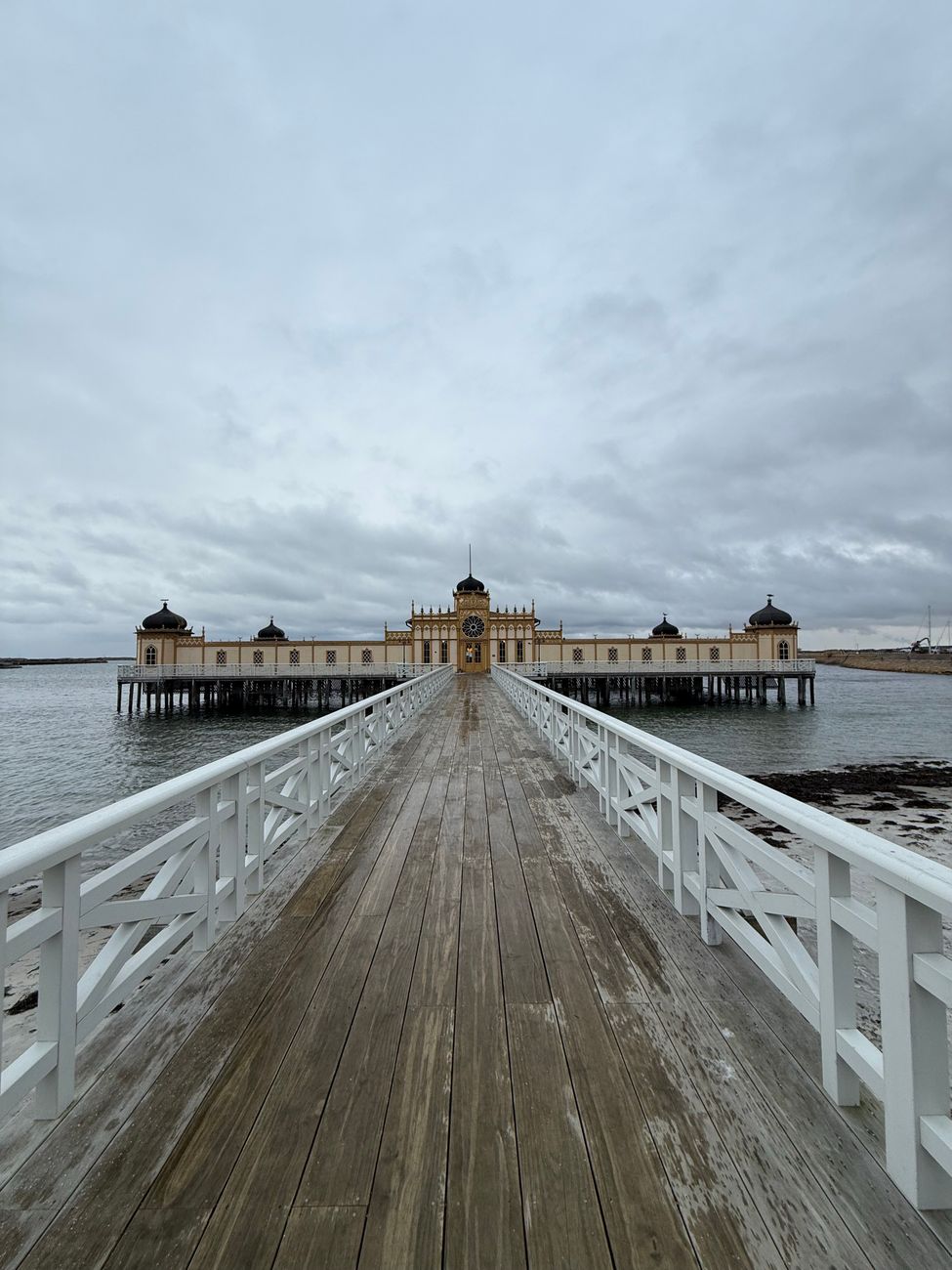
Cold-water swimming is a habit here, not a stunt. Lysekil's kallbadhus (from 1906) and the sea-sauna at Smögen keep it going year-round: a dip off the rocks, a spell in a wood-fired sauna, repeat until you feel new.
The sea rarely climbs past 17–18°C even in August. That's the deal on this coast. The sauna is the reason it works — and the reason locals keep swimming long after the tourists have driven home.
Bohuslän's towns are old fishing and trading places strung along the coast and out on islands. Each does something the others don't.

Marstrand — a car-free island of white wooden houses and masts, with Carlstens fästning (built between 1682 and 1860) glowering from the top. The fortress once jailed "Lasse-Maja," a thief who worked in women's clothing. You reach the island on the little Koön ferry — a couple of minutes, a few kronor. This is Sweden's sailing town; regatta week is a spectacle and impossible for a bed.
Fjällbacka — red cabins under a granite cleft called Kungsklyftan that you can climb up into. Ingrid Bergman spent her summers here and the square carries her name. Small, steep, and busy in July.

Smögen — the long wooden Smögenbryggan, old fishing sheds turned into shops and ice-cream bars. Loud and shoulder-to-shoulder in high summer, salt-scoured and quiet the rest of the year. Buy shrimp straight off the boat.
Lysekil — a working town on the Gullmarsfjord, Sweden's only true fjord, with the 1906 kallbadhus and Stångehuvud on its doorstep.
Grebbestad — the oyster capital (more on that below). A real harbour, not a postcard.
Strömstad — the jumping-off point for the Koster islands, close enough to Norway that half the number plates in the car park are Norwegian.
Most of it happens on the water — and most of it is bookable by the half-day.
You don't need to be a sailor to get out here. The archipelago is flat, sheltered water, and half the best experiences come with a guide who does the tricky part for you.
This is the reason to come. Bohuslän is Sweden's shellfish coast, and it eats what it lands — often within sight of the boat that landed it.

Oysters — the flat native Ostrea edulis, best around Grebbestad, which carries a protected-origin name. Eaten raw off the shell, ideally one you opened yourself. Season runs roughly September to mid-June; midsummer they're left alone to spawn.
Havskräfta (langoustine) — creel-caught, sweet, the West Coast's quiet pride. Order them whole and get your fingers dirty.
Räkor (cold-water shrimp) — the räksmörgås is the coast's default lunch: a mountain of hand-peeled shrimp on bread with egg, mayonnaise and lemon. Every harbour café makes one; the good ones don't skimp.
Musslor — blue mussels farmed in the fjords, cheap and everywhere in season.
Where to eat: look for a harbour-front fiskrestaurang, or buy straight off the boat in Smögen, Grebbestad or Lysekil and eat on the quay. In autumn, skaldjurskryssningar (shellfish cruises) combine the catching and the eating in one afternoon.
Not a wine coast — though a small vineyard, Luna outside Lysekil, is coaxing Solaris and Pinot Noir out of Nordic soil if you want the curiosity with your oysters.
June and early July, then late August into September are the sweet spot. Long days, open restaurants, water warm enough (barely). September adds the oyster and lobster seasons and thins the crowds — arguably the best of the lot.
Mid-July — the coast fills. Marstrand, Smögen and Fjällbacka go elbow-to-elbow, beds vanish, prices peak, and the Norwegian and Gothenburg boats crowd every harbour. Good fun if that's what you want; book far ahead.
May — cool, quiet, granite to yourself, but the sea is too cold for most and some places haven't opened. Good for walking and cold-bathing rather than lounging.
October to April — most harbour-front places close. What stays open: the kallbadhus, the towns people actually live in (Lysekil, Uddevalla, Strömstad), and a raw, empty coast that some prefer to the summer version. Bring wind gear. It rains, and the wind off the Skagerrak is the real weather here.
A car is easiest. The coast road winds and the towns don't line up neatly — you'll want your own wheels to move between Grebbestad, Smögen, Lysekil and Marstrand. The E6 runs the length of Bohuslän; the good bits are the small roads heading west off it, toward the water.
Public transport — Västtrafik buses and the Bohus rail line cover the main towns, but reaching the tips of the peninsulas and the islands by bus takes patience and a timetable.
Island ferries — the little Marstrand ferry from Koön runs every 15 minutes (two minutes across, a few kronor, return included). The Koster boats leave Strömstad year-round, about 45 minutes out. Smaller fjord ferries handle the crossings inland; most take cars and cost little.
Pick a base for what you're there to do. Bohuslän is long and thin, so where you sleep shapes your week more than on a compact island.
Marstrand — for sailing and the fortress. Car-free, pretty, priced accordingly.
Grebbestad or Fjällbacka — for the northern coast, oysters and coves. Grebbestad if you're there to eat and get out on the water.
Smögen or Hunnebostrand — for the classic fishing-village summer, the bryggan, and quick access to the outer skerries.
Lysekil — for the fjord, the kallbadhus and Stångehuvud, at slightly lower prices than the honeypots.
Strömstad or Koster — for Kosterhavet and the far north; Koster itself for a car-free island stay.
A sjöbod or coastal cottage — the local way to do it. Best with a few nights and a car or a boat.
Bohuslän is Sweden's dearest coast in high summer — Marstrand and Smögen edge toward small-Norwegian-resort prices — but May, June and September run a fraction of July.
Prices in 2026 kronor (roughly €1 ≈ 11 SEK). Outside July, hotels drop 30–40%. Many harbour-front places close entirely October–April.
Go if you want Sweden's seafood coast at its source — granite islands, oyster and langoustine safaris, sailing out of Marstrand, and cold swims off the rocks. Skip if you need sand, guaranteed heat, or a cheap week in July.
Found this useful? Share it.
Still planning?
We don't stop at "here's the country." Real places to stay, what to do, apps that matter, even how to find someone to travel with — plus guides for whatever vibe you're after, from beach days to wine country to slow weekends. All up top. Spin for somewhere new when you're done with this one.