This is your destination guide for Mexico.
This is your destination guide for Baja California Sur
📍 Part of MexicoCactus desert dropping into two different seas — gray whales that come to you, the world's healthiest reef, and Cabo as the loud 5%.


The reality: You land in Cabo, and for the first hour you think the whole peninsula is golf courses and a tequila-shaped party. Then you drive north. Within 40 minutes the resorts thin out, the cactus closes in, and the road runs between desert mountains and a sea so clear Cousteau called it the aquarium of the world.
That's the trick of Baja Sur. Los Cabos is real, expensive, and loud — but it's the southern tip of a 750-kilometre peninsula that's mostly empty. The rest is fishing towns, a Pacific surf coast, an artists' village in the desert, Jesuit mission squares, and a stretch of the Sea of Cortez where gray whales come to give birth and actually seek out the boats.
Most people fly in for a beach week and never leave the resort. The ones who rent a car and drive — to La Paz, to Todos Santos, out to the whale lagoons — come home talking about the wildlife, not the pool. Baja Sur rewards the drive. Pick up a car at the airport, point it north, and you'll understand within the hour.
Baja Sur has two coasts and they behave nothing alike. The Pacific side is wild — big surf, rip currents, cooler water, dramatic and often not for swimming. The Sea of Cortez side is the opposite: warm, glassy, turquoise, the calm one.
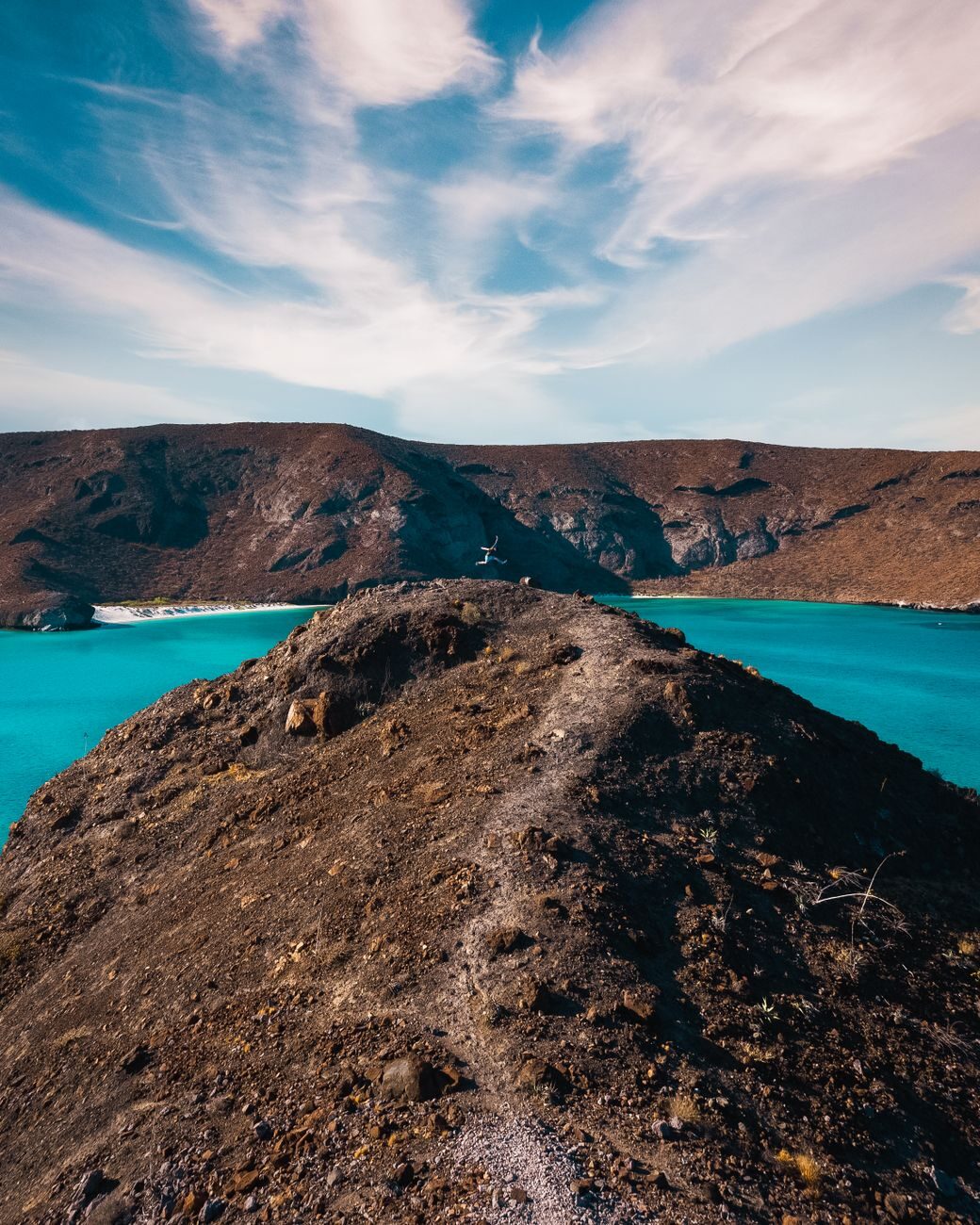
Balandra (near La Paz) is the postcard — a shallow lagoon the colour of a swimming pool, with a mushroom-shaped rock. It's now a protected area: you buy a digital wristband in advance (~125 MXN), there's a cap of 450 people per time slot, and no food vendors, so pack your own.
Playa Tecolote, next door, is the open-water version with beach clubs and the departure point for many whale-shark tours.
El Cerritos, south of Todos Santos, is the rare Pacific beach you can actually swim and learn to surf at — a sandy break with schools on the beach.
Médano, in Cabo, is the busy one — beach clubs, jet skis, and a vendor every ten metres. It's the only swimmable beach in Cabo San Lucas itself, which is why it's packed.
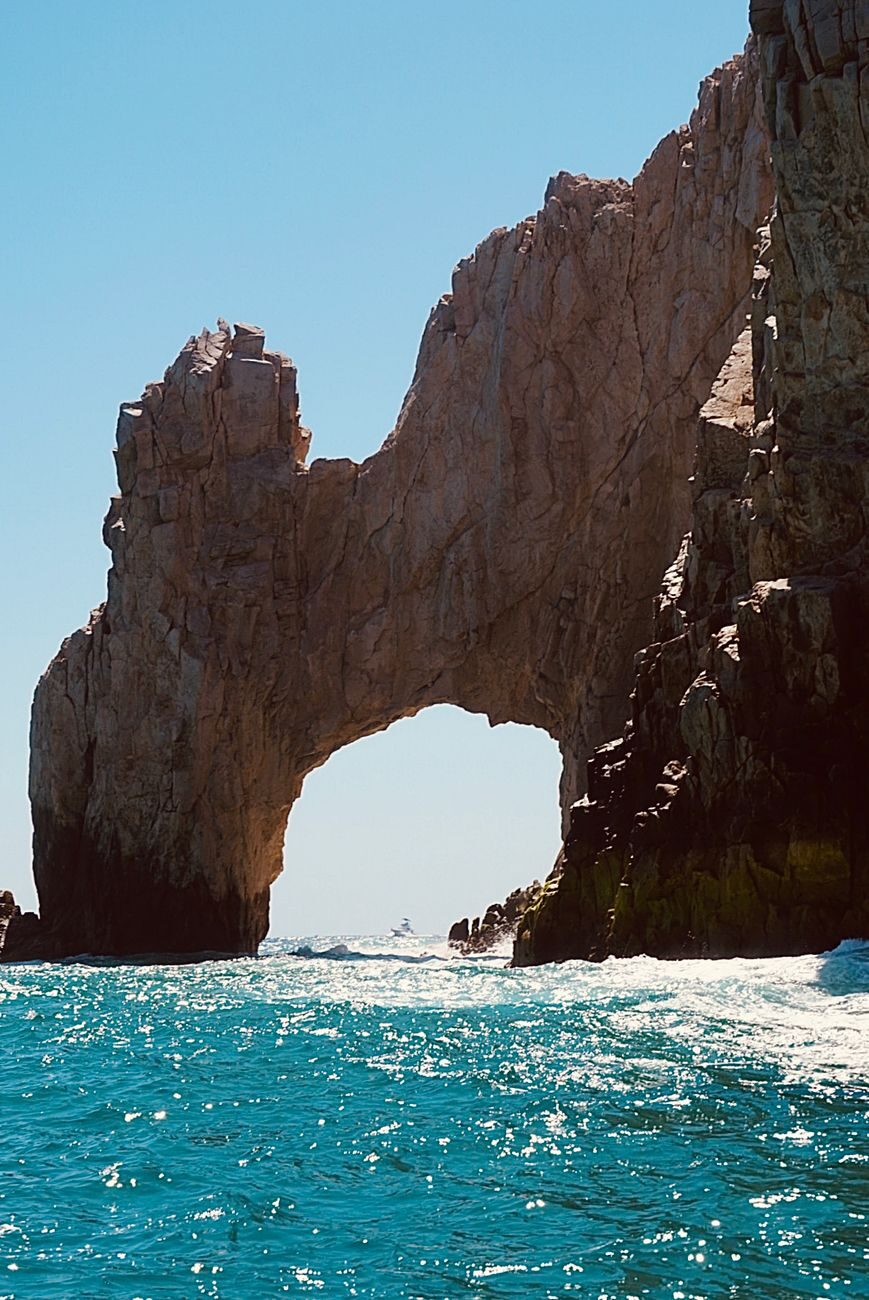
Playa del Amor ("Lovers Beach"), tucked under El Arco at Land's End, is reachable only by water taxi from the marina. Walk across the sand and the Pacific side ("Divorce Beach") is too rough to enter.
Ensenada Grande, on Espíritu Santo island off La Paz, is regularly called one of Mexico's best beaches — boat access only, no development, no crowds.
The towns are spread along a single highway and each one is a different holiday. Pick wrong and you'll think Baja Sur is just a resort strip.
Cabo San Lucas — the party capital. El Arco, the marina, the clubs, the sportfishing fleet. Fun for two nights, exhausting for seven.
San José del Cabo, 30 minutes east, is its quieter sibling: a colonial church on a real plaza, and a Gallery District that runs an art walk on Thursday evenings in season.
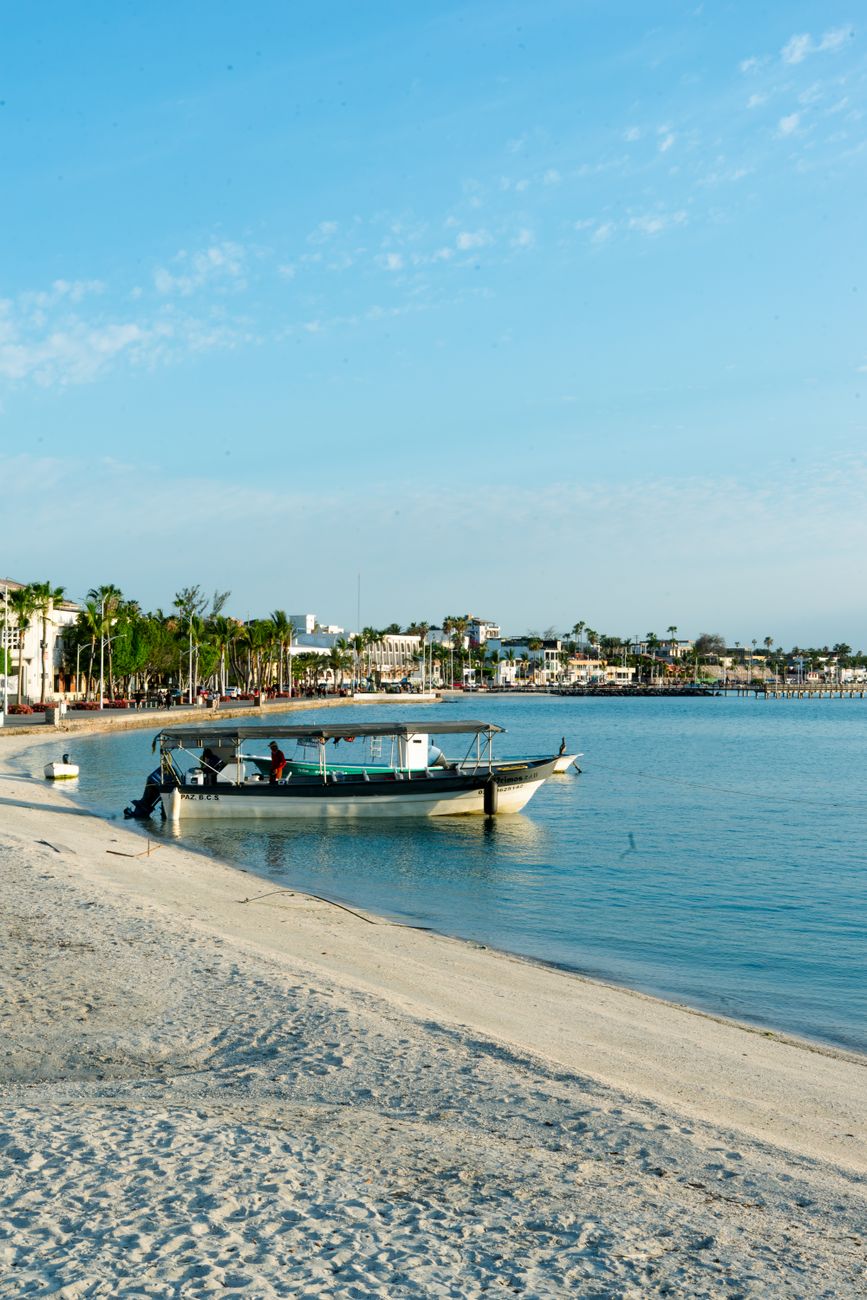
La Paz is the one most people skip and shouldn't — a working seafront city with the best sunset malecón in Baja, taco stands locals actually eat at, and the whale sharks offshore.
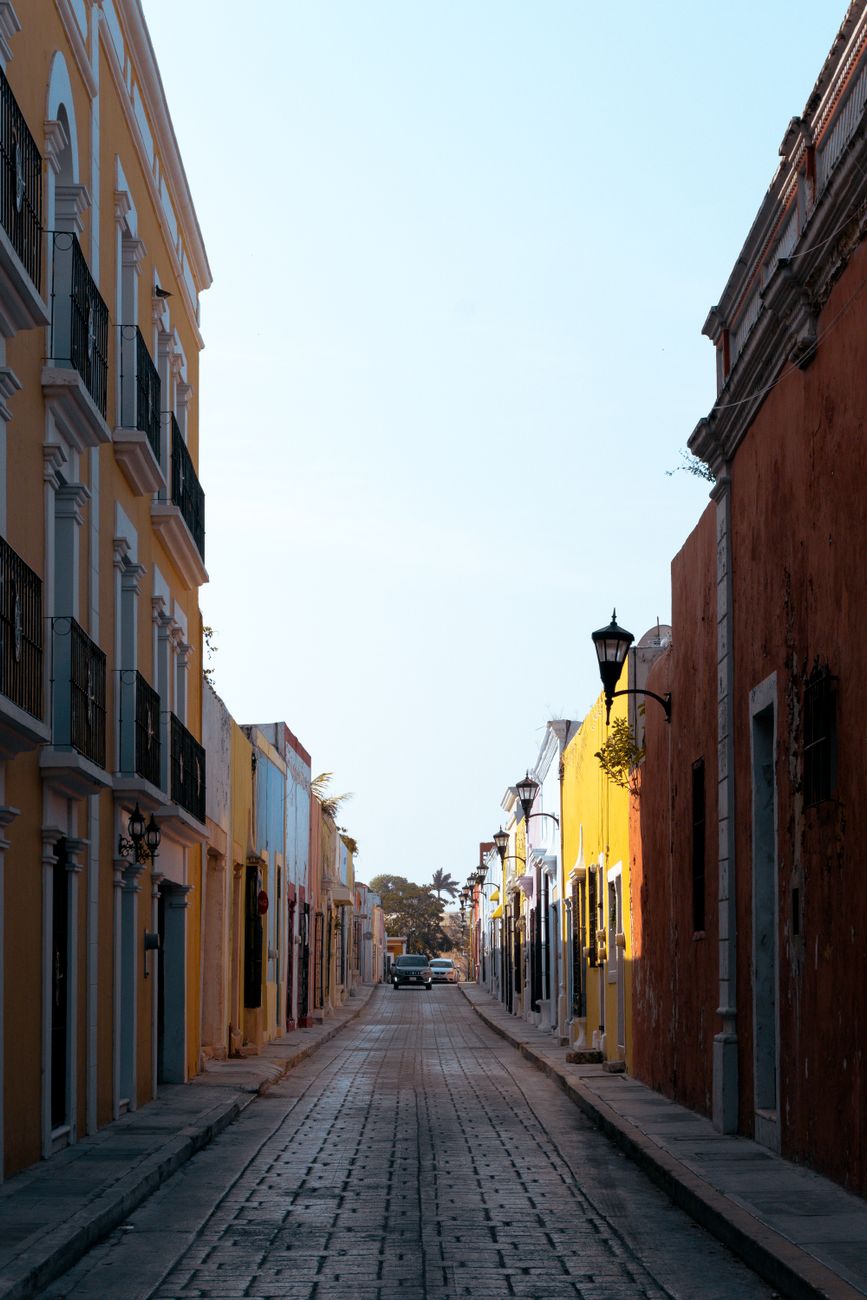
Todos Santos is the desert Pueblo Mágico: artists, boutique hotels, farm-to-table kitchens, and the Hotel California that every guide tells you is "the one from the Eagles song." It isn't — the band has no connection and once sued over it. Come for the galleries and the surf, not a myth.
Loreto, four hours north, is the old Spanish capital, built around the first of the peninsula's Jesuit missions, sitting between the Sea of Cortez and the Sierra de la Giganta. The BBC put it on its 2026 list and it still feels half-forgotten — cobbled streets, a mission church, and a marine park of empty islands offshore.
The reason to come — three world-class marine encounters within driving distance, all tightly regulated.
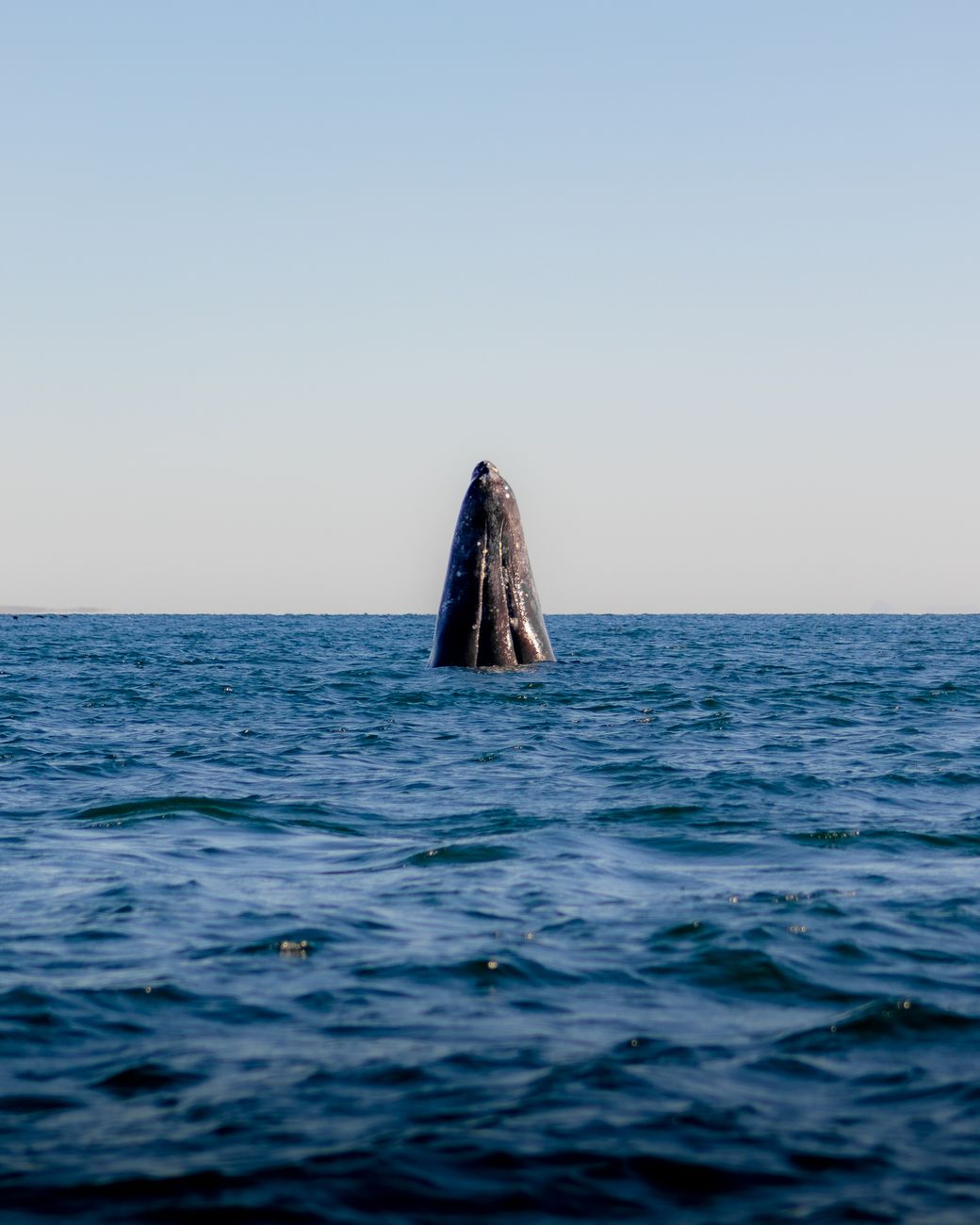
Gray whales (late Dec–mid Apr, peak Feb–Mar). In the Pacific lagoons — Magdalena Bay, reached via Puerto San Carlos, or San Ignacio — mothers raise their calves and, uniquely on earth, approach the boats to be touched. Trips are capped at four boats per whale. There's no zoo glass here; it's the rarest wildlife encounter in Mexico.
Whale sharks (roughly Nov–Apr) gather off La Paz to feed. Snorkelling only — scuba is illegal here — under a strict permit system with limited boats per slot, and a season that opens late or suspends entirely if shark counts drop (it has, several Februaries running). When it's on, you swim beside a 7-metre fish that ignores you completely.
Cabo Pulmo, a 2.5-hour drive north of Cabo, is a conservation miracle: a reef fished to collapse in the 1990s, then closed to fishing, now with fish biomass up over 400%. Expect bull sharks resting on the sand and tornados of jacks thick enough to dim the light. Dives run 45 minutes, no-touch, and the best sites close on rotation through the Sep–Dec high season. The village itself has three sandy streets and no ATM — come for the water, not the wifi.
Two bonus acts: mobula rays leap from the water by the thousand off the coast in May–June, and blue whales, the largest animals that have ever lived, pass Loreto in January–March.
Desert, mountains, and two oceans — there's more here than lying by a pool.
Baja Sur eats from the sea, simply. The best meals here cost a few dollars and come from a stand, not a tablecloth.

Baja fish taco — battered, fried, with crema and cabbage. It was more or less invented on this peninsula. Eat it from a stand, not a restaurant.
Almejas chocolatas — chocolate clams, named for the shell, not the taste — come raw with lime or grilled, best on the La Paz malecón.
Tacos de marlin ahumado — smoked marlin — are the local move when the fishing's good.
Damiana — a local desert herb turned into a liqueur some bars use instead of triple sec in a margarita. Order one once.
Where to eat: La Paz for the honest taco stands along the malecón; Todos Santos for the farm-to-table kitchens cooking from the valley orchards. Cabo has the high-end rooms (and the high-end bills) if that's the night you want.
No wine country here, before you ask — Baja's vineyards are in Valle de Guadalupe, far north in the other Baja state. Down here it's beer, margaritas, and damiana.
November to April is the season — dry, warm days, cool nights, and the entire wildlife calendar (gray whales, whale sharks, blue whales) overlapping. This is when you want to be here.
February–March is peak for the marine life, when the lagoons are full of calves and the whale-shark count is highest. The trade-off is Semana Santa crowds and higher prices around Easter.
May–June is the quiet sweet spot: the mobula rays are leaping, the heat hasn't fully arrived, water is warming, and prices dip before summer.
August to October is hurricane season — hot, humid, and genuinely disruptive. The official Pacific window runs 15 May–30 November, but the real risk is late summer; September is the month locals leave. Storms can close the airport for a day and cancel every boat trip.
Rent a car. Baja Sur is too big and too empty for anything else — the towns string along a single two-lane highway (Mex 1), and the best beaches and lagoons sit at the end of dirt roads no bus serves. Distances are real: Cabo to La Paz is 2 hours, Cabo to Loreto is 5.
Airports. Three serve the state — Los Cabos (SJD) is the big international hub, with smaller fields at La Paz and Loreto. Flying into the right one can save you half a day of driving.
One non-negotiable: buy Mexican car insurance. Foreign policies aren't recognised here, and driving without it after an incident is a serious problem. Fuel up when you can — stations thin out between towns, and stretches of Mex 1 have none.
Compare rental cars →Pick a base by what you're here for. Baja Sur is too long to "see from one hotel" — most people split between two.
Cabo San Lucas — resorts, nightlife, sportfishing. Loud and dollar-priced.
San José del Cabo — boutique hotels, art, calmer evenings, same airport.
La Paz — laid-back city, whale-shark base, far better value.
Todos Santos — design hotels, surf, desert quiet.
Loreto — missions, islands, and the slowest pace in the state.
The East Cape / Cabo Pulmo — off-grid, for divers who don't mind no wifi.
Baja Sur runs two economies. Los Cabos is priced for Americans on a long weekend — US-dollar menus, resort markups. Drive 90 minutes to La Paz or Todos Santos and you're back at normal Mexican prices.
Prices in 2026 USD. La Paz and Loreto run 30–40% under Los Cabos for almost everything.
Go if you want desert, two seas, and the best marine wildlife in Mexico — friendly gray whales, a reef that healed itself, whale sharks you can snorkel beside — with a rental car and a week to drive between them. Skip if you wanted an all-inclusive that never makes you leave the pool, or guaranteed swimming weather in September.
Found this useful? Share it.
One new way to travel. Every Thursday.
Not deals or destinations — methods. House sitting, night trains, repositioning cruises, and what each one really costs.
Ever thought of travelling this way?
House Sitting
A whole house and no rent, for looking after someone’s home while they are away. We spent the whole of covid on an estate in Portugal this way.
Read article →Overnight Ferries
Sleep on a ship that has to cross anyway. A two-berth cabin with a shower for less than a hotel room — and you wake up in another country.
Read article →Campervan Relocations
Rental companies need their vans driven back. Four berths, a kitchen and a shower for about a euro a night — and a country you would never have picked.
Read article →👇 Tap one, or just type