This is your destination guide for Portugal.
This is your destination guide for Algarve
📍 Part of PortugalSandstone cliffs, sea caves, charcoal sardines, and a wild surf coast in the west.

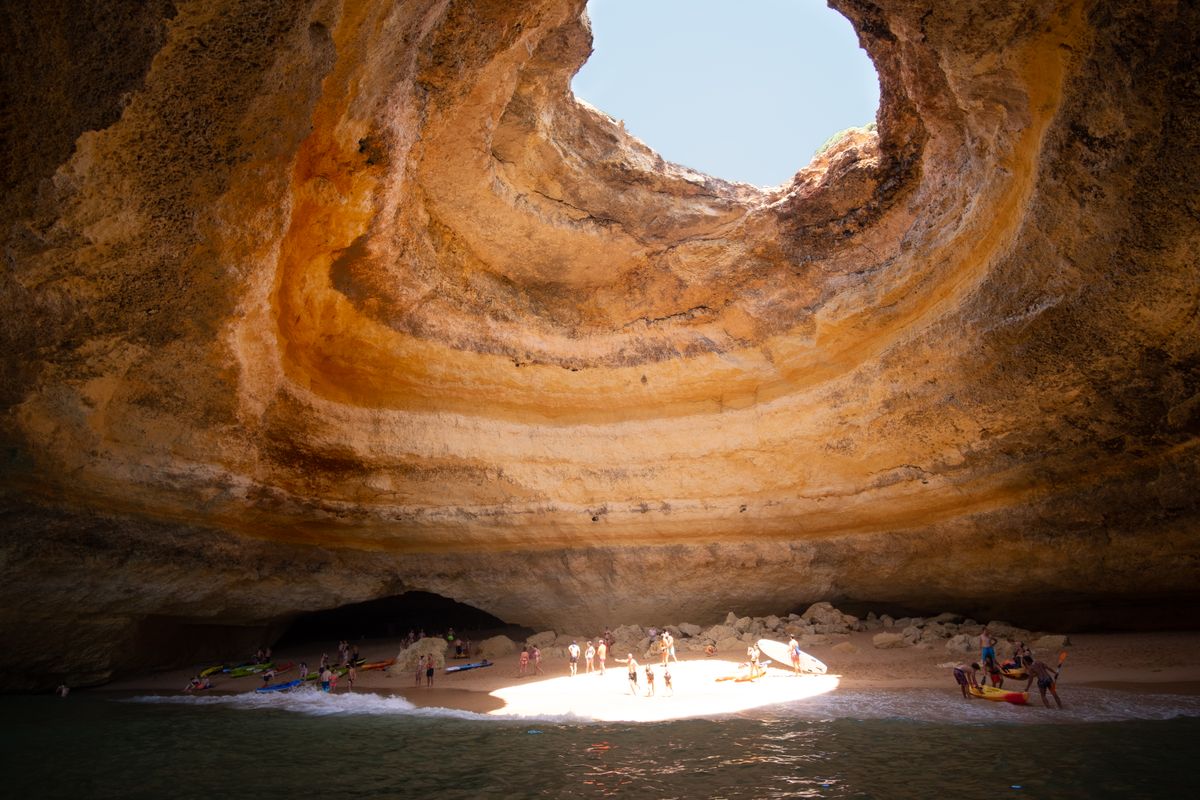
The reality: You're on a cliff path east of Carvoeiro and the ground in front of you just ends. Below, through a hole in the rock the size of a swimming pool, you're looking straight down into Benagil cave — sea sloshing onto a patch of sand you're no longer allowed to set foot on. A guided kayak slides in, gets its eight minutes, slides out. You keep walking. The next cove is empty.
That's the Algarve in one frame. The famous bits — Benagil, the Albufeira strip, the arch at Praia da Marinha you've already seen on a screen — are real, crowded, and a sliver of the whole. Drive twenty minutes in any direction and you hit a different version: lagoon islands you reach by ferry in the east, surf beaches with no road behind them in the west, a Moorish castle in red sandstone an hour inland at Silves.
Most people fly into Faro, taxi to a resort, and see one beach for a week. The Algarve rewards the opposite. Rent a car. Walk one cliff trail, eat sardines off a charcoal grill at a beach shack, drive out to where Europe ends at Sagres. The coast is only about 150 kilometres long — you can taste most of it in a week and still have lazy days left over.
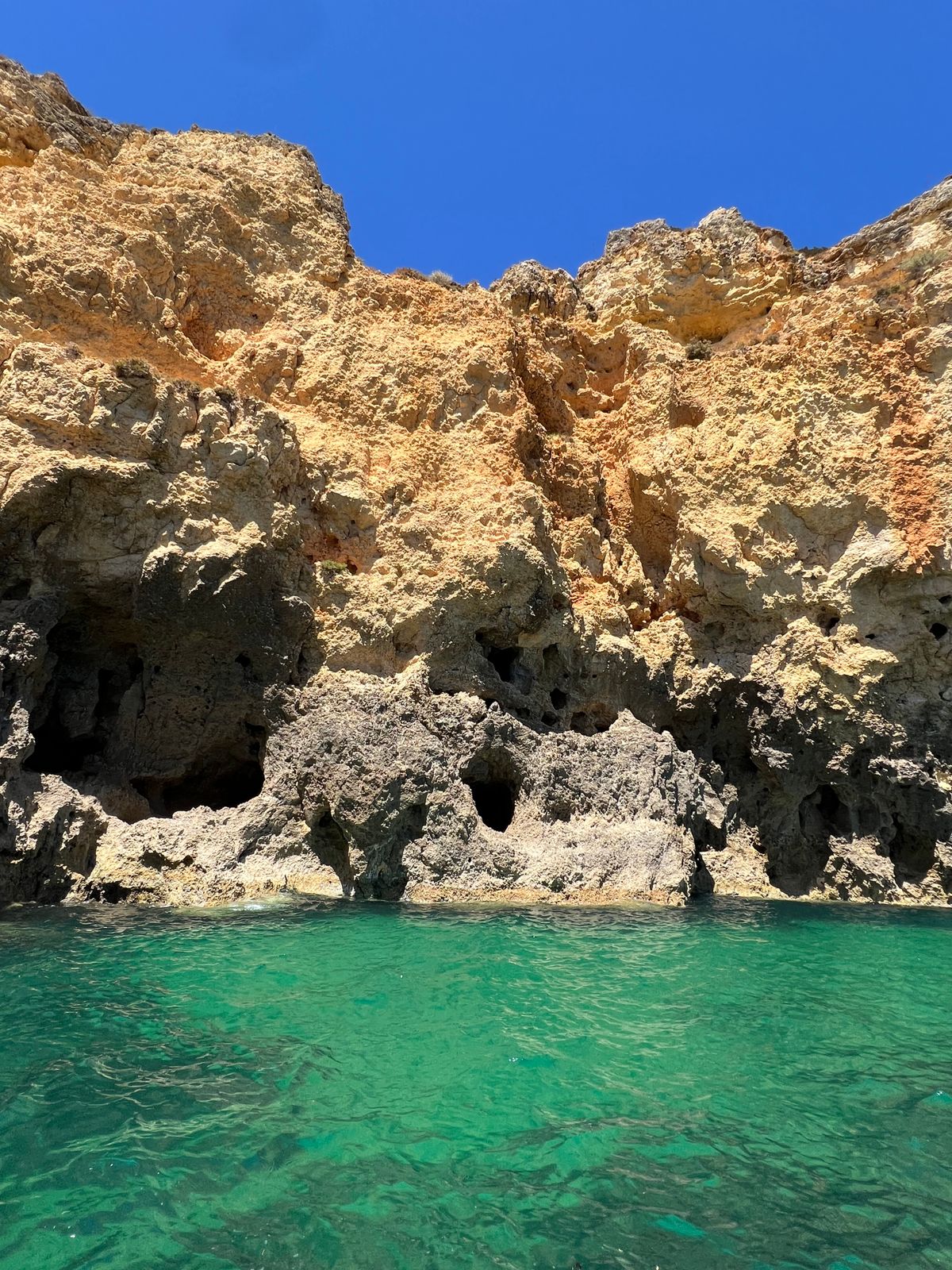
The Algarve runs in three moods. The centre (Lagoa to Albufeira) is the postcard: golden sandstone cliffs, sea caves, coves at the bottom of wooden staircases. The east trades cliffs for the Ria Formosa lagoon and long sandbar islands you can only reach by ferry. The west is wind, surf, and beaches with nothing built behind them.
Praia da Marinha — the one with the double sea-arch (the "M-rock"). The cliff-top view beats the beach itself. Free car park, but full by 9 AM in summer.
Praia de Benagil — the village beach next to the cave. You can swim and paddle off it, but the cave itself is guided-tour-only now (see Active, below).
Praia da Falésia — near Albufeira, a four-kilometre wall of ochre and orange cliff. Long enough to walk away from the crowds even in August.
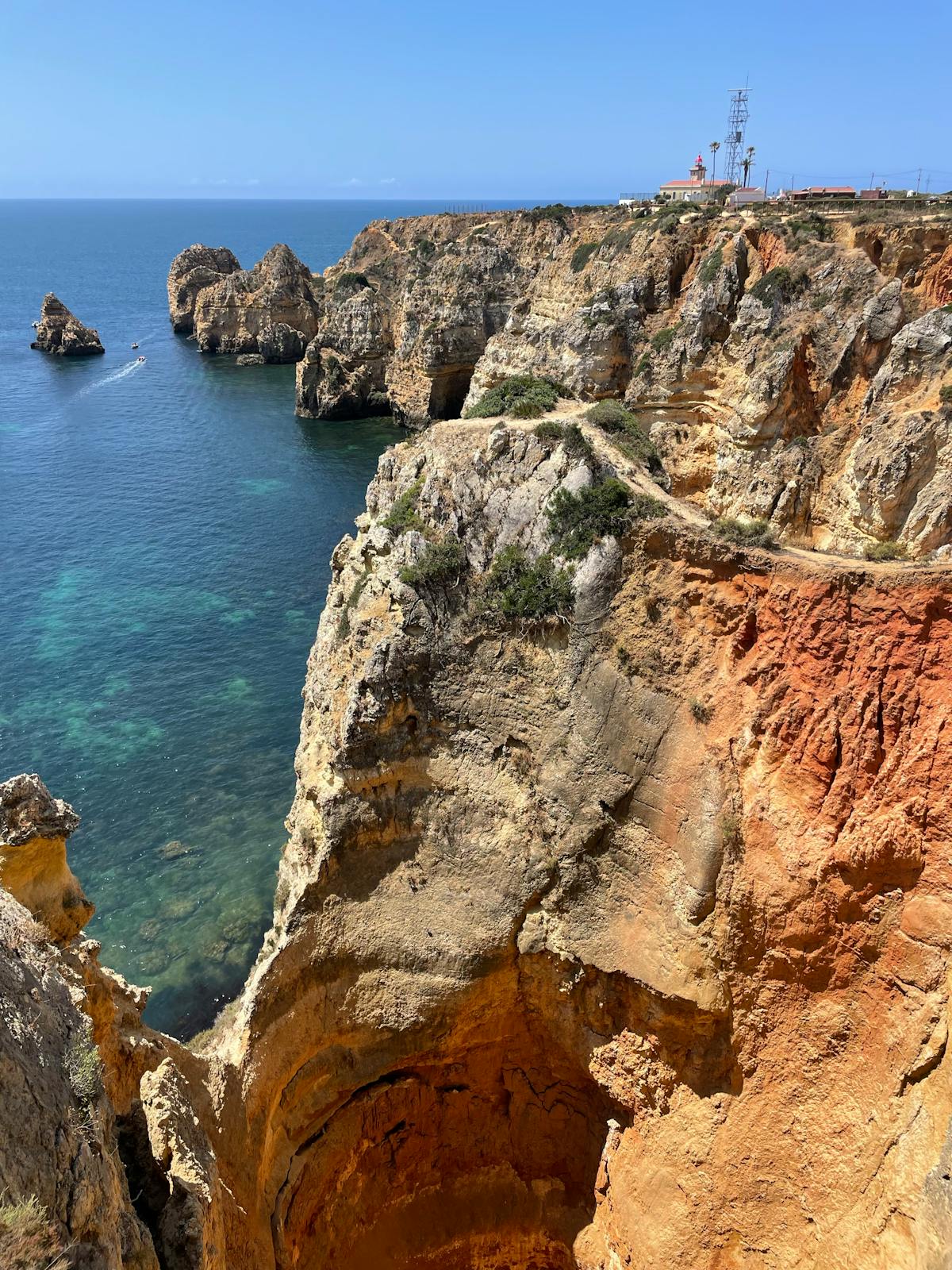
Praia do Camilo (Lagos) — 200 wooden steps down to a twin cove. Ponta da Piedade, ten minutes south, is the cathedral of sea stacks — best seen from a small boat.
Ilha de Tavira & Ilha da Culatra — the Ria Formosa sandbar islands in the east. Ferry only, which keeps them calm. Culatra still has a working fishing community and no cars.
Praia do Amado & Praia da Arrifana — the west-coast surf beaches. Atlantic, not Mediterranean — colder, wilder, and far emptier than the centre.
The Algarve's towns pull in different directions — lively west, quiet east, sleepy inland. Pick two or three and you've seen the range.
Lagos — the lively western base. A walkable old town inside the walls, a serious surf and boat-trip scene, and the cliffs of Ponta da Piedade on its doorstep. Where most kayak and cave trips start.
Tavira — the prettiest, in the quiet east. A Roman bridge over the Gilão river, tiled façades, and a slow rhythm the central coast lost. A ferry runs to its own island beach.
Silves — inland, the old Moorish capital. A red sandstone castle over a town that smells of orange groves. An easy half-day; almost no beach tourists make it up here.
Olhão — a working fishing town with cube-shaped houses and the best produce-and-fish market on the coast. The ferries to Culatra and Armona leave from here.
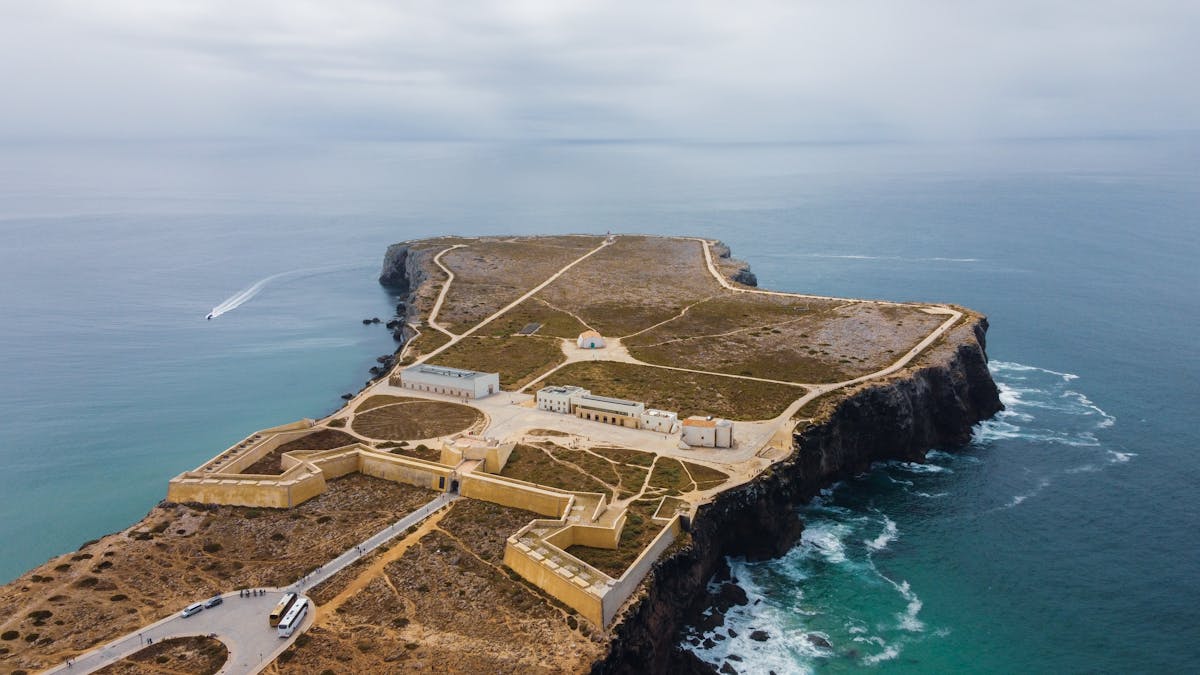
Sagres — the end of the line, literally. A windswept fortress on a clifftop, surf beaches, and Cabo de São Vicente twenty minutes on — the south-westernmost point of Europe.
Carvoeiro — a small cliff town built around a cove, central enough to reach the caves and the Seven Valleys trail on foot. Pretty, and it knows it.
Faro — most people pass through the airport and ignore the city. Mistake: there's a small walled old town and the easiest boat access to the Ria Formosa.
For people who want to move without it taking over the holiday.
The Algarve has a golf reputation that puts some travellers off and a surf scene most don't expect. Both are real, and there's a whole coast of cliff walking in between. You don't need to be sporty to enjoy any of it.
The Algarve eats off the grill and out of the sea. Less refined than Lisbon, more honest — and cheaper than the coast it sits on would suggest.
Cataplana — the signature: a domed copper pot of clams, prawns, and white fish (or pork and clams), opened at the table. Made for two, ordered for the ritual.
Sardinhas assadas — sardines grilled over charcoal, eaten with bread and a green-pepper salad. Best from June onward, when they're fat. Every beach shack does them.
Percebes — gooseneck barnacles, prised off the west-coast rocks at low tide. They look strange and taste like the sea. Not cheap.
Frango piri-piri — the village of Guia, near Albufeira, is the chicken pilgrimage. Whole bird, charred, brushed with chilli oil.
Sweet finish: the almond-and-egg sweets — Dom Rodrigo and morgado — are a Moorish inheritance, wrapped in twists of foil and sold all over the interior. And medronho, the local firewater distilled from arbutus berries up in the Monchique hills: strong, rough, and a point of pride.
Where to eat: look for a tasca away from the seafront — small, family-run, daily specials chalked up. Beach shacks (apoios de praia) do the freshest grilled fish, often cheaper than the town restaurants. Inland and in the fishing towns is where the prices and the cooking get honest.
Wine: don't come for it — the Algarve isn't a famous wine region — but the small DOC producers around Lagoa and Tavira have improved fast, and a tasting pairs well with a Silves or Monchique day inland.
May–June and September–October are the sweet spots. 22–28°C, sea swimmable, trails comfortable, towns alive but not jammed. This is where you want to be.
July and August — hot, packed, and the priciest. Central beach car parks fill before 9 AM, hotels double, the Strip roars. One honest note: the Atlantic stays bracing (around 19–22°C) even now. This isn't bathwater like the Med.
November to February — the Algarve's quiet trick. Mild, sunny days around 16–18°C, which is why the golf-and-walking crowd and a big British winter set come down. Citrus harvest, almond blossom in late winter, half the prices — but many beach restaurants close, and the west coast gets proper Atlantic weather.
March and April — wildflowers on the cliffs, cool sea, very few crowds. The best window for the coastal walks before the heat arrives.
Rent a car. The whole point is leaving the resort, and the best coves sit at the end of unsignposted lanes. Roads are good: the EN125 along the spine is slow and dull, the A22 motorway is fast but tolled electronically — sort the toll transponder with your rental so you don't get a surprise bill.
The Linha do Algarve train runs the length of the coast — Lagos, Portimão, Faro, Tavira, Vila Real de Santo António. Cheap, scenic, slow, and inland of most beaches. Useful for hopping between towns, useless for reaching coves.
Ferries to the Ria Formosa islands leave from Faro, Olhão, and Tavira — cheap and frequent in summer, thinner in winter. Buses (EVA/Vamus) connect the towns but thin out badly off-season and barely reach the smaller beaches.
Pick a base by what you're after. The Algarve is narrow enough to day-trip across — but each base has a different character.
Lagos — the western all-rounder. Old town, beaches, surf, nightlife, boat trips.
Carvoeiro or Lagoa — central and calmer. Cliffs, caves, and the Seven Valleys trail at the door. Good for families.
Albufeira — split personality. The Old Town is pleasant; the Strip is a different holiday. Pick your postcode carefully.
Vilamoura / Golden Triangle — marina, golf, and money. For a particular kind of trip.
Tavira — the quiet, authentic east, with its own island beach a ferry away.
Sagres — the wild end. Surf, big skies, end-of-Europe sunsets, and not much else (the point).
The Algarve is the affordable end of the Atlantic — cheaper than the Spanish costas, a different planet from the French Riviera — right up until you hit the Golden Triangle around Quinta do Lago and Vale do Lobo, where a coffee costs what a full lunch does in Tavira.
Prices in 2026 euros. Off-season knocks 30–40% off most of this — golf and the Golden Triangle excepted.
Go if you want Europe's most photogenic coastline within an easy drive — cliff-cave walks, sandbar islands you reach by ferry, charcoal sardines, and a wild surf-and-cliff west around Sagres. Skip if you came for the Albufeira Strip, or expect any of it to feel undiscovered in August.
Found this useful? Share it.
Still planning?
We don't stop at "here's the country." Real places to stay, what to do, apps that matter, even how to find someone to travel with — plus guides for whatever vibe you're after, from beach days to wine country to slow weekends. All up top. Spin for somewhere new when you're done with this one.