
🌟 What to Do & Local Tips
Explore experiences and tips to get the most from your trip in the Solomon Islands
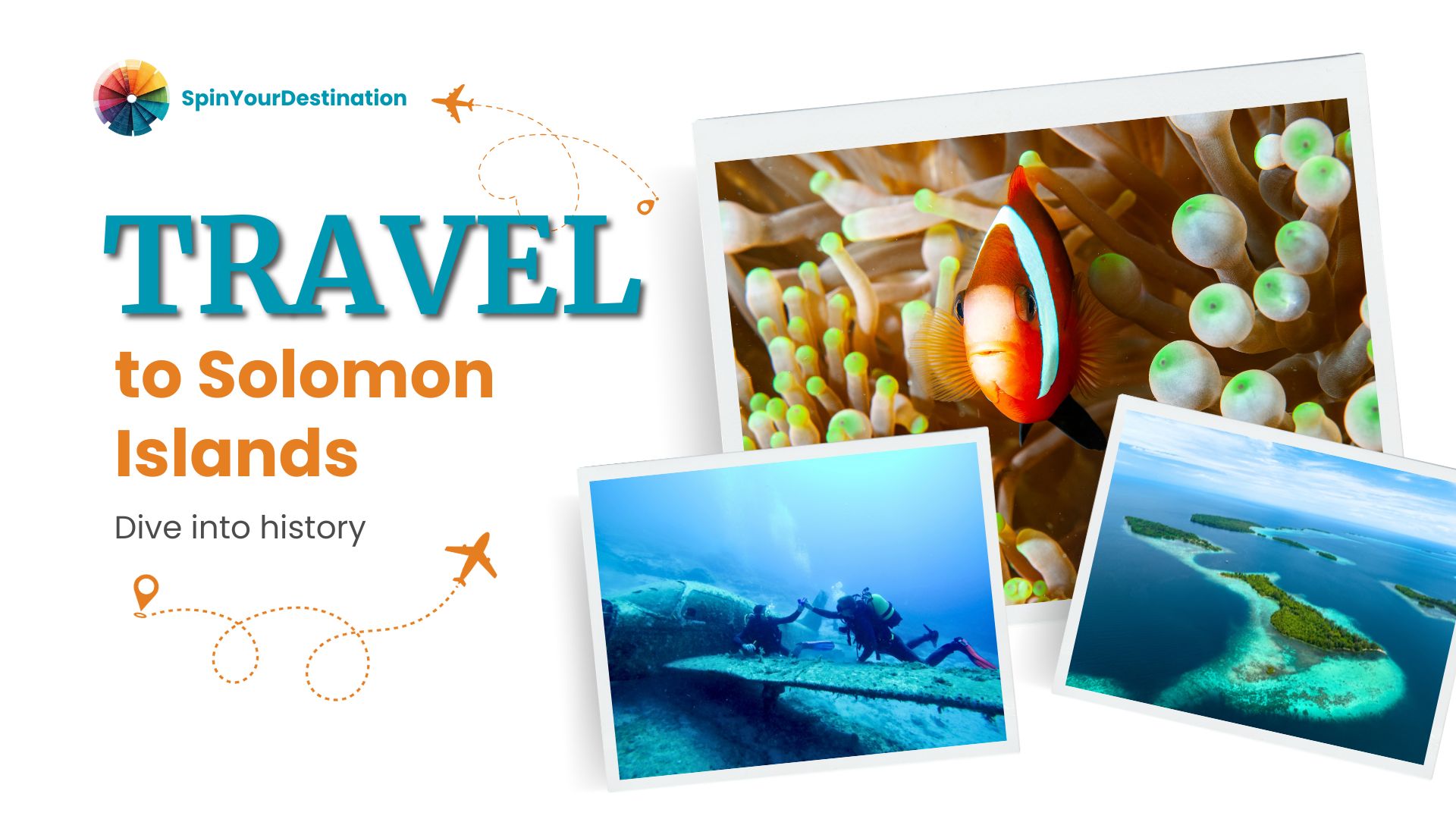
The dive boat throttles down. Below you, twelve meters of clear blue water, then the silhouette of a Japanese transport ship lying on its starboard side—140 meters of rusted steel, intact, draped in coral, a tank still sitting in the cargo hold. You roll backwards off the gunwale and start sinking towards the wreck. This is the Toa Maru, twenty minutes off Gizo, one of the world’s great wreck dives. Almost no one else is here.
The Solomon Islands sit at the rough overlap of three of the world’s great travel themes: WWII Pacific history, world-class diving, and one of the most intact traditional Melanesian cultures left in the South Pacific. Iron Bottom Sound off Honiara hides more than 50 wrecks from the Guadalcanal Campaign. The Western Province offers reefs and lagoons untouched by mass tourism. Malaita preserves shell-money economies older than European contact.
Tour operators are mostly small, locally owned, and built around the diving and lagoon trades. There are very few Viator or GetYourGuide options—most experiences are booked direct through the operator’s website or by email. Book early for May–October when most visitors come; expect very flexible Solomon Time scheduling year-round.
📍 Book Activities & Experiences
East Honiara WWII Battlefields Tour — Hapi Isles
The country’s most-booked guided tour, run by Hapi Isles Tours & Transfers (a locally-owned operator with 20+ years on Guadalcanal). Four and a half hours covering the Guadalcanal American Memorial, Japanese War Memorial on Mt Austen, Bloody Ridge, Betikama School War Museum, Tetere Beach’s rusted amtracks, and the Pagoda tunnel at Henderson Field. Air-conditioned vehicle, English-speaking guide, hotel pickup. 4.8 stars on Viator. From $125 per person.
More info →Hotomai Cultural Village Tour — Hapi Isles
Four-hour, 100% community-owned cultural experience east of Honiara. You start a fire the ancient way without matches, weave a small basket to take home, and join traditional dances and chants with the village. All proceeds go directly to Hotomai village for education and health. Run by Hapi Isles Tours; hotel pickup at 8:30am, returns mid-afternoon. From $188 per person.
More info →Toa Maru Wreck Dive — Dive Gizo
A 140-meter Japanese WWII transport lying on its starboard side 20 minutes off Gizo, in 7–37 meters of water. Cargo holds still hold a Type 21 tank, motorcycles, sake bottles, ammunition, medical supplies. Coral has colonized the wreck; turtles and rays patrol it. Dive Gizo, based at Gizo Hotel, runs two-tank trips with experienced local dive masters. Suitable for advanced open-water divers and above. From $150 for a two-tank dive.
More info →Skull Island Day Trip — Dive Gizo
Half-day boat trip from Gizo across Vona Vona Lagoon to Nusa Kunda, the tiny coral islet that holds the skulls of vanquished Roviana chiefs and warriors. Local guide explains the headhunting history and tribal etiquette; lunch at Zipolo Habu Resort on Lola Island. Calm-water boat ride, no scuba required, suitable for non-divers. Booked direct through Dive Gizo. Email enquiry for current rates.
More info →⭐ Top Experiences in the Solomon Islands
⭐ Guadalcanal American Memorial
The country’s most-visited WWII site, on Skyline Drive above Honiara. A 24-foot pylon and four directional walls list the lost US and Allied warships of the six-month Guadalcanal Campaign (Aug 1942–Feb 1943). Built by the American Battle Monuments Commission and the Guadalcanal-Solomon Islands Memorial Commission. From the same hilltop you look out over Iron Bottom Sound where more than 50 warships went down. Open daily, free, no booking required. Reach by taxi (around $13 round trip) or as part of any WWII tour.
More info →⭐ Dive Munda — Shark Point & the Cave of the Kastom Shark
Munda’s award-winning SSI Instructor Training Centre, based at Agnes Gateway Hotel, operates over 30 dive sites across New Georgia’s reefs and wrecks. Signature dives include Shark Point (wall drops over 600 meters, regular sightings of grey, blacktip, whitetip reef sharks plus hammerheads) and the Cave of the Kastom Shark. The seabed around Munda is littered with WWII Hellcat fighters, B-17 bombers, and Japanese landing craft. Nitrox available; visibility usually 25–40 meters. From $138 for a two-tank dive.
More info →⭐ Marovo Lagoon at Uepi Island Resort
Uepi Island Resort sits directly on the barrier reef of Marovo Lagoon—the largest saltwater lagoon on earth and on UNESCO’s tentative World Heritage list. Six beach houses, family-run since 1986, with the house reef five steps from your door. Snorkel-from-the-jetty visibility regularly 30+ meters; kayaks and paddleboards included. Accessible by float-plane or boat transfer from Seghe airfield. Full-board packages from around $438 per person per night including all meals and reef activities.
More info →⭐ Kolombangara Crater-Rim Trek
The two-to-three-day climb up Kolombangara’s near-perfect 1,770-meter volcanic cone is one of the most rewarding hikes in the South Pacific. Trekkers stay at Imbu Rano Lodge at 370m altitude (jointly managed by KFPL and KIBCA), then climb through cloud forest to Mt Tepalamenggutu (1,708m) and optionally on to Mt Veve (1,779m). Local KIBCA guides arranged on arrival. Self-catered. From $56 per night per person at the lodge; guide, porter, and $13 daily conservation fee additional.
More info →⭐ Langa Langa Lagoon & Shell Money — Taflabana
Boat tour from Auki out to the artificial islands of Langa Langa Lagoon, home of the asi (saltwater people) and the country’s last functioning shell-money economy. At Taflabana Guesthouse on Foueda Island, visitors watch the entire eight-step shell-money process from raw shell to finished tafuliae strand and can buy direct from the women who make them. A simple necklace takes three days; a 2.4-meter red-money strand takes two to three months. Booked direct via Taflabana, contact +677 7509509.
More info →⭐ Tetere Beach Amtracks — Open-Air WWII Museum
East of Honiara on Guadalcanal’s north coast, more than 40 American LVT amphibious landing vehicles sit abandoned in coconut groves where they were left in 1945. Trees grow through some of them; the rusted hulls have weathered to wafer thin. The site is privately tended by owner Sammy Basoe, who tells visitors about the Battle of Tenaru fought along this stretch of beach. Included on most full-day WWII tours from Honiara, including the Hapi Isles East Honiara itinerary.
More info →⭐ Sanbis Resort — Mbabanga Island
Boutique six-bungalow resort on a private island, 7 minutes by boat from Gizo airstrip. Each bungalow has its own stretch of beach, hot-water ensuite, and lagoon-view veranda. Solomon Watersports—the on-site PADI dive centre—runs daily trips to over 20 sites including the Toa Maru and Simbo Volcano. Maximum 12 guests on the island. No children under 12 in the Lodge section. Booked direct. From $275 per person per night including all meals.
More info →⭐ Peter Joseph WWII Museum — Munda
A private outdoor collection of WWII relics gathered by the late Barney Paulsen and his family from the surrounding New Georgia jungle—weapons, helmets, ammunition, aircraft fragments, personal effects—displayed in open thatched shelters at the family compound near Munda. The museum charges a small entry fee and family members guide you through the collection. Included on Dive Munda’s WWII day trips or visit independently from Agnes Lodge.
More info →⭐ National Museum & Cultural Centre — Honiara
The country’s best single introduction to its 63 indigenous languages, kastom traditions, and WWII history. Permanent exhibitions on shell money, ceremonial canoes, traditional music, and the Guadalcanal Campaign. Outside the building, kastom houses from different provinces have been reconstructed in a small open-air ethnographic park. Walking distance from the Honiara waterfront hotels. Modest entry fee, open Monday to Friday.
More info →⭐ Honiara Central Market — Guided Shopping Tour
The biggest, busiest market in the country, owned and run by the Honiara City Council. Around 1,000 stalls (about 80% of vendors are women) sell taro, cassava, kumara, sweet potatoes, betel nut wrapped in pepper-vine leaves, tropical fruit, smoked tuna brought in fresh at the seafront pier, and woven baskets and shell jewelry from every province. The whole market sits along Mendana Avenue with water frontage onto Iron Bottom Sound. Open six days a week, closed Sunday for Sabbath. Cash only, mostly in small denominations. Guadalcanal Travel Solomons (GTS) runs a 3-hour guided shopping tour from $55 per person (min 2 pax) that starts at the market and continues to Betikama Carvings and the National Cultural Museum—the easiest way to navigate the market with a local guide and buy direct from makers.
More info →⭐ Bloody Ridge (Edson’s Ridge) — WWII Historical Highlights Tour
The grass-covered hill where US Marines under Colonel Edson held off repeated Japanese assaults in September 1942 in some of the campaign’s heaviest fighting—the turning point that protected Henderson Field. A simple memorial stone marks the site. From the ridge you can read the entire landscape of the Lunga river plain. Guadalcanal Travel Solomons (GTS) runs the WWII Historical Highlights Tour direct from Honiara hotels: 3 hours covering Bloody Ridge, the American War Memorial, Mt Austin Japanese War Memorial, and Henderson Field. Daily 9am and 1pm. From $48 per person (2+ pax).
More info →⭐ Tenaru Waterfall Day Trip — Spacifica Travel
Full-day guided jungle hike to Tenaru Falls, plunging into a deep rainforest swimming pool east of Honiara. Spacifica Travel runs the day trip from your Honiara hotel: 1-hour 4WD transfer to Paraninju Inland Mountain Lodge, then a 30–45 minute (4km) medium-hard guided hike with a local village guide to the falls. Total trip around 7 hours, BYO swimsuit and lunch (or order at the lodge). Minimum 2 people. The trail crosses customary village land—a local guide is essential.
More info →📋 Booking Tips
- Dive lodges sell out for May–October: Uepi, Sanbis, Dive Munda, and Dive Gizo book heavily for the dry-season window. Confirm 4–6 months ahead, preferably direct by email—OTAs often don’t show real availability for these small operators
- Most experiences are booked direct, not on Viator or GetYourGuide: Viator has roughly one Solomon Islands product (the East Honiara WWII tour). For diving, cultural villages, and trekking, the operator’s own website or email is the only booking channel
- Carry cash: Most attractions, village entry fees, taxis, and small operators are cash only. ATMs in Honiara, Gizo, and Auki only; nothing on Marovo Lagoon, Kolombangara, or smaller islands. Stock up before leaving the main centres
- Reconfirm domestic flights and ferries: Solomon Airlines and the Auki ferries can shift on short notice for weather. Always reconfirm 24 hours before travel and plan a buffer day before international departures
- Get permission before visiting villages: All land in the Solomons is customarily owned. Showing up unannounced is taboo—your lodge or tour operator handles village introductions on your behalf and brings a small gift (rice, sugar, exercise books)
💡 Local Tips
Everything you need to know before you go
💡 Essential Info
SBD / Solomon Islands Dollar
Cards accepted only at the larger hotels in Honiara and Gizo (Heritage Park, Coral Sea, Solomon Kitano Mendana, King Solomon). Cash essential almost everywhere else—markets, villages, taxis, ferries, dive operators. ATMs in Honiara, Gizo, Munda, and Auki only. Stock up in Honiara before flying to outer islands.
English & Solomon Islands Pijin
English is the official language and is taught in schools, but everyday communication happens in Pijin, an English-based creole shared across the country. 63 indigenous languages are also spoken. Useful Pijin: Hao nao iu? (how are you?), Mi olraet (I’m fine), Tanggio tumas (thank you very much).
+677
Emergency: 999 (police), 911 (ambulance/fire in Honiara)
Our Telekom and Bmobile-Vodafone are the two main operators. SIM cards available at Honiara airport on arrival or at city shops. 4G covers Honiara, Gizo, Munda, and Auki; outer islands range from patchy to no signal at all.
Malaria risk in most rural areas—take antimalarials and use repellent dawn-to-dusk. Routine vaccines recommended; yellow fever certificate required only if arriving from an infected country. Dengue fever present. Tap water in Honiara hotels is generally safe; drink bottled or boiled water elsewhere. National Referral Hospital in Honiara is the main facility; serious cases evacuate to Brisbane.
🤝 Cultural Tips
💵 Tipping
Not part of traditional Solomon Islands culture but accepted in tourist contexts. Restaurants: rounding up the bill is enough. Tour guides: $13 to $25 for an excellent full day. Dive boats: $13 per guest per day is standard. Cash only.
👋 Greetings
“Hello” or “Halo!” in Pijin works everywhere. Try a few Pijin phrases: tanggio tumas (thank you very much), plis (please), orait (OK / fine). Greet strangers when you pass them in villages; silence is considered rude. Elders are always addressed first.
🍽️ Dining
Must-try: motu (fish or chicken steamed in banana leaves over hot stones), poi (mashed taro), kokorako (chicken in coconut cream), fresh tuna sashimi (cheaper than anywhere on earth), and lap-lap, baked cassava and coconut pudding. Etiquette: Many restaurants close on Sunday for the Sabbath; plan ahead, particularly outside Honiara.
👔 Dress Code
Villages and churches: Always cover shoulders and knees. Remove shoes before entering homes. No swimwear in villages or in town—a sarong over swimwear is essential when leaving the beach. Women carrying a lavalava (sarong) handles any unexpected village or church visit. Modest dress shows respect and opens doors everywhere.
🚨 Safety & Health
- The Solomons are generally safe for visitors, though petty theft happens around Honiara’s central market and waterfront after dark—leave valuables in the hotel safe and avoid walking alone at night in town
- Honiara’s Chinatown and the squatter settlements east of the city saw ethnic tensions in 2021—the situation has been calm since then but visitors should avoid political gatherings and follow local advice
- Malaria is present in most rural areas—take antimalarial prophylaxis (mefloquine or doxycycline are common) and use DEET-based repellent dawn-to-dusk
- Tropical sun at the equator is severe—SPF 50+ minimum, hat, and reapply every 90 minutes. The reef sunburn is the most common preventable injury
- Customary land rules apply to every village, beach, and reef—always have a local intermediary (your lodge or guide) introduce you before walking onto unfamiliar land or fishing on a reef
- Cyclone season runs November to April. Most cyclones come with several days’ warning—follow your accommodation’s guidance and the Solomon Islands Meteorological Service
- Earthquakes and tsunami risk are real—the Solomons sit on the active Pacific Ring of Fire. If you feel a strong tremor while at the coast, move inland or uphill immediately without waiting for an official warning
💰 Money-Saving Secrets
- Book outer-island lodges direct rather than via OTAs—Uepi, Sanbis, Agnes Lodge, and Dive Munda offer better packaged dive rates by email than show on third-party platforms
- Take the Auki Express ferry instead of the Solomon Airlines flight—$44 to $63 one-way vs. roughly double for the 30-minute flight
- Use Public Motor Vehicles (PMVs) around Honiara—$0.4 per route versus $6.3+ for a taxi over the same distance
- Eat at the central market or local food stalls—a plate of fish and taro for around $5.0 versus restaurant prices of $15+
- Buy dive packages of 5+ dives rather than per-dive—all the dive operators discount steeply (often 20–30%) for multi-dive bookings
- Bring your own snorkel gear and reef-safe sunscreen—rental gear at Honiara hotels is expensive and selection is limited
📅 Best Time to Visit
Wet Season (Nov–Apr)
Hot and humid, 26–32°C. Heavy rain in short bursts. Cyclone risk December–March.
✔ Pros: Lush green landscape, very few tourists, lowest rates at lodges, the country at its quietest
✘ Cons: Cyclone risk, sticky humidity, dive visibility reduced by river run-off, road washouts on Guadalcanal, ferries cancelled in rough seas
Dry Season (May–Oct)
Drier and cooler, 23–30°C. Southeast trade winds keep mornings calm, afternoons fresh.
✔ Pros: The best weather of the year, dive visibility at 30–40m, all operators active, ferry schedules reliable, Kolombangara trekking conditions ideal
✘ Cons: Peak prices, Uepi and Sanbis book out 6+ months ahead, July and August are the busiest weeks at the dive lodges
Shoulder (Apr & Nov)
Transition months, 25–30°C. Mostly dry with occasional heavy showers.
✔ Pros: Best value-for-weather window, dive visibility still excellent, fewer guests at the lodges, easier last-minute availability
✘ Cons: November can flip quickly into the wet season, late April can still bring squalls, some smaller operators have not yet reopened
Diving Peak (Jun–Sep)
Dry and stable, 24–29°C. Visibility regularly 30–40m on the major wrecks and reefs.
✔ Pros: Best visibility of the year on the Toa Maru and Munda walls, shark encounters at peak frequency, all dive resorts running full schedules
✘ Cons: Dive operators book out months ahead, peak pricing on lodges and live-aboards, premium Solomon Airlines fares for Munda and Gizo