
Mindful & Nature Paraguay
Your complete guide to Paraguay’s wilderness, stillness, tereré ritual, and nature immersion
Paraguay moves slowly. It is one of the few remaining countries in South America where you can sit under a tree for an afternoon without an app directing you to the next point of interest. The national practice of tereré—iced herbal mate prepared and shared communally from a single vessel—encodes a particular philosophy: nothing important needs to be rushed.
The Chaco to the west is one of the world’s last great wilderness areas—57% of the country, with jaguar, peccary, giant anteater, and more species of birds than Europe combined. Access requires a guide and advance planning. The experience is total: no phone signal, no other travellers, just the flat green and thorny immensity of the Gran Chaco and its nocturnal soundscape.
San Rafael National Park in the east is home to 430 bird species and one of the last Atlantic Forest fragments in existence. Itaipu reservoir has 340 kilometres of forested shoreline. The ruins at Trinidad admit no sound except wind, grass, and occasional birdsong. Paraguay’s mindfulness offer is simply the presence of places that have not yet been marketed.
Tereré—the practice of slowing down
Tereré is the cultural practice most deeply associated with Paraguay and its Guaraní heritage. It is a cold-water herbal infusion—different from Argentine hot mate—prepared in a guampa (vessel), drunk through a metal straw (bombilla), and passed in sequence among a group. UNESCO inscribed tereré on its Intangible Cultural Heritage list in 2020 as “practices and traditional knowledge of tereré in the culture of poha nana.”
The herbs (yérbá para tereré) are mixed fresh at preparation—a base of green Paraguayan yerba mate, cooled with ice or cold water from a thermos, combined with fresh herbs: mint, rue, cedrón, or medicinal plants chosen according to the occasion and the health needs of the group. The poha nana tradition (Guaraní for “good medicine plants”) gives each herb a specific purpose.
The ritual of passing the guampa—each person drinks until the water is exhausted, then returns it to the preparer (who refills from the thermos) rather than passing it on—creates a natural pause in conversation. You cannot hurry through tereré. The pace of the drink is the pace of the afternoon.
The most mindful way to encounter tereré is not through a formal cultural experience but by accepting naturally when offered—which will happen if you spend more than a day in Paraguayan company. Any extended wait, any roadside stop, any rural estancia will involve tereré. It is simply what people do when they sit together.
You can also buy the equipment: a good guampa (wooden or cow-horn), a stainless bombilla, and a selection of Paraguayan yerba and fresh herbs at Mercado 4 in Asunción. The medicinal herb vendors there will advise on which plants to combine and why. An afternoon at the herb market with this purpose in mind is one of Asunción’s most unusual and instructive experiences.
The Gran Chaco—South America’s last great wilderness
The Chaco occupies 57% of Paraguay’s territory west of the Paraguay River. It is the second-largest forest in South America after the Amazon—a vast, flat, semi-arid to dry-tropical landscape of thorn forest, palm savannahs, and seasonal wetlands. It contains more mammal species than anywhere in the Western Hemisphere except the Amazon.
The Chaco Seco (dry Chaco) of western Paraguay is jaguar country. A wildlife survey in 2021 identified one of the highest jaguar densities remaining on Earth in the Paraguayan Chaco. It also holds giant anteater, giant armadillo, peccary, tapir, maned wolf, marsh deer, and over 350 bird species—including the rare bare-faced ibis, Chaco eagle, and quebracho crested-tinamou.
Accessing the Chaco properly requires a specialist wildlife guide and a 4WD vehicle. The road surface deteriorates sharply west of Filadelfia after rain. Wild Expedition runs a 12-day small-group wildlife safari—vehicle and guide included throughout, night spotlighting for nocturnal species, accommodation at remote estancias. These are genuine wildlife expeditions into an area that sees very few foreign visitors.
The Mennonite colonies of Filadelfia, Loma Plata, and Neu-Halbstadt are the gateway to the Chaco and provide good accommodation and services. The contrast between the neat German-speaking agricultural towns and the raw wilderness surrounding them is itself a kind of mindfulness exercise—the question of what humans build in extreme places and why.
Night in the Chaco: the sky away from any light pollution in the Boreal summer (June–August) is one of the finest stargazing environments on Earth. The dry season (May–September) is the recommended time to visit—cooler temperatures (15–28°C), dried roads, and concentrated wildlife around remaining water sources.
San Rafael—the last Atlantic Forest
San Rafael National Park in the Itapúa and Caazapá departments of eastern Paraguay protects one of the last significant fragments of the Atlantic Forest—a biome that once stretched across the entire eastern seaboard of South America and has been reduced to less than 12% of its original area. What remains at San Rafael is among the most biodiverse forest remnants on Earth.
The park records over 430 bird species—including the vinaceous-breasted amazon (critically endangered), the helmeted woodpecker (endangered), the black-fronted piping-guan, and the russet-winged spadebill. The World Land Trust has identified San Rafael as one of its priority conservation areas globally. Paraguay Nature Foundation works with local communities to maintain access corridors.
A 3-day, 2-night guided tour with Wildlife Paraguay combines birding (dawn and dusk sessions), night walks for nocturnal mammals, and cultural engagement with the Mbya-Guaraní communities at the park’s edge. These are the most authentic wildlife and cultural immersion experiences available in eastern Paraguay.
The Atlantic Forest at San Rafael regenerates quickly where deforestation has been halted—secondary forest growth can be observed alongside primary forest, giving a clear sense of what conservation effort achieves over time. Orchid diversity in the park is extraordinary in late spring (October–November).
The park is 240 kilometres from Asunción via Route 1 south (the same road as the Jesuit missions). It is best combined with a Jesuit missions visit at Trinidad and Jesús on the same loop. A five-day route: Asunción—Encarnación (missions)—San Rafael (birding)—Asunción covers the best of southern Paraguay without repetition.
Jesuit ruins, Lago Ypacaráí, and contemplative travel
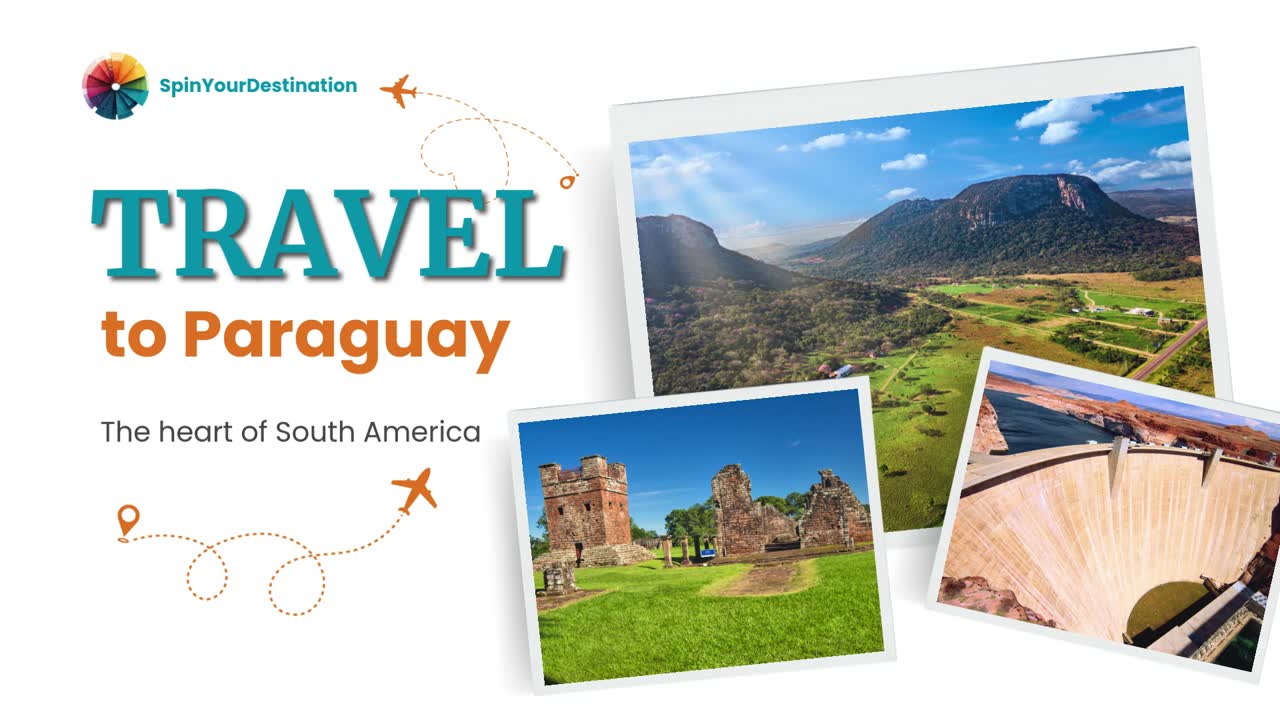
The Jesuit mission ruins at Trinidad are best experienced early morning or in the hour before closing. At these times the site is often empty: red sandstone walls, grass between the flagstones, a single bird calling from the bell tower, the wide sky over the Paraná plain. The experience requires nothing. Standing in the main nave of the 1740s church—roofless now, open to the sky—is as close as Paraguay gets to a secular contemplative space.
The ruins at nearby Jesús del Tavarangue have an additional quality—the unfinished church stands with Gothic arches open to the sky, abandoned mid-construction when the Jesuits were expelled in 1767. The incompleteness is not a loss; it makes the ruin into something else entirely: a monument to interrupted intention.
Lago Ypacaráí and the Colonia Independencia wine region (70 kilometres from Asunción via Route 1) offer a very different kind of mindful experience: slow mornings, wine tasting at family-run Brasilian-and-German-founded vineyards, a walk through the Cordillera hills, and the lake in late afternoon. Colonia Independencia’s wines—particularly the Moscatel and Tâmina varieties—are light and fruit-forward, suited to the subtropical climate.
The route: Asunción → San Bernardino (morning coffee at Hotel del Lago, boat on the lake) → Colonia Independencia (winery lunch) → Yaguaron (Franciscan church) → return Asunción. A single day, entirely self-driven on paved roads, covering lake, wine, and colonial history. This is Paraguay at its quietest and most restorative.
🌟 Top Mindful & Nature Experiences
🌿 Tereré—the ritual of shared slowness
UNESCO Intangible Cultural Heritage. Cold-water herbal mate shared in sequence, a social practice encoding friendship and presence. Best experienced naturally rather than formally—accept when offered in any Paraguayan social setting. Herb equipment available at Mercado 4, Asunción. More info →
🐾 Gran Chaco Wildlife Safari
A 12-day wildlife expedition into one of Earth’s last great wildernesses—jaguar, giant anteater, maned wolf, 350+ bird species. Wild Expedition runs small-group safaris with vehicle, bilingual naturalist guide, and estancia accommodation throughout. Dry season (May–September) only. More info →
🐦 San Rafael Birding—Atlantic Forest
430 bird species in one of Earth’s last Atlantic Forest remnants. 3-day guided tour with dawn/dusk birding sessions, night walks, and Mbya-Guaraní community visit. Critically endangered vinaceous-breasted amazon. 240km from Asunción. More info →
🏛️ Trinidad Ruins—contemplative morning
UNESCO Jesuit mission—empty most mornings, roofless 1740s sandstone cathedral open to the sky, Guaraní-carved Baroque friezes, grass between the flagstones. The most quietly moving place in Paraguay. 28km from Encarnación. More info →
🌅 Colonia Independencia—wine & hillside calm
Family wineries in the Cordillera hills 70km from Asunción, founded by German-Brazilian settlers. Moscatel and Tâmina varieties. Wine tasting, walks through subtropical vineyard landscape, lunch at a traditional estancia. Combine with Lago Ypacaráí in a day loop. More info →
🚣 Lago Ypacaráí Boat Tour
Boat across the lake of a century of Paraguayan love songs, 50km east of Asunción. Hotel del Lago (19th century), San Bernardino colonial town, sunset from Mirador Bella Vista. Civitatis half-day tour in English includes transfer from capital. More info →
💡 Insider Tips
- 🌿 The herbs for tereré at Mercado 4 are sold by women who have been mixing prescriptions since childhood. Tell them what you are feeling—physically or emotionally—and they will mix accordingly. This is not performance; it is functional traditional medicine. The resulting blend will be better than anything sold pre-packaged.
- 🐾 Book Chaco wildlife tours at least 3 months in advance for peak dry season (June–August). The region has no tourist infrastructure—your guide and vehicle are everything. Confirm that your operator has permits for the specific estancias and wildlife corridors they will use. Wild Expedition has these established.
- 🐦 For San Rafael birding: dawn starts at 5am in summer (October–January). The vineyard parrot and helmeted woodpecker are most active in the first two hours of light. A spotting scope is worth carrying even if you have binoculars—the canopy height in primary forest makes focal length critical.
- ⛰ The Cordillera hills are Paraguay’s highest terrain east of the Paraguay River, reaching only 300–400m elevation. Do not expect mountain walking—expect rolling subtropical hills with trails through forest and pasture. Colonia Independencia’s walks are well-marked and suitable for all fitness levels.
- 🌅 For a purely restorative evening in Asunción: walk the Costanera from the port southwards starting at 5:30pm. Tereré vendors, cycling families, the river going gold, the Palacio de los López turning orange. No entry fee. No arrangement needed. This is what Paraguay’s capital feels like from the inside.