
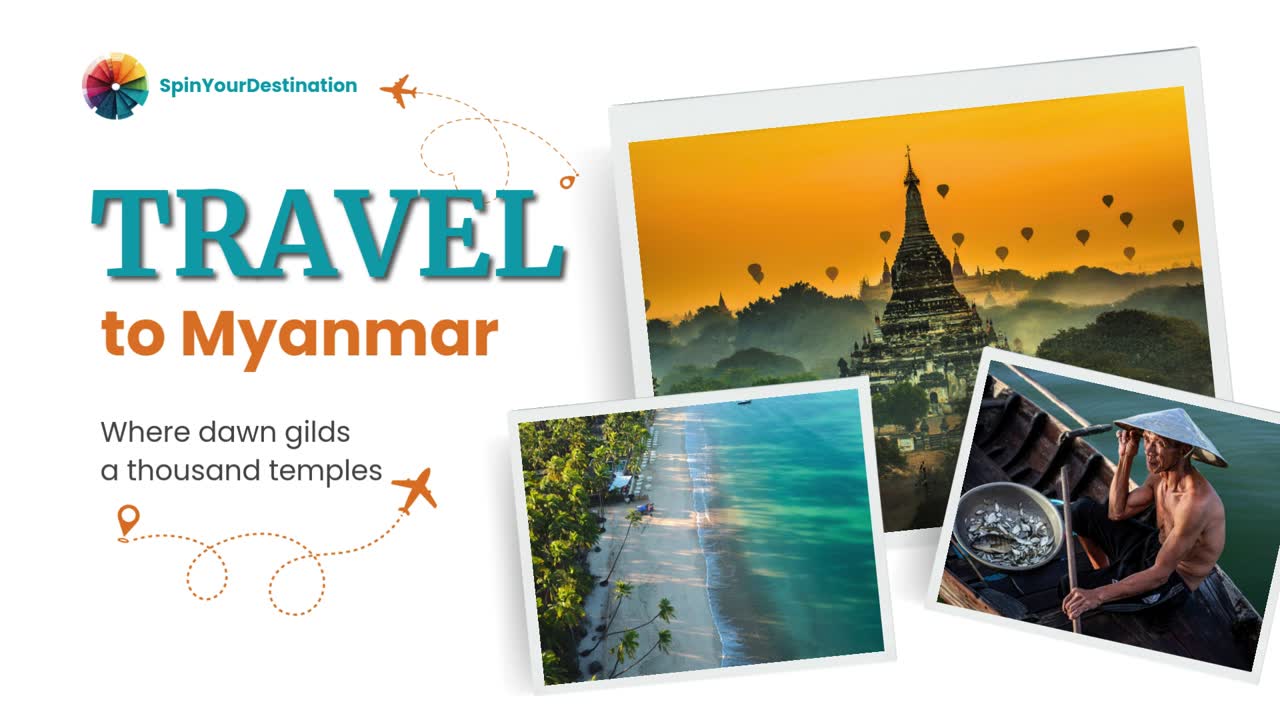
Cultural & Historical Myanmar
Your complete guide to ancient temples, Buddhist heritage, and cultural traditions
Shwedagon Pagoda glows at dusk—27 metric tons of gold leaf, thousands of diamonds crowning the top. Barefoot pilgrims circle clockwise. Monks chant. Incense smoke spirals upward. You're standing at Myanmar Buddhism's epicenter, 2,600 years after Buddha's hair relics were enshrined here.
Myanmar's cultural identity is Theravada Buddhism—90% of population, monasteries in every village, monks receive daily alms at dawn, gold pagodas dominate skylines. But history layered: Pyu city-states (1st-9th centuries), Bagan Kingdom unified Myanmar (9th-13th centuries building 10,000 temples), colonial British rule (1824-1948), military dictatorship (1962-2011). Architecture, language, customs reflect each era.
Key sites: Bagan (2,000+ temples, UNESCO), Shwedagon (Yangon's golden pagoda), Mandalay (last royal capital), Mrauk U (forgotten kingdom). Colonial architecture thrives in Yangon. Puppet theatres preserve ancient arts. Meditation centers teach Vipassana technique to foreigners.
Best visited November-February for comfortable temple exploration.
Bagan—the temple plain that defined a kingdom
Bagan was capital of Pagan Kingdom (849-1297 CE)—first kingdom to unify regions now called Myanmar. Kings built over 10,000 Buddhist temples, pagodas, and monasteries between 11th-13th centuries. More than 2,200 survive today.
UNESCO World Heritage Site (2019)—covering almost 3,600 structures across 42 square kilometers. Largest Buddhist empire of its time. Temples range from small brick shrines to massive Dhammayangyi (largest, never completed, mysterious sealed corridors).
Major temples: Ananda (whitewashed cruciform, most sacred), Shwesandaw (sunset views), Dhammayangyi (biggest, pyramid-like), Thatbyinnyu (tallest at 63 meters), Sulamani (intricate murals). Each has unique architecture, history, local devotion.
Temple climbing mostly banned now (preservation)—only designated viewpoints open. Sunrise/sunset crowds concentrate at permitted locations. But 2,000 temples mean exploring by e-bike finds empty corners.
Active worship continues—Bagan isn't museum but living religious site. Locals make offerings, monks meditate, festivals celebrate merit-making. Respectful behavior essential—remove shoes, cover shoulders/knees, don't pose disrespectfully on Buddha images.
Shwedagon Pagoda—Myanmar's golden heart
Shwedagon Pagoda dominates Yangon skyline—326 feet tall, covered in 27 metric tons of gold leaf, topped by 5,448 diamonds and 2,317 rubies. Built 2,600 years ago according to legend (historians say 6th-10th centuries). Most sacred Buddhist site in Myanmar.
Legend: Two merchant brothers met Buddha, received eight hair relics, brought them to Myanmar. Enshrined on Singuttara Hill. Over centuries, kings enlarged, gilded, added treasures. Current height achieved 15th century. British briefly occupied (1824-1852) but returned it.
Visit timing: Sunset best—golden stupa glows, crowds manageable (locals pray after work), cooler temperatures. Entry $10 foreigners. Shoes off entire complex. Four entrances (southern stairway main, longest, traditional).
Complex contains smaller shrines, pavilions, planetary posts (donate at your birth day-of-week post—Myanmar calendar uses 8-day week: Wednesday splits day/night). Pilgrims circle clockwise, pour water on Buddha images, light candles, meditate.
Photography allowed but respectful—no feet pointing at Buddha, no sitting higher than images. Monks welcome conversation (many practice English). Ask permission before photographing people.
Mandalay—last royal capital and living culture
Mandalay was Myanmar's last royal capital (1857-1885). King Mindon founded city, built palace, hosted Fifth Buddhist Council (1871). British conquered 1885, exiled King Thibaw, ended monarchy. Palace burned WWII—current structures are 1990s reconstructions.
Mandalay Palace sits center—square moated fortress, teak buildings (reconstructions), Lion Throne. Climb watchtower for city views. Museum shows royal artifacts. Best understood with guide (history complex).
Mahamuni Pagoda houses Myanmar's second-most sacred Buddha image—13 feet tall, covered in gold leaf applied daily by male devotees (women prohibited from approaching). Pilgrims press gold leaf onto body (except face). Over 6 inches thick now.
Traditional crafts thrive—gold leaf beating (Mandalay produces 90% of Myanmar's gold leaf), marble carving, wood carving, tapestry weaving. Workshops welcome visitors. Watch artisans, buy directly. Skills passed father-to-son for generations.
Mandalay Marionette Theatre preserves yoke thé (string puppet art) dating to 15th century. Nightly 8:30pm shows feature 27 traditional characters, live orchestra, folklore tales. $7-10 entry. Essential for understanding traditional performing arts.
Buddhist traditions—monks, meditation, and merit
Theravada Buddhism shapes daily Myanmar life—monks receive alms dawn (merit-making for donors), pagodas dominate villages, children often ordain temporarily (especially boys, some for life), meditation centers teach foreigners.
Monk alms rounds (6-7am)—locals wait on streets with food. Monks walk barefoot, silent, receiving without thanks (giving is donor's privilege). Tourists can observe (respectfully distant) but participate only if Buddhist or with monastery permission.
Meditation retreats: Myanmar developed Vipassana (insight meditation) technique worldwide. Mahasi Sasana Yeiktha (Yangon), Dhamma Joti (Yangon), Panditarama (Yangon) offer 10-day silent retreats for foreigners. Free (donation-based). Strict rules (no phones, no talking, vegetarian meals).
Pagoda festivals celebrate full moons—Thadingyut (October, end of Buddhist Lent), Tazaungdaing (November, Festival of Lights). Locals light candles, donate to monks, visit pagodas en masse. Joyful, communal, visitor-welcoming.
Etiquette at religious sites: shoes off always (socks permitted), shoulders/knees covered, don't point feet at Buddha images, don't sit higher than Buddha, ask permission before photographing monks/worshippers.
🌟 Top Cultural Experiences
🏛️ Bagan Temple Exploration
2,000+ temples across plains. E-bike rental $5-10/day. Visit Ananda, Dhammayangyi, Shwesandaw. Sunrise/sunset at permitted viewpoints. Full day exploring. Entry fee $25 (covers all temples). November-March best. More info →
✨ Shwedagon Sunset Visit
Golden pagoda glowing at dusk. Yangon's must-see. $10 entry. 326-foot gilded stupa, diamond-topped. Barefoot pilgrims circling. Sunset 5-6pm best. Allow 2 hours. Southern stairway entrance traditional. More info →
🎭 Mandalay Puppet Theatre
Traditional yoke thé performance. 27 puppet characters, live orchestra, folklore tales. Nightly 8:30pm. $7-10 entry. 66th Street theater. Behind-scenes tour possible. Ancient art preserved. Essential cultural experience. More info →
🏺 Mandalay Craft Workshop Tour
Visit gold leaf beating, marble carving, tapestry weaving workshops. Watch artisans, learn techniques, buy directly. Half-day $20-30 with guide. Skills centuries old. Father-to-son training. Authentic, not tourist show. More info →
🙏 Monk Alms Giving (Dawn)
Watch monks receive alms 6-7am. Stand respectfully distant. Don't block path. Villages/neighborhoods best (not tourist-staged). Free. Yangon, Mandalay, Inle Lake areas. Silent, barefoot, traditional. More info →
🧘 Vipassana Meditation Retreat
10-day silent meditation at Mahasi (Yangon) or other centers. Free (donations). Strict rules—no phones, no talking, vegetarian. Buddhist or curious welcome. Life-changing for many. Book months ahead. More info →
💡 Insider Tips
- 👟 Shoes off constantly—temples, pagodas, monasteries, meditation centers require barefoot. Bring slip-on shoes. Socks permitted (but hot). Ground hot midday—go early morning or late afternoon.
- 👔 Dress modestly at religious sites—shoulders/knees covered always. Lightweight long pants/skirts essential. Some sites provide longyis (sarongs) for uncovered visitors. Better to bring appropriate clothes.
- 📸 Ask permission before photographing people—especially monks, nuns, pilgrims praying. Many happy to pose but ask first. Never photograph during ceremonies without asking. Respect sacred moments.
- 💰 Donations expected at some sites—Shwedagon included in entry. Others donation boxes. No fixed amount. Local custom: small bills (1,000-5,000 kyat). Give if site meant something. Don't stress amounts.
- 🕐 Timing avoids crowds—Shwedagon sunset busy but beautiful. Bagan sunrise crowded at permitted viewpoints. Go off-season (April-May, September-October) for fewer tourists but hot weather trade-off.