
✈ How to Get There
Getting to and around Micronesia
✈ Flying to Micronesia
Main International Airports
Pohnpei International Airport (PNI) — The most accessible entry point. Located near Kolonia, the commercial capital of the Federated States of Micronesia. Regular United Airlines flights from Guam and Honolulu.
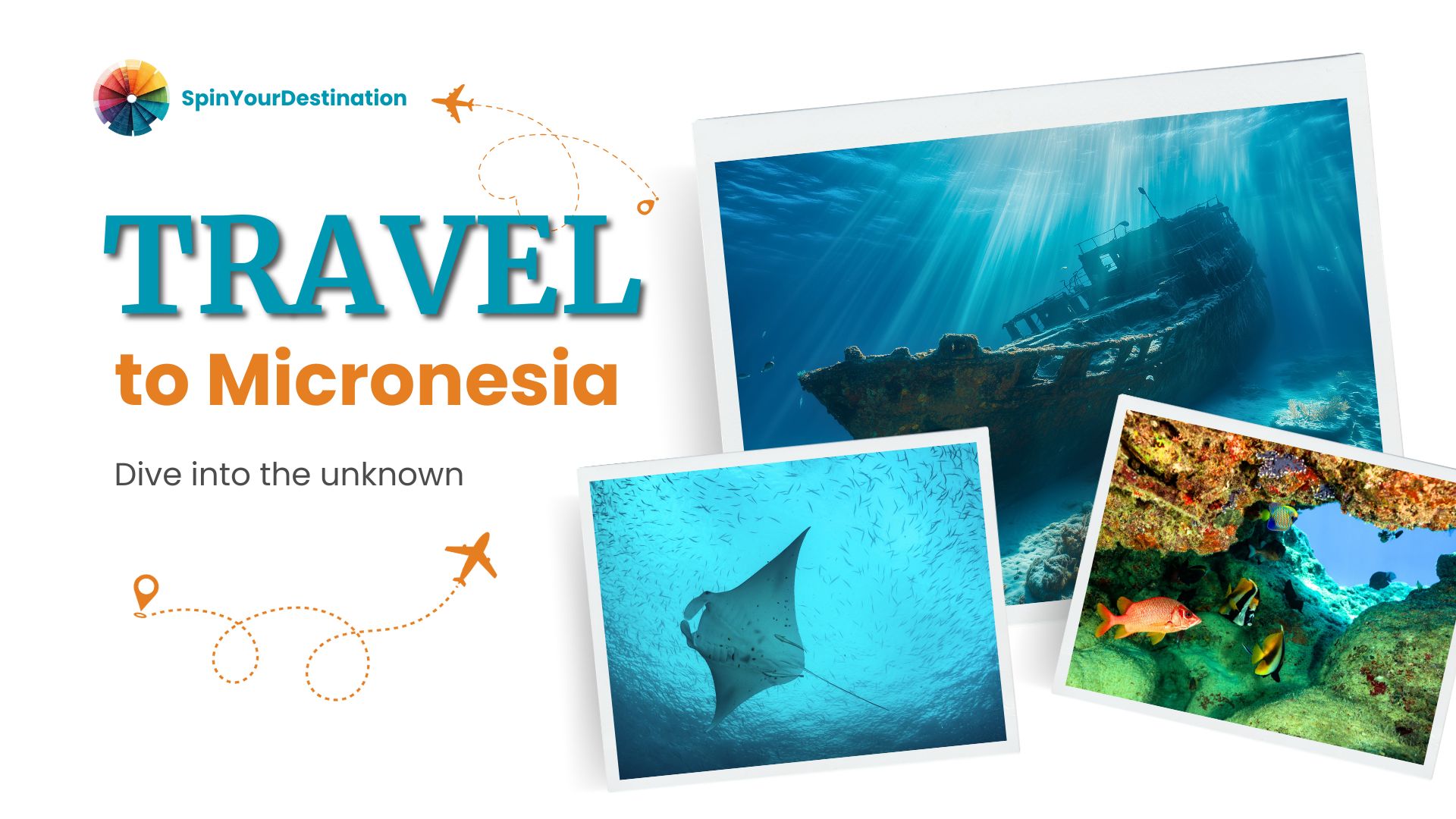
Chuuk International Airport (TKK) — Gateway to the world-famous Chuuk Lagoon wreck diving. Located on Weno island. Served by United Airlines Island Hopper route.
Other International Airports:
- Yap International Airport (YAP) — Gateway to Yap’s manta rays and stone money culture. Regular United flights from Guam.
- Kosrae International Airport (KSA) — Served by United Airlines on the Island Hopper route. Remotest and least-visited main island.
💡 Island Hopper Tip
United Airlines operates the legendary “Island Hopper” route (UA154/UA155) connecting Honolulu–Majuro–Kwajalein–Pohnpei–Chuuk–Guam three times per week (Mon, Wed, Fri). You can purchase a through ticket and stop over on multiple islands—an extraordinary way to see Micronesia.
🌄 Routes to Micronesia
From North America
United Airlines flies Honolulu–Pohnpei and Honolulu–Chuuk on the Island Hopper route. Alternatively, fly Honolulu–Guam (United, daily) then connect to any FSM island from Guam. Guam is the main regional hub. Journey: 12–16 hours from US West Coast including connection.
From Asia & Australia
Fly to Guam from Tokyo, Osaka, Seoul, Hong Kong, or Manila (2–5 hours), then connect onward to any FSM island with United Airlines. Guam has daily or near-daily flights to all four main FSM islands. Journey from Tokyo: around 6–9 hours total.
From Europe
No direct routing exists. Best option: fly to Frankfurt–Tokyo–Guam–FSM island, or London–Los Angeles–Honolulu–Micronesia. Journey time: 24–36 hours including connections. Micronesia is genuinely remote—plan accordingly.
⛴ Getting Between Islands
There are no passenger ferry services between the four main island groups. Chuuk, Pohnpei, Yap, and Kosrae are separated by hundreds of kilometres of open Pacific. The only way to move between them is by air.
United Airlines Island Hopper connects all four islands on Mon/Wed/Fri. If you want to visit multiple islands, plan your itinerary around this schedule—or book separate legs through Guam.
Within each island group, small inter-island boats and charter flights serve outer atolls and smaller islands. These run infrequently—ask locally and plan with flexibility.
Flights book out fast—especially around dive season and holidays. Book all inter-island segments before you arrive.
Field Trip Ships (government vessels) occasionally serve outer atolls but operate on irregular schedules and are not reliable for tourism.
🛂 Visa & Entry Requirements
US citizens and nationals can enter Micronesia (FSM) without a visa and stay indefinitely under the Compact of Free Association. No passport required if arriving from the US—a US government-issued ID is sufficient.
Most other nationalities can enter visa-free for stays of up to 30 days for tourism. Citizens of the European Union, UK, Australia, Canada, Japan, and many other countries are included. Check your specific passport requirements before booking.
Check visa requirements for Micronesia →🚗 Getting Around on Each Island
Rental Cars
Rental cars are available on all four main islands and are the recommended way to explore—especially Pohnpei, which has extensive roads reaching waterfalls, Nan Madol, and the highland areas. Expect basic Japanese vehicles. A 4WD or high-clearance vehicle is useful on Pohnpei’s rougher tracks.
Taxis
Taxis are available on all main islands and are affordable by Western standards. There are no meters—agree on the fare before getting in. Drivers often double as informal guides and know every corner of their island. USD only.
Diving Boats
On Chuuk, most travel is by dive boat. Dive operators run daily trips to wrecks in the lagoon. Live-aboard boats offer access to outer reef sites and more remote wrecks. On Yap and Kosrae, dive operations similarly provide boat-based transport to dive sites.
🚗 Car Rental Tip
Book rental cars through your hotel or a local operator—there are few international rental company offices on FSM islands. Your accommodation can arrange this in advance. An international driving permit is recommended alongside your home licence.
📍 Local Transport Notes
There is no formal public bus network on any FSM island. Informal share taxis (jitney-style minivans) operate on some routes on Pohnpei between Kolonia and outlying areas, but schedules are irregular.
Practical Tips
- Carry USD cash: Most local transport, small shops, and outer island services are cash-only
- Agree fares beforehand: No meters anywhere—always confirm price before getting in
- Walking is practical: Kolonia (Pohnpei) and Colonia (Yap) town centres are small enough to walk
- Cycling: Yap’s Colonia is flat and bikeable. Ask your accommodation about bicycle hire.
- Dive operators handle logistics: On Chuuk, your dive operator transports you everywhere that matters
🚙 Renting a Car
Recommended for exploring Pohnpei’s interior—roads to the Nan Madol causeway, Kepirohi Waterfall, and the cloud forest are best reached independently. Yap is compact but a car allows you to visit all stone money sites in a day.
Things to Know
- Drive on the right side of the road
- Road quality varies—some tracks require 4WD on Pohnpei
- Fuel stations exist in main towns; fill up before heading to remote areas
- Roads in Weno (Chuuk) are limited—a car is less essential there
- No major international rental brands—book through your hotel or dive operator
⚠ Road Conditions
Heavy rainfall (Pohnpei averages over 7,500mm per year) can make unpaved tracks muddy and impassable. Check conditions locally before driving off main roads, and allow extra time.
🚗 Compare Rental Cars
Compare and book through international platforms for the best rates:
💰 Money-Saving Tips
- Book Island Hopper stops strategically: A multi-stop ticket is cheaper than booking each leg separately
- Fly via Guam: Guam often has more competitive fares than routing through Honolulu
- Book flights early: Seats on FSM routes are limited and sell out months in advance
- Dive packages: Most Chuuk dive operators offer accommodation+diving packages that are cheaper than booking separately
- USD everywhere: No currency exchange needed for US travellers—same currency throughout FSM