This is your destination guide for Austria.
This is your destination guide for Hallstatt
📍 Part of AustriaA village of 700 people and a million visitors, wedged between a mirror lake and the oldest salt mine on earth.
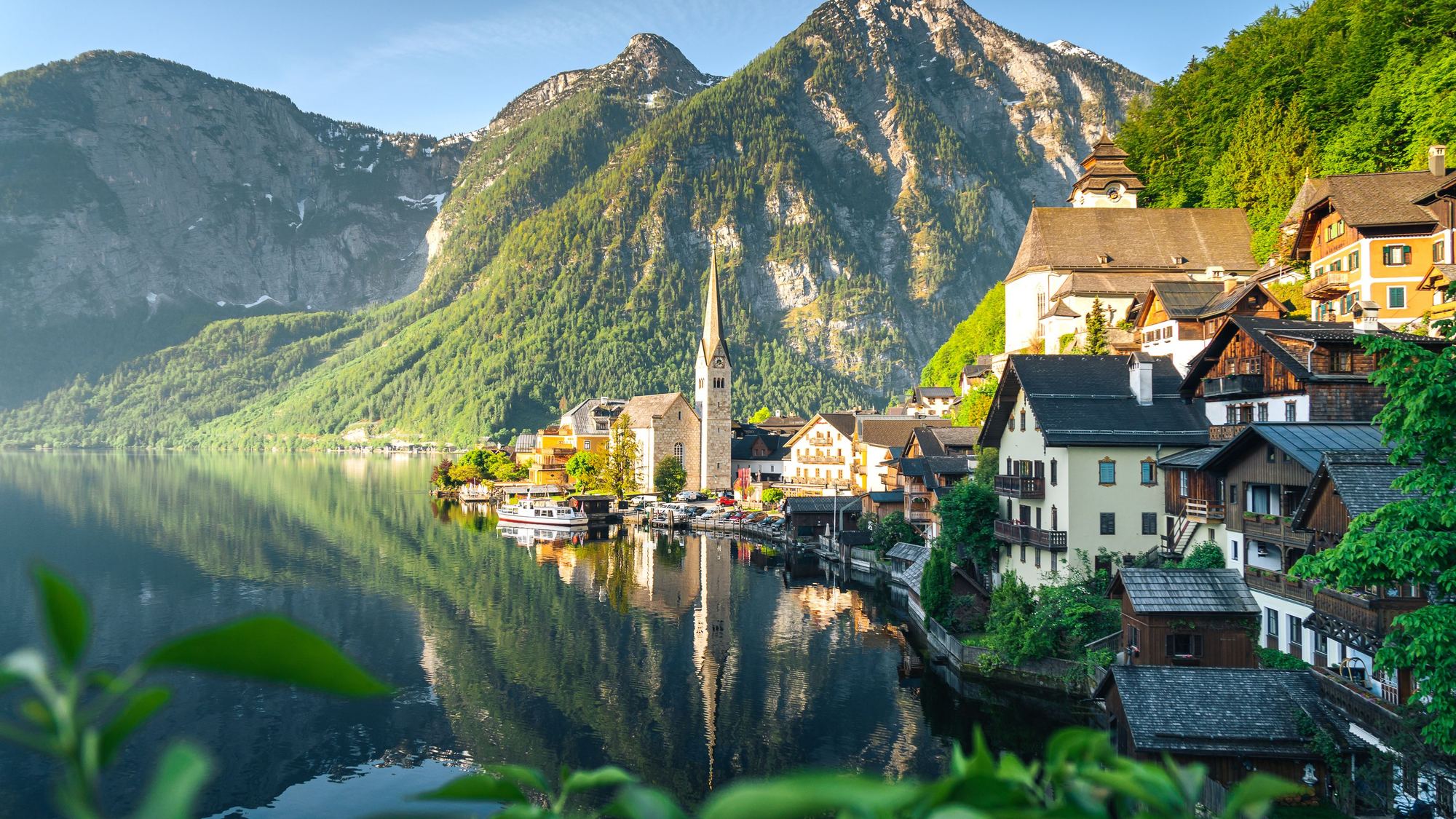

The reality: Hallstatt is the village on every "most beautiful places in Europe" list — pastel houses stacked up a cliff, a needle-spired church, a mirror lake, the Dachstein behind. It's so photogenic a Chinese property developer built a full-scale replica of it. And it is exactly that beautiful, for about the first and last hour of the day. In between, a village of roughly 700 people takes on close to a million visitors a year, most of them off coaches from Salzburg and Vienna for a two-hour photo stop.
Here's the thing the coaches miss: Hallstatt has been inhabited for some 7,000 years, and the reason is under the mountain, not on the lakefront. This is the oldest salt mine in the world — "Hall" is an old word for salt — and the wealth it dug out built the place millennia before anyone came for a selfie. The mine tour, the prehistoric graves, the bone-house chapel: that's the Hallstatt that rewards more than a photo.
And Hallstatt is only the front door to the Salzkammergut, Austria's lake district — a scatter of quiet lakes and imperial spa towns where the day-trip crowds never go. Sleep the night, do the mine and the lake early, then spend real time on the Wolfgangsee, at Gosau under the Dachstein, or in Bad Ischl. Give the region two or three days and it turns from a photo stop into a place.
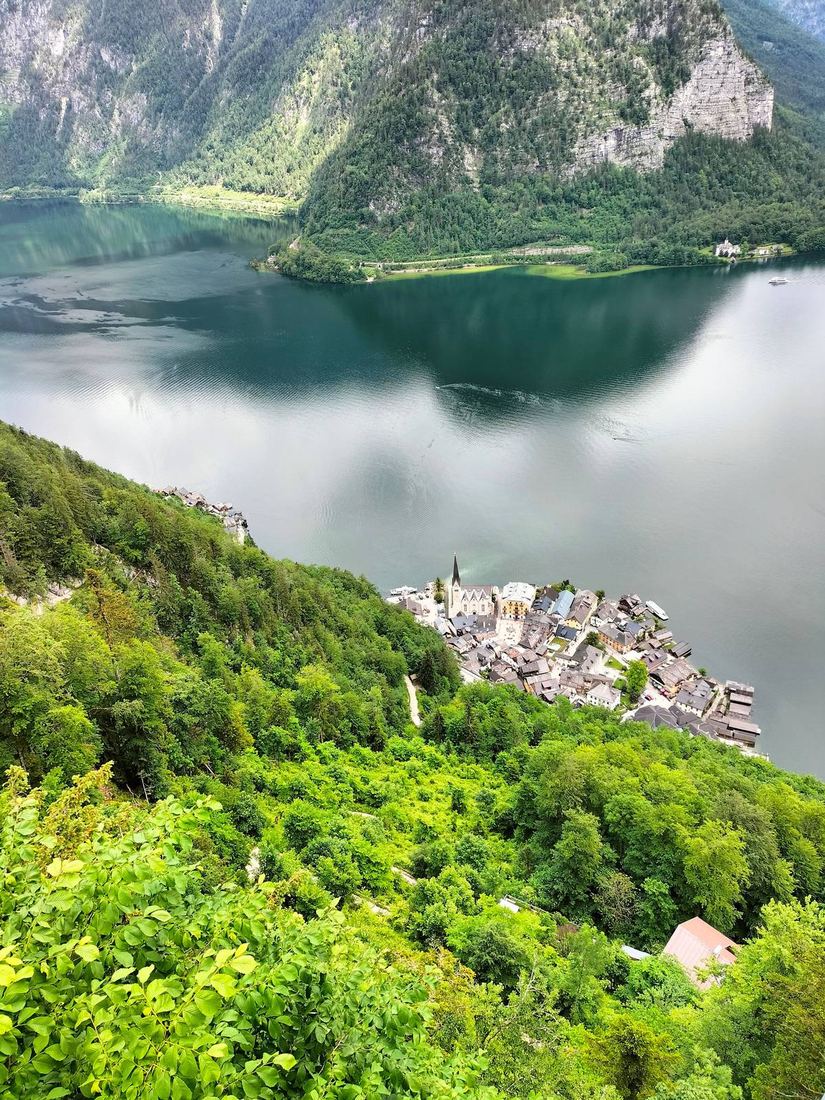
Hallstatt's landscape is a single, tight composition — a lake, a cliff, and a village crammed onto the narrow shelf between them, with the Dachstein massif closing the far end. There's so little flat ground that for centuries the dead had to be exhumed to make room, which is how the village got its strangest sight.
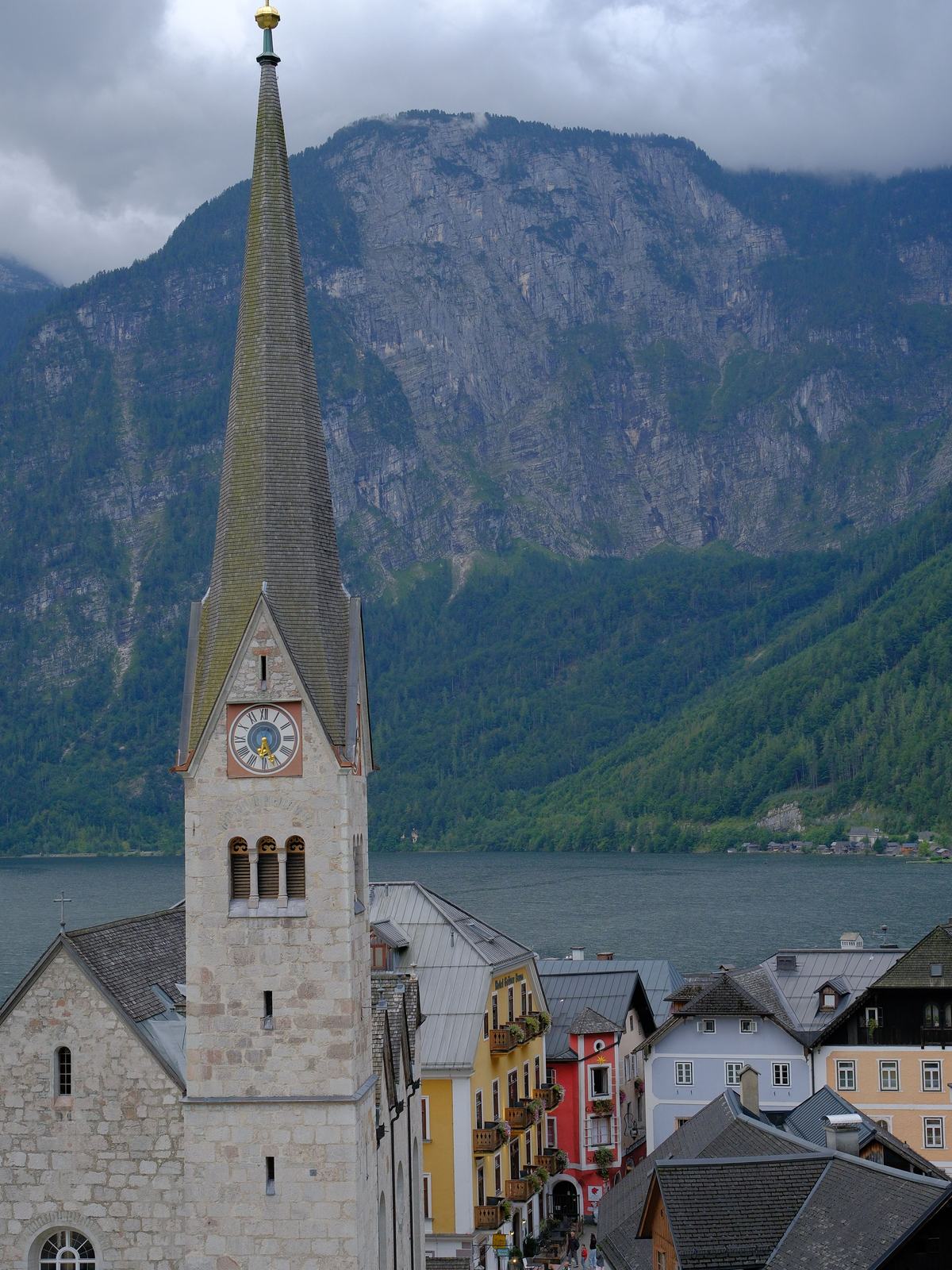
The classic view is from the north end by the Evangelical church, looking back along the waterfront — the shot the coaches queue for, now managed with barriers. Get it at dawn or after 5 PM.
Then climb to the two things worth more than the photo: the Salzwelten, the salt mine 838 m up (funicular, then a guided tour into 7,000-year-old workings, complete with a wooden miners' slide and a subterranean lake), and the Skywalk "Welterbeblick" platform beside it, jutting over the drop for the whole valley in one frame.
Back down, the Beinhaus (Bone House) in St. Michael's chapel holds around 600 skulls, hand-painted with flowers and names — a gentle, oddly tender solution to a village with no room to bury people.
Hallstatt is one lake in a district of them, and the others carry a fraction of the crowds. This is the Salzkammergut, the imperial-era holiday country where the Habsburgs summered.
Bad Ischl was the emperor's spa town — Franz Josef's Kaiservilla is still here, and so is Zauner, the pastry house feeding the town since 1832; it was a European Capital of Culture in 2024. On the Wolfgangsee, St. Wolfgang has a lakeside pilgrimage church and the Schafbergbahn, a steam cog railway that grinds to a 1,783 m summit and one of the great lake panoramas.
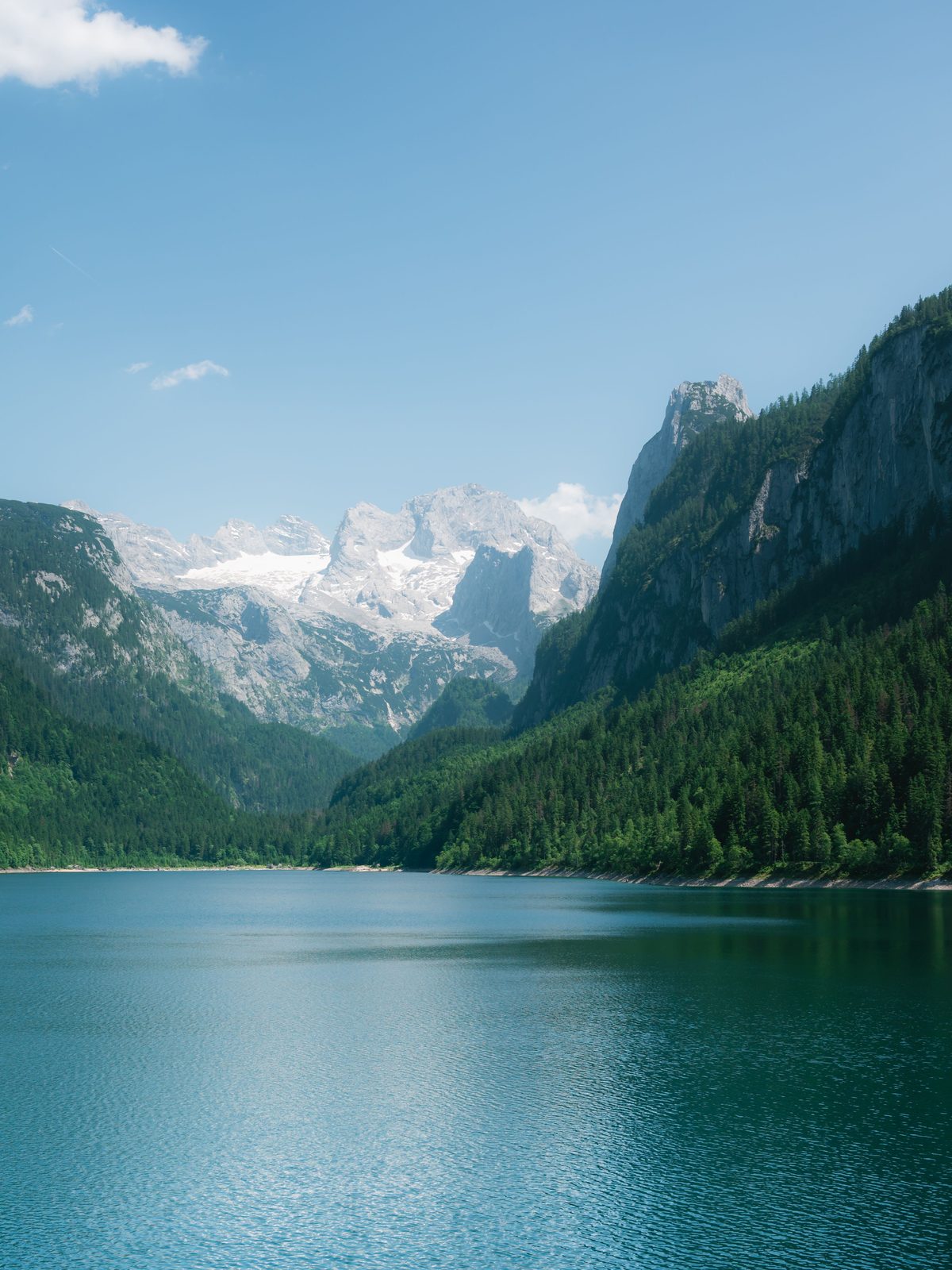
Gosau, up a side valley, gives you the Gosausee — a small lake that mirrors the Dachstein so cleanly it looks staged, and the antidote to Hallstatt's crush. St. Gilgen, Mondsee (whose church stood in for the Sound of Music wedding) and Traunsee round out a district you could spend a week in.
A lake district built for slow days, with one big mountain behind it.
The Salzkammergut is gentler than the high Alps — lake swims, cable-car viewpoints, easy shore walks — with the Dachstein for anyone who wants real altitude.
Salzkammergut cooking is lake-and-mountain Austrian — freshwater fish, game, dumplings, and an imperial sweet tooth left over from the spa-town era.
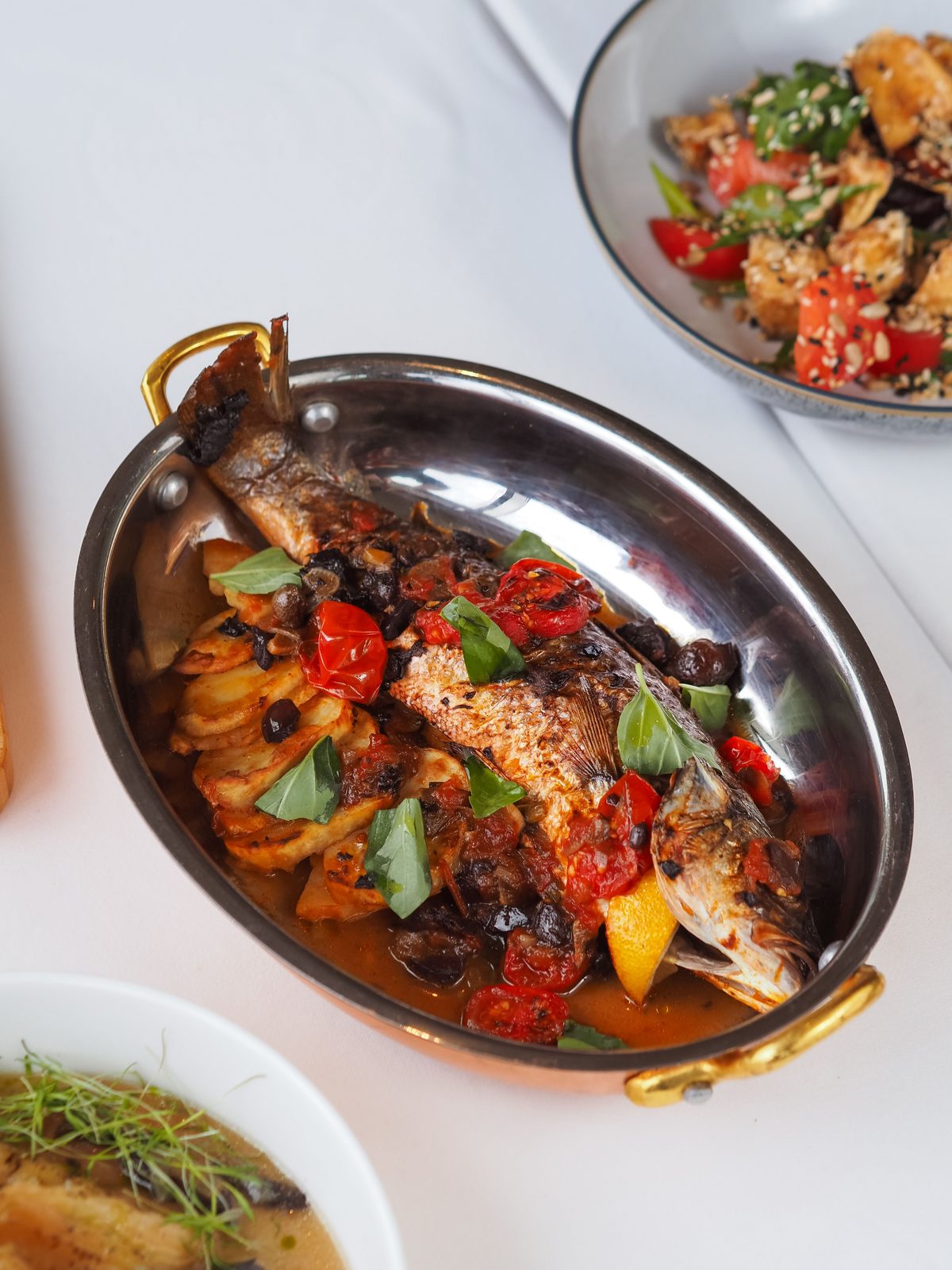
The plate to order is the lake fish: Reinanke (whitefish) and Saibling (char), pulled from the Hallstättersee and Wolfgangsee and served simply — grilled, or smoked at a lakeside Fischerei. Otherwise it's the Austrian canon done well: Wiener Schnitzel, Tafelspitz (the emperor's boiled beef), Kaspressknödel in broth, and Kaiserschmarrn, the shredded, sugar-dusted pancake.
For the sweet end, Bad Ischl is the destination: Zauner has made the Zaunerstollen (a chocolate-nut-wafer log) since the 1800s. Drink a crisp Grüner Veltliner, a Stiegl or Gösser beer, or the local fruit schnapps.
The Salzkammergut has real seasons and a serious crowd problem in one village — so when matters as much as where.
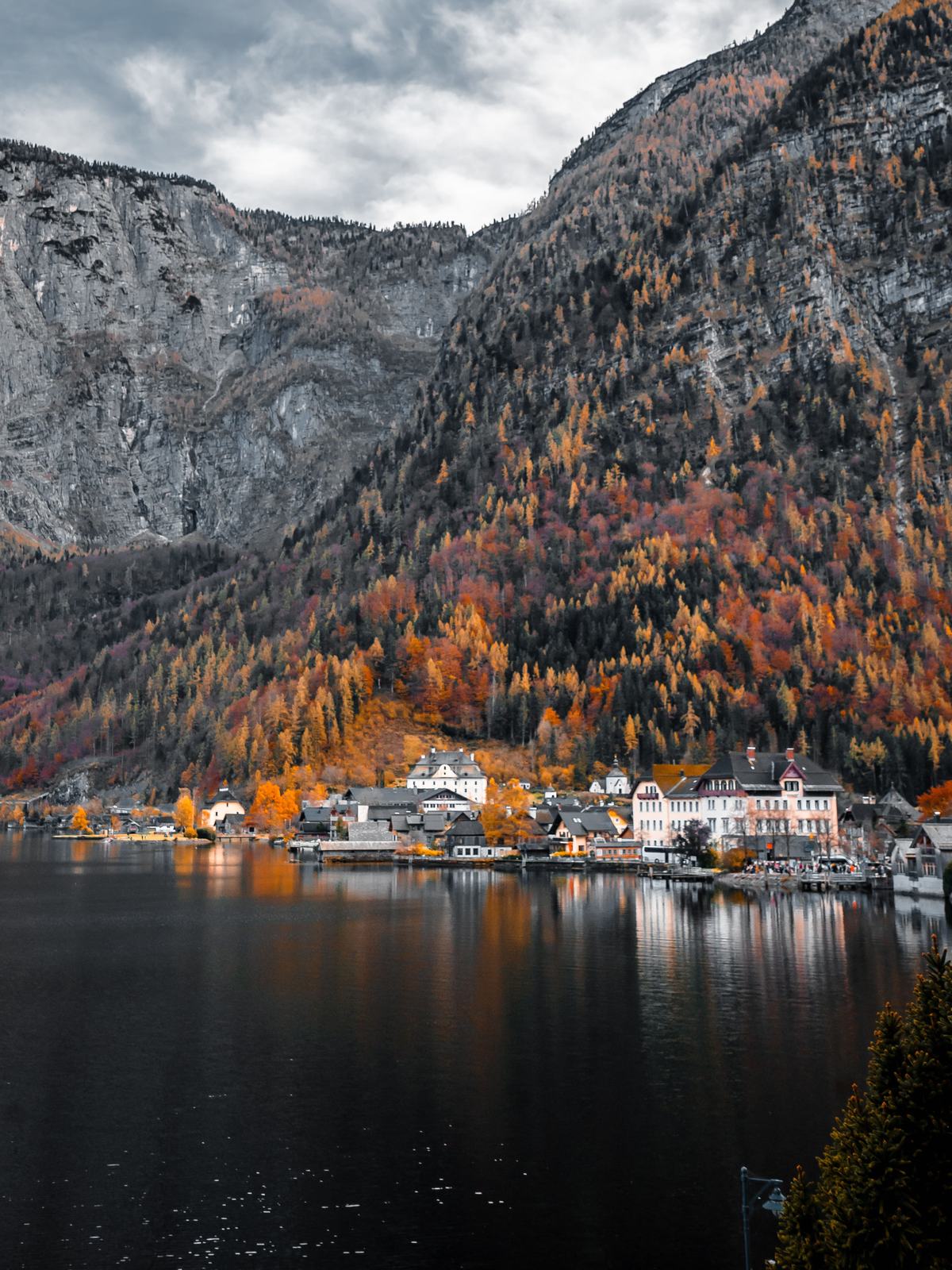
May–June and September–October are the sweet spots: mild (15–24°C), the lakes warming or still swimmable, the coaches thinner, the autumn light on the water superb. July–August is warmest and best for swimming but also peak crowds, and Hallstatt at midday is a scrum — come, but sleep over and use the early and late hours.
Winter (Dec–Feb) is quiet, often snow-dusted and genuinely lovely, with the village near-empty midweek; some lifts and boats run reduced schedules. November and the thaw weeks of March–April are the flat, grey shoulders.
Whatever the month, the crowd rule is the same: be on the lakefront before 9 or after 5.
The Salzkammergut is doable by public transport but far easier with a car, because the lakes sit in separate valleys.
Hallstatt has a train station across the lake — the trains from Salzburg (via Attnang-Puchheim) don't stop in the village; a little ferry meets each train and carries you over, which is a lovely arrival. By road it's about 75 minutes from Salzburg. Note that Hallstatt village is largely car-free for day visitors — the car parks are at the edge and fill early in summer, and there's a day-visitor cap system, so arriving by train or before mid-morning saves a lot of grief.
Between the lakes, PostBuses link the main towns but not frequently; a car opens up Gosau, the Wolfgangsee and Bad Ischl without timetable-watching. The Salzkammergut lake boats and the Schafbergbahn cog railway are attractions in themselves.
Where you sleep decides whether Hallstatt is a scrum or a mirror-lake at dawn.
In Hallstatt village — the early mornings and late evenings, the whole point of staying, but rooms are few, booked far ahead, and dear.
Obertraun — across the lake at the foot of the Dachstein cable cars, quieter, cheaper, a short ferry or drive away.
Bad Goisern & Gosau — among the wider Salzkammergut with easy access to the Gosausee.
Wolfgangsee (St. Wolfgang / St. Gilgen) — the lake-district-proper base, a good hub with its own draws.
Bad Ischl — imperial spa town, central to the whole district.
After Switzerland, Austria feels like a sale — a lake-district holiday here runs well below Zermatt or St. Moritz money, closer to rural Bavaria. Hallstatt village itself charges a small fame premium on rooms and the photo-strip restaurants; step just outside it and prices are ordinary Austrian.
Prices in 2026 euros. Sleeping outside the village (Obertraun, Bad Goisern) cuts the room bill sharply, and the shoulder seasons knock 25–35% off summer rates.
Go if you want a lake district with 7,000 years under it — the oldest salt mine on earth, mirror lakes, imperial spa towns — and you'll sleep over to catch Hallstatt at dawn instead of fighting the coaches at noon. Skip if you need the famous village empty in the middle of the day, or you won't range beyond its one main street.
Found this useful? Share it.
Still planning?
We don’t stop at “here’s the country.” Real places to stay, what to do, apps that matter, even how to find someone to travel with — plus guides for whatever vibe you’re after, from beach days to wine country to slow weekends. All up top. Spin for somewhere new when you’re done with this one.