This is your destination guide for Austria.
This is your destination guide for Salzburg
📍 Part of AustriaA baroque stage-set between Mozart and the Sound of Music — a hilltop fortress, a UNESCO old town, and monks who pour their own beer.


The reality: Salzburg is a small city that punches like a capital, because two global brands were born here — Mozart, in a yellow house on the Getreidegasse in 1756, and The Sound of Music, filmed across its gardens and squares in 1964. The result is a UNESCO baroque old town of domes and marble squares, hemmed by wooded hills, with one of Europe's largest medieval fortresses on the rock above. It is genuinely handsome and genuinely busy, and it wears both facts openly.
What saves it from being a Mozart theme park is that the culture is real, not staged. The Salzburg Festival each July and August is one of the most serious classical-music events on earth; the churches and the fortress are the actual baroque, not a recreation; and the beer halls the students drink in have been pouring since the 1600s. The trick is to take the marketing — the Mozart chocolates, the Sound of Music bike tours — with a wink, and go straight for the substance underneath it.
So do the fortress and a concert, walk the Getreidegasse early before the tour groups, and give an afternoon to the hills and the beer gardens rather than the gift shops. Salzburg is compact enough to see in two days and rich enough to keep you a third — and it's the natural base for Hallstatt, the lakes and the Alps on its doorstep.
Salzburg's landscape is a baroque old town packed onto the west bank of the Salzach river, under a fortress on a rock — a skyline of green domes and a great white castle that has never been taken by siege.
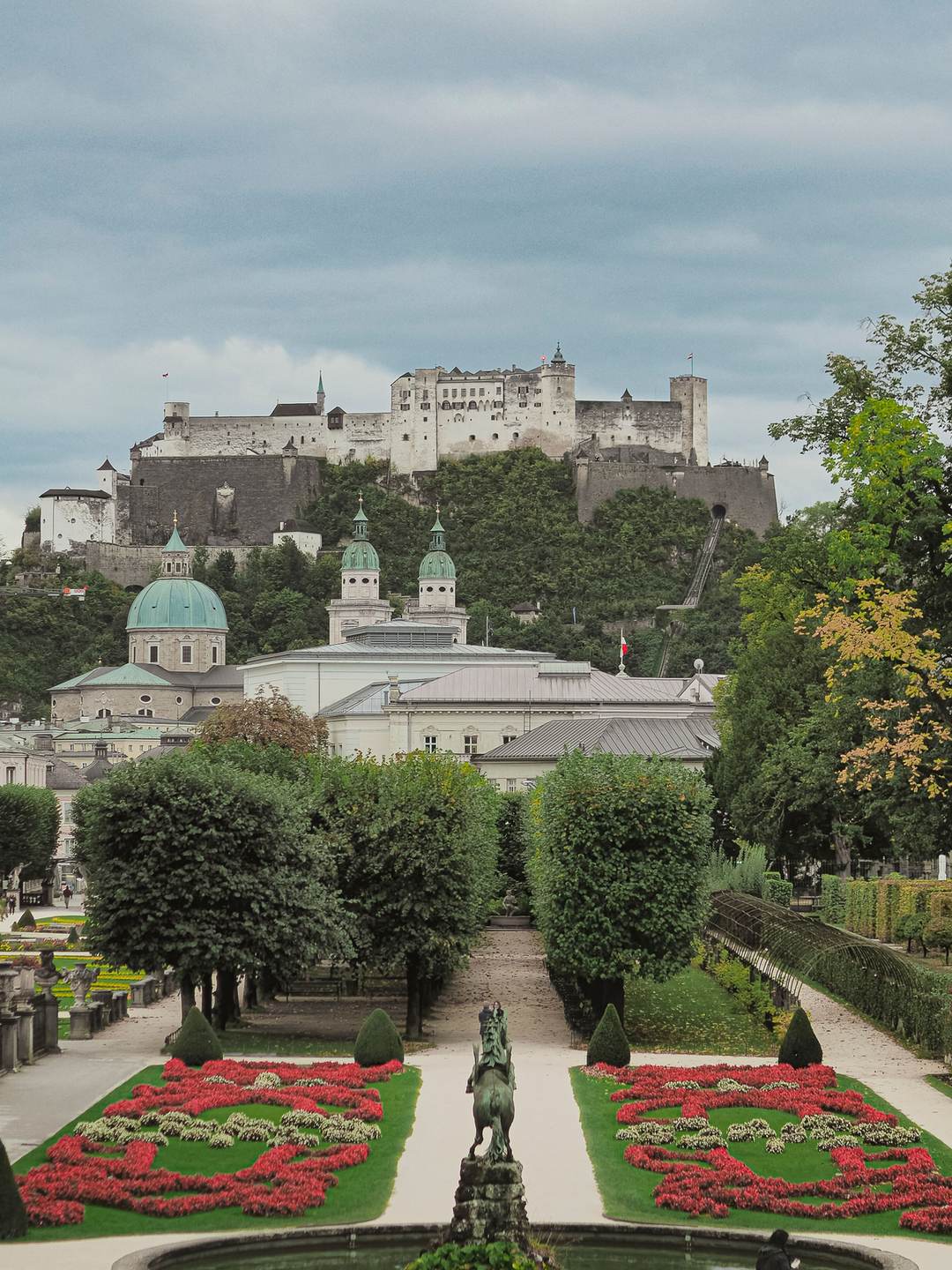
The Hohensalzburg Fortress is the anchor: one of the largest fully preserved medieval fortresses in Europe, reached by a little funicular or a steep walk, with ramparts that hand you the whole city and the Alps behind it.
Below, the Getreidegasse is the famous shopping lane — wrought-iron guild signs, Mozart's birthplace at No. 9 — best walked early before it fills.
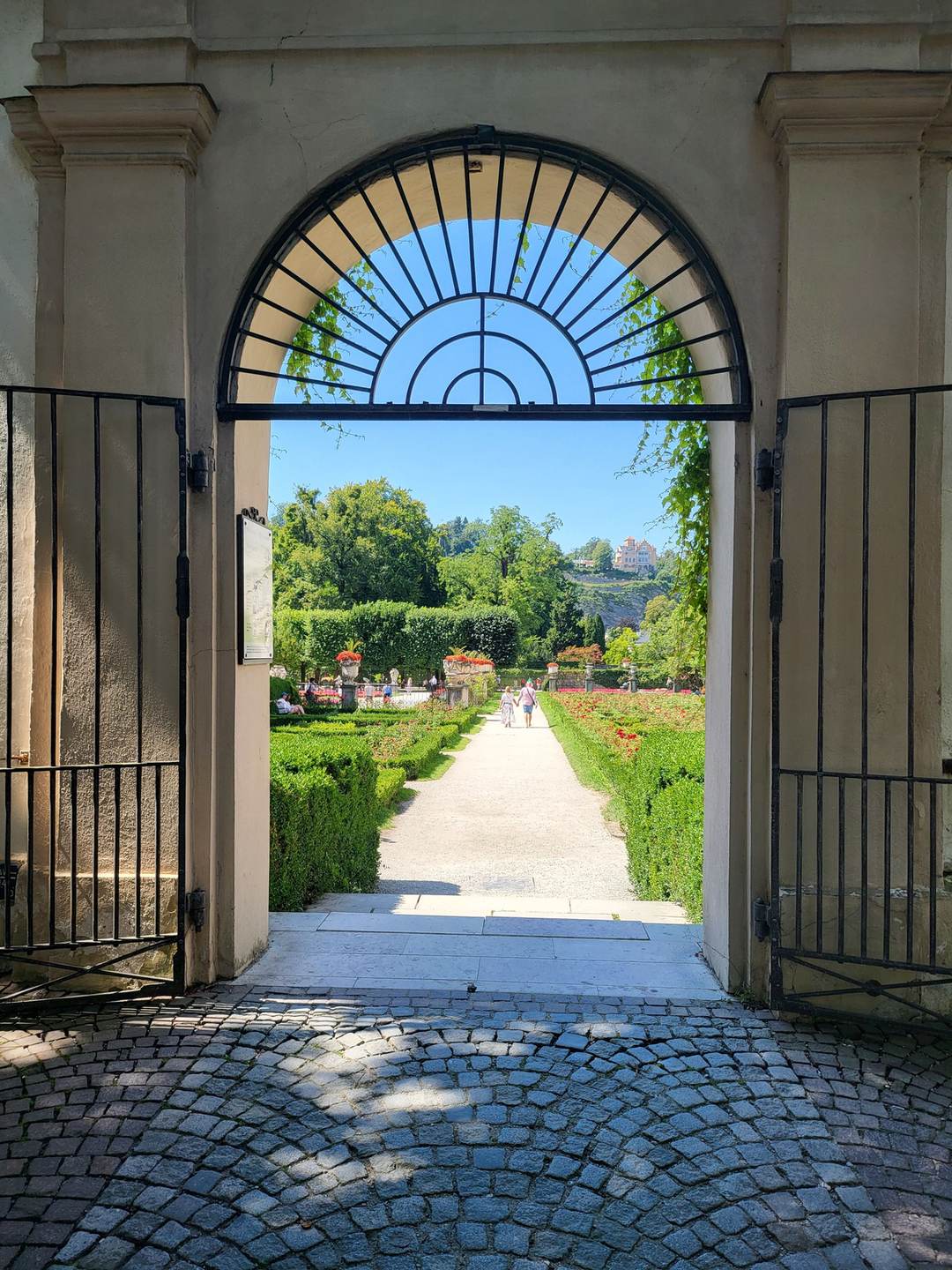
The set-pieces cluster tight: the Domplatz and the great Cathedral, the Residenzplatz with its baroque fountain, St. Peter's Abbey and its cliff-cut catacombs, and the Mirabell Palace gardens across the river (the "Do-Re-Mi" steps, if that's your thing — and the best free view back to the fortress). It's all within a 20-minute walk.
Salzburg is small, so its range comes from the quarters just off the tourist core and the outsized day-trips on its doorstep.
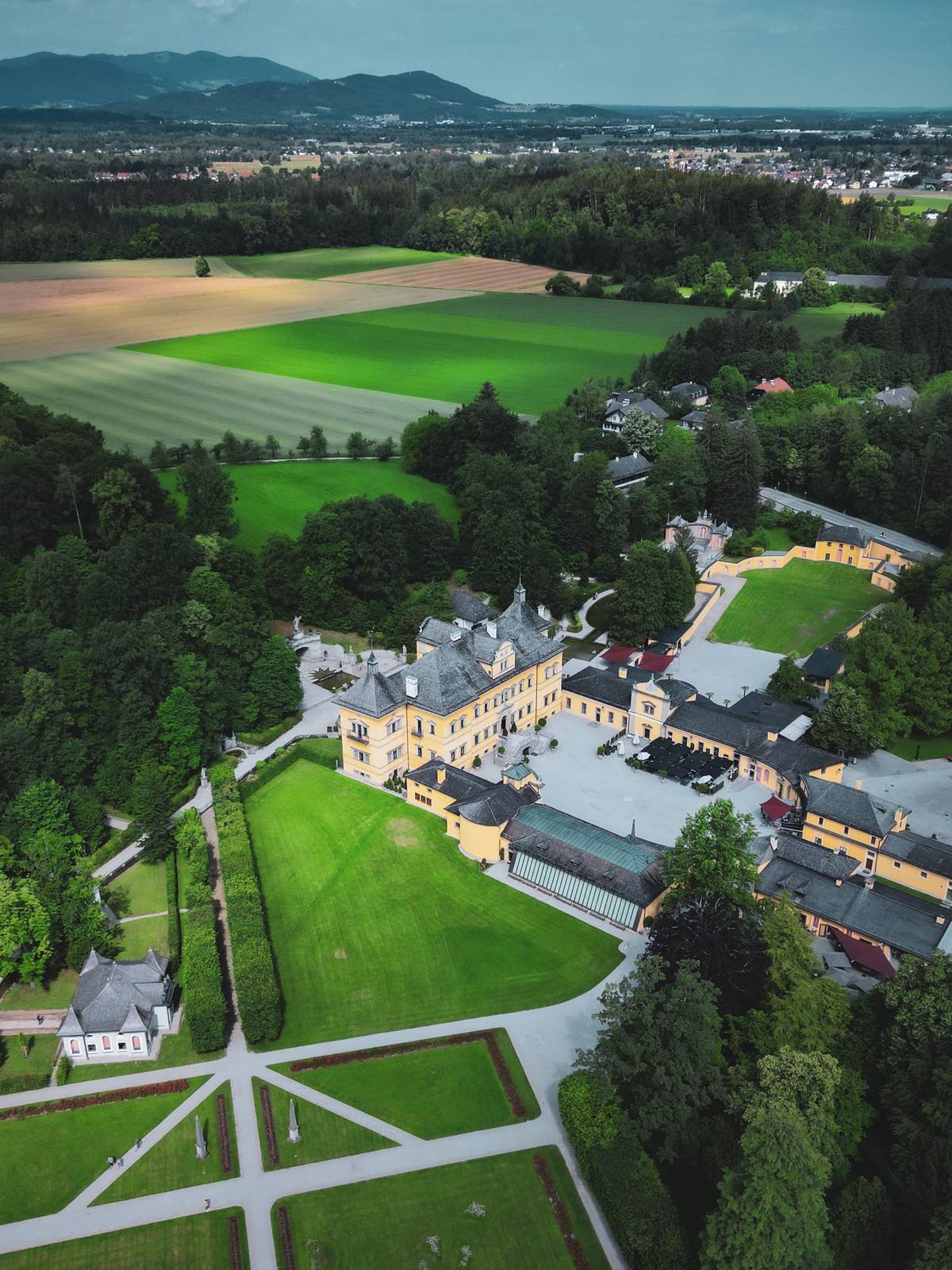
Across the Salzach, the Right Bank around the Linzergasse and Steingasse is the older, quieter, more local side — the medieval lane of Steingasse at night is the antidote to the Getreidegasse by day. South of the centre, Hellbrunn Palace has the 400-year-old trick fountains, a prince-archbishop's practical joke that still soaks visitors on cue, plus the Sound of Music gazebo.
And Salzburg is the best base in Austria for day-trips: Hallstatt and the Salzkammergut lakes (see that guide), Berchtesgaden/Königssee and the Eagle's Nest just over the German border, the Untersberg cable car, and the salt mines at Hallein.
A city you walk, climb a little, and drink in a garden.
Salzburg isn't an adventure base, but it's built for good legs and easy hills — river paths, a fortress climb, a couple of viewpoint mountains right at the edge of town.
Salzburg eats classic Austrian, with a monastery beer culture and an imperial sweet tooth — and one dessert named after the hills you've been climbing.
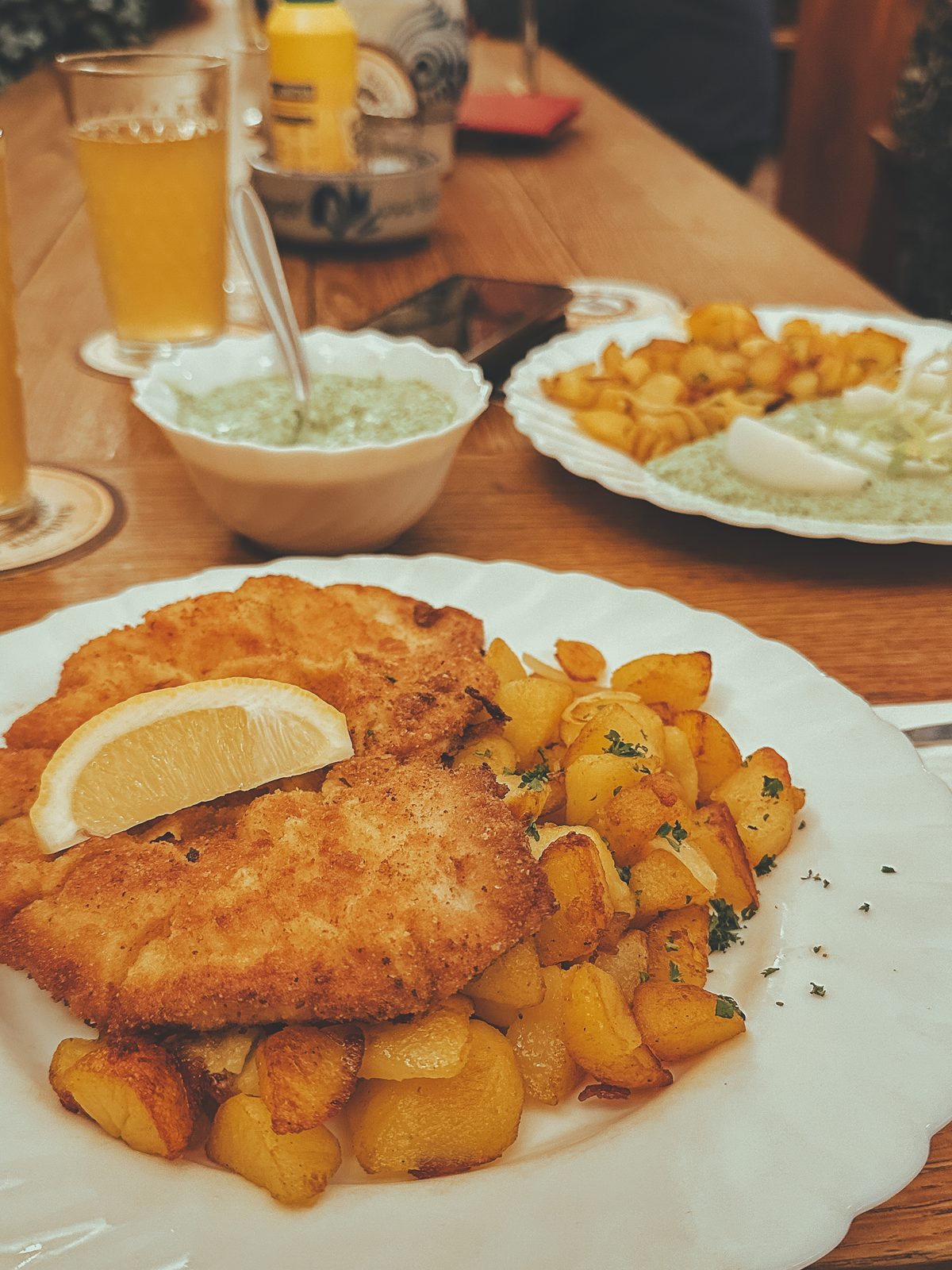
Order the canon done well: Wiener Schnitzel (veal, pounded thin, pan-fried), Tafelspitz (boiled beef with horseradish and apple), and Bosna, Salzburg's own street sausage in a spiced bun. The city dessert is Salzburger Nockerl — a giant baked soufflé in three peaks, shaped to mirror the hills around town, sweet and absurd and meant to share.
The drinking institution is the Augustiner Bräustübl, a monastery brewery where you rinse a stone stein, fill it from the tap yourself, and drink it in a chestnut-shaded garden with a thousand others. On chocolate: the Mozartkugel was invented here by Paul Fürst in 1890 — his original is round, hand-dipped, silver-and-blue foil; the gold-wrapped ones in every airport are industrial imitators.
Salzburg has one giant event that reshapes its calendar, and a lot of rain the brochures skip.
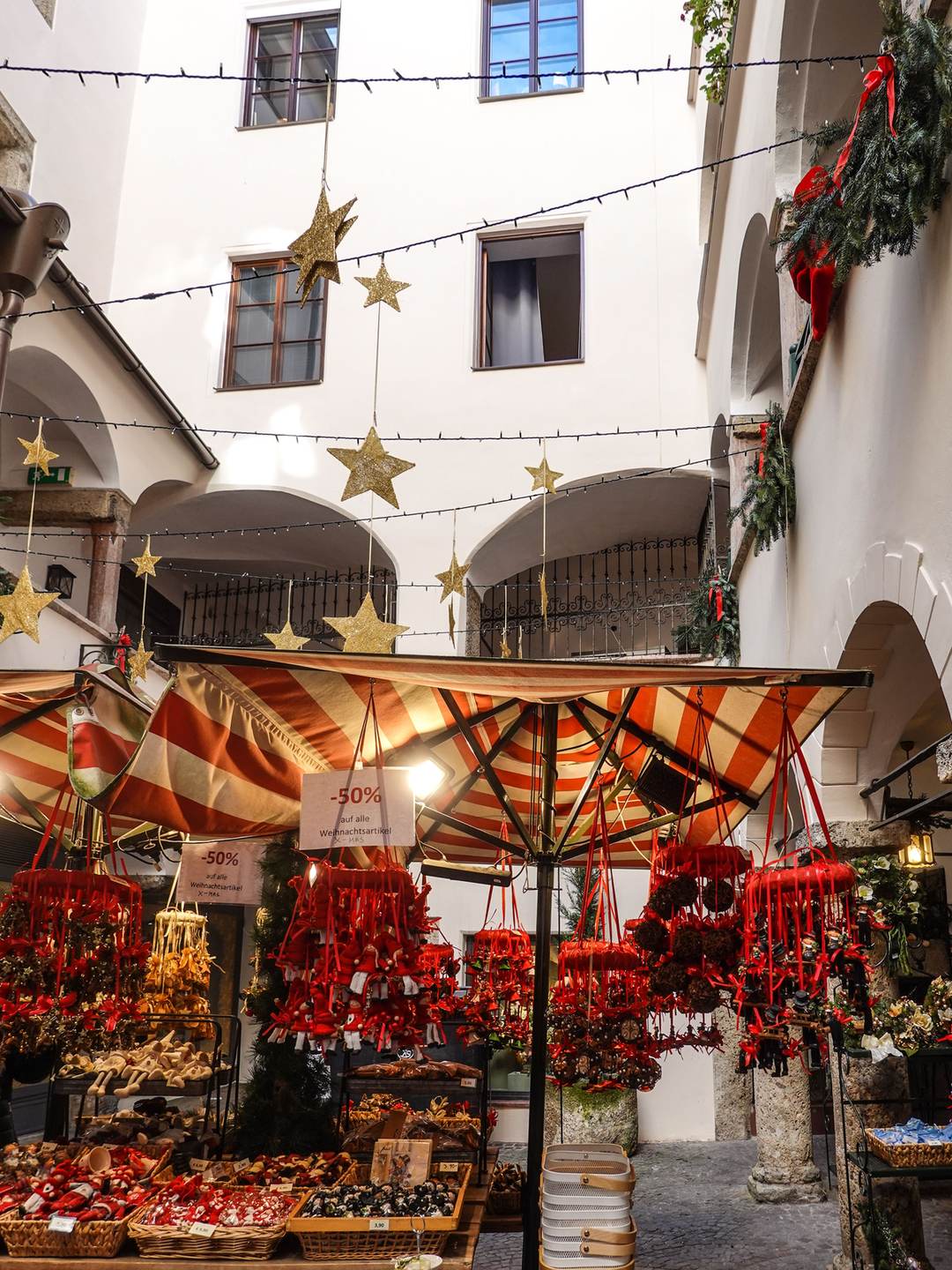
May–June and September are the pick: mild (18–24°C), gardens open, crowds manageable, rooms sane. Late July–August is Salzburg Festival season — thrilling if you're here for it, but the city is at its busiest and priciest, and rooms book months ahead. December brings a strong old-town Christmas market run and a snow-dusted fortress.
The honest caveat is the weather: Salzburg sits against the Alps and is one of the wetter cities in Austria — it rains a lot, often for days, especially in summer, so pack for it and have an indoor plan. November and the early-spring thaw are the quiet, grey shoulders.
Salzburg is a walk-everywhere city with fast rail links out.
The old town is compact and largely pedestrian — you'll walk between every sight, and a car is a liability (park at a Park-and-Ride and take the bus in). The train station is a 15-minute walk or short bus from the centre, with fast connections to Vienna (~2.5 hr), Munich (~1.5 hr) and Innsbruck.
Local buses (and the fortress funicular) cover the hills and Hellbrunn; a Salzburg Card bundles transport, the funicular and museum entries and pays off on a busy sightseeing day. For the lakes and Alps, you'll want either the PostBus network or a rental car picked up as you leave.
Small city, clear trade-offs between the old-town core and the quieter riverbanks.
In the old town (left bank) — inside the baroque and a walk from everything; atmospheric, priciest, with some rooms small and noisy on festival nights.
Right bank (Linzergasse/Steingasse) — a couple of minutes over the river, a little cheaper and more local.
Near the station (Elisabeth-Vorstadt) — the budget-and-convenience choice for rail day-trippers.
The Mönchsberg — hillside places (including the Museum der Moderne's hotel) looking down over the whole city.
Salzburg is mid-priced Austrian — dearer than Vienna in the festival weeks, ordinary the rest of the year, and a clear step below Swiss cities. The one time it spikes hard is late July–August, when festival demand doubles room rates.
Prices in 2026 euros. Avoid late July–August if the budget's tight; May, September and the shoulders are far kinder on rooms.
Go if you want a baroque city you can walk in two days — a fortress over the Alps, real world-class music, monastery beer poured by your own hand — and you'll take the Mozart-and-Sound of Music marketing with a wink. Skip if festival-season prices or a rainy small old town would sour it, or a city trading on a 1965 film just isn't your thing.
Found this useful? Share it.
Still planning?
We don’t stop at “here’s the country.” Real places to stay, what to do, apps that matter, even how to find someone to travel with — plus guides for whatever vibe you’re after, from beach days to wine country to slow weekends. All up top. Spin for somewhere new when you’re done with this one.