
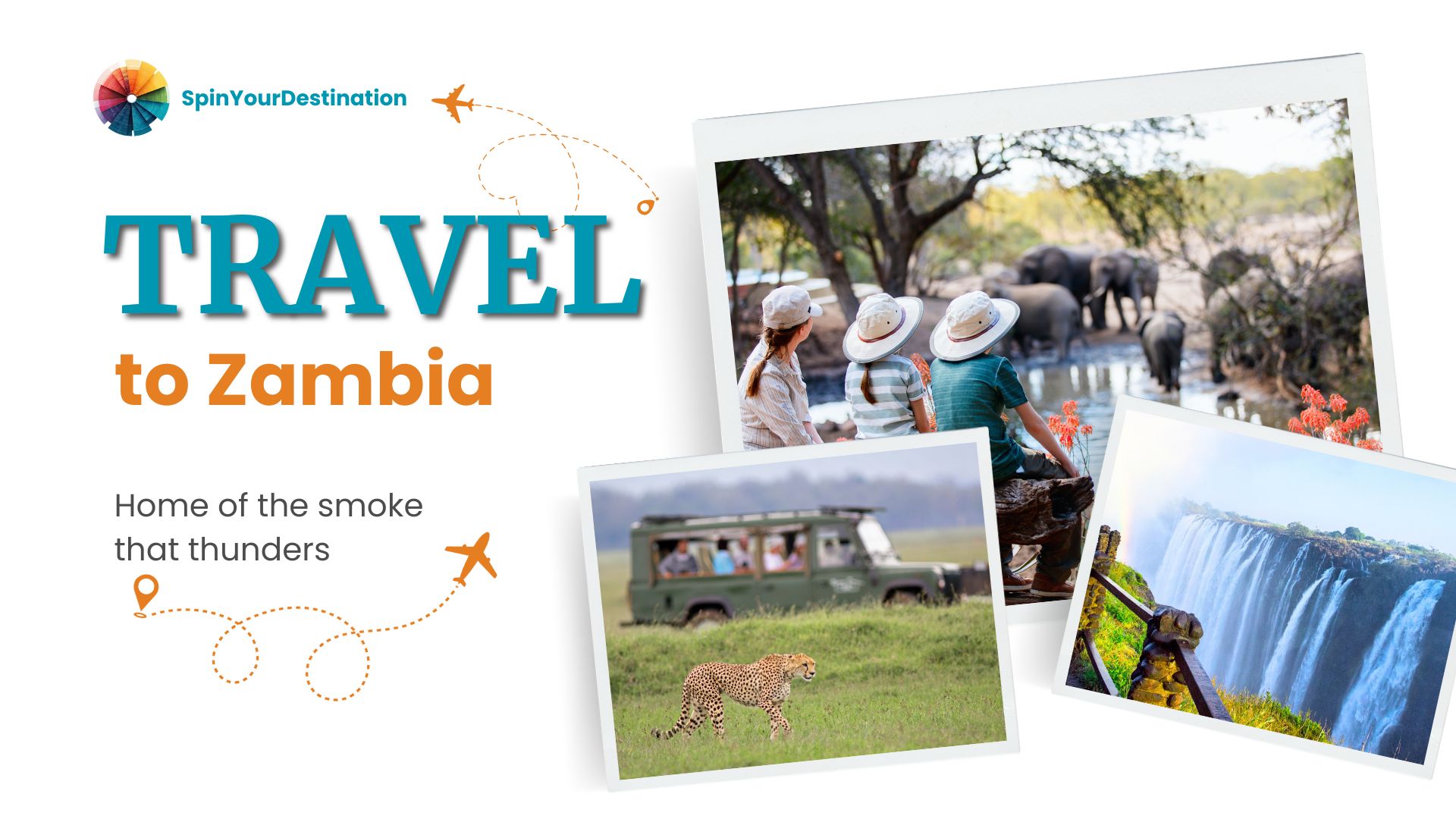
Mindful, Unplugged & Nature Zambia
Your complete guide to remote bush camps, silent canoe safaris, and disconnecting in Africa's largest wilderness
The tent flap is open and the bush is completely black. Somewhere across the water, a hippo blows air. A francolin calls from the riverbank—a single, sharp note, then silence. No engine, no light, no screen. Just the Kafue River moving past in the dark, and the particular quality of stillness that only exists this far from a road.
Zambia is genuinely remote. Kafue National Park alone covers 22,400 square kilometres—roughly the size of Wales, with almost no one in it. The Lower Zambezi National Park has no road through it at all; access is by boat or small aircraft only. Many of the bush camps here operate without wifi by design, not oversight. The silence is the selling point. The disconnection is the point.
What Zambia offers for slow, present travel is not performance. There is no guided meditation on a platform above the treetops. There is just the hour before dawn when you walk out on a river bank with an armed scout and watch the world wake up—impala at the water's edge, kingfisher bolting past at eye level, the first elephant of the day crossing downstream. Your body adjusts within two days. The phone stays in the bag. The weeks fall away.
Off-grid camps in Kafue—the real silence
Kafue National Park is Zambia's largest and most undervisited park. Its central section—where the Kafue River cuts through miombo woodland and granite kopjes—has a handful of small, privately run camps that operate entirely on solar power with no grid connection, often no wifi, and typically fewer than ten guests at a time. When there are six guests in 22,000 square kilometres of wilderness, the word "remote" means something.
The rhythm at these camps is the bush rhythm: early rising (4:30-5am) for the dawn walk or boat cruise, back to camp by 9am for breakfast. Rest through the midday heat—read, sleep, sit watching the river. Out again at 4pm for the afternoon drive or canoe. Sundowners on the riverbank. Dinner under the stars. Bed by 9pm. Repeat for four days and the city starts to feel like something that happened to someone else.
Birds are the soundtrack: the drawn-out call of a Pel's fishing owl before dawn, the mechanical churring of nightjars as you eat dinner, crowned cranes in pairs crossing overhead mid-morning, African fish eagles calling from the acacia on the far bank—that sound, once heard, never leaves you. The Kafue area has over 500 recorded bird species.
The Busanga Plains in northern Kafue are the most spectacular—vast floodplains where lions hunt red lechwe at dawn and cheetah watch from termite mounds. Access is by charter flight or rough road. It is exceptional. It is also remote enough that the stillness there is of a quality rarely available anywhere else on earth.
Canoe safaris—the slowest possible way to see wildlife
The canoe safari was invented in Zambia in the 1990s on the Lower Zambezi, and it remains the most quietly profound safari experience on the continent. You sit two inches above the water in a traditional open canoe, paddling silently along the river's edge while the world of the African bush passes at walking pace. Elephants drink on the bank, five metres away, unconcerned. Hippos surface and sink around you. A monitor lizard slides off a log as you pass.
The key word is silently. No engine, no exhaust, no noise. Animals that would flee from a vehicle tolerate a canoe at close range because it registers as river traffic—like a log drifting past. You experience the bush from the animal's eye level, from their habitat, on their terms. It does something to the way you think about wilderness that is hard to explain and impossible to forget.
In the Livingstone area, the Zambezi above Victoria Falls passes through Mosi-oa-Tunya National Park—a protected corridor of riverine forest and wetland. Canoe trips here drift through channels between islands, past hippo pools and nesting bee-eaters, with elephants feeding in the shallows. No white water, no rapids—this is the river before the falls, wide and gentle and extraordinary.
Multi-day canoe expeditions in the Lower Zambezi cover 50-80km over three to five days, camping on islands each night. Guides cook over open fires. The water goes from flat to shimmering to inky black as the light changes through the day. It is, by any measure, one of the finest slow-travel experiences in Africa.
Walking safaris—on foot at nature's pace
The walking safari began in Zambia—Norman Carr led the first commercial walking safari in South Luangwa in the 1950s, and the tradition remains purer here than almost anywhere on the continent. The difference between a vehicle safari and a walking safari is not just transportation. On foot, every sense engages. You smell the bush. You hear everything. You slow to the pace of tracking—following prints in dust, reading broken grass, reading the direction a herd moved hours before.
Walks last three to four hours, typically leaving before dawn to reach good ground at first light. The pace is set by the guides reading the environment—slow when something is near, stopping entirely when needed. An armed National Parks scout walks at the back. You are not in danger; wild animals in open bush give far more ground to a walking party than you might expect. But the awareness required is real, and that awareness is the point. Your phone does not exist in this moment.
The Luangwa Valley's walking safari areas in the south are the finest: the Chikoko Trails area, accessible only on foot or by small aircraft, covers terrain that has never had a road through it. Norman Carr identified it as prime walking country in the 1960s. It still is. Nothing has changed.
Season: walking safaris run during the dry season only (May to October). The grass drops as the water retreats, visibility opens, and wildlife concentrates around the remaining rivers and lagoons. September and October are hot (35°C+) but deliver the most extraordinary wildlife density.
The Lower Zambezi—no roads, no crowds
The Lower Zambezi National Park has no internal road network. It has a single track along the river's southern edge, a handful of camps accessible by boat from Chirundu, and an interior accessible only on foot. This structural remoteness means it will never be crowded. The camps there are small—six to twelve guests—and the wildlife is exceptional: large elephant herds, buffalo, lion, leopard, wild dog passing through on range.
The river here is different from the Victoria Falls section. It is wider, slower, more serious. The hippos are in larger pods. The crocodiles are longer. Sitting in a canoe in the Lower Zambezi watching a herd of sixty elephants cross the river in front of you is a scale of natural event that modern life does not prepare you for.
This is not comfortable or convenient. Getting there requires a four-and-a-half-hour drive from Lusaka or a charter flight from Lusaka or Livingstone. But for people who specifically want wilderness without performance—no zip lines, no show—it is perhaps the definitive Zambian experience. You go in with a bag and come out three days later a different version of yourself.
The best time is June to October. The Zambezi drops during the dry season exposing sandbanks where the camp boats land, and wildlife concentrates along the river corridor. November to April the park often closes due to flooded access tracks.
🌟 Top Mindful & Nature Experiences
🏕️ Kasabushi Camp, Kafue
Family-owned camp on the Kafue River among ancient granite boulders—solar-powered, remote, deliberately slow. "Disconnect to reconnect" is their operating philosophy. Back-to-basics camping from $213 per person per night; chalets higher. 500+ bird species, sunrise yoga, boat cruises at dawn, no wifi in bush areas. Kafue National Park's most intimate accommodation option. More info →
🛶 Canoe Safari Above Victoria Falls
Drift along the Zambezi above the falls through Mosi-oa-Tunya National Park—channels, islands, hippo pools, nesting bee-eaters, elephants at the water's edge. No engine, no noise, two inches above the river. Full or half-day options from Livingstone. From $85 per person. The gentlest and most intimate wildlife experience in the Livingstone area. More info →
🚶 Walking Safari, Luangwa Valley
Pure walking safaris in the remote Chikoko Trails area of South Luangwa—terrain accessible only on foot, along natural hippo trails, tracking lion prints, reading the bush at ground level. Guided by Remote Africa Safaris' expert guides and armed National Parks scouts. Morning walks 4 hours. Camps from $905 per person per night, fully inclusive. No vehicles, no compromise. More info →
🦅 Birding in Busanga Plains, Kafue
One of Africa's finest birding locations—500+ species, including Fülleborn's longclaw, Chaplin's barbet (endemic to Zambia), crowned cranes, wattled cranes, and rare specials that only exist on these floodplains. Best at dawn and dusk. Busanga Bush Camp by Wilderness runs just 4 tents and sits on an island in the heart of the plains. Open May to October only. Contact for rates (premium wilderness tier). More info →
🌊 Lower Zambezi—Paddle & Walk
No internal roads, no crowds, sixty-elephant river crossings, lions in the winterthorn forest. Canoe silently past drinking elephants at the water's edge. Track wildlife on foot with armed guides through mopane woodland. Southern Cross Africa specialises in Lower Zambezi canoe and walking safaris—multi-day expeditions camping on river islands. Prices on enquiry, typically from $532 per person per night fully inclusive. More info →
🦒 Mosi-oa-Tunya Walking Safari
Walk through Mosi-oa-Tunya National Park beside the Zambezi with a professional armed ranger—track white rhinos, giraffes, zebras, impala and 400+ bird species on foot. Learn to read animal tracks, identify medicinal plants, and understand the bush ecosystem at walking pace. Three hours, small group, from $181 per person including park fees and return transfers. Departs Livingstone. More info →
💡 Insider Tips
- 🌅 The hour before dawn is not optional. Every experienced Zambia traveler will tell you the same thing: get up before 5am, every day. The light is extraordinary and the wildlife encounters at dawn are categorically different from anything that happens at 9am.
- 📵 Bush camps without wifi are not a problem to solve—they are the product. Download what you need before you leave Livingstone or Lusaka. After 48 hours you will not miss the connection at all.
- 🌙 The bush at night in Kafue or Luangwa is absolute darkness. Bring a headlamp and leave it on your bed within reach. Moving around camp after dark without light is not advised—guides will always escort you, but the habit matters.
- 🧴 Sunscreen and insect repellent are not optional. The Zambian sun at altitude is intense even in cool weather, and mosquito pressure at bush camps near rivers is real. DEET repellent, long sleeves after 5pm, and sleep with a net.
- 🎒 Packing for a bush camp: neutral colours (khaki, green, tan)—not white, not bright. Layers for early mornings (cool down to 10°C even in September). Closed shoes for walking, sandals for camp. A good pair of binoculars makes the birding—and the general game viewing—exponentially better.
- 🐘 On a canoe safari: if an elephant is very close, stop paddling and hold still. Let the current drift you slowly away. Your guide will signal. Follow the guide's instructions silently. Elephants at the water's edge are focused on drinking—they are not looking for trouble, and you should not provide any.