
Countryside Angola
Inland Malanje, the Kwanza River, Cangandala and Huíla — rural Angola at its rawest
You leave Luanda just before sunrise on the A1 east. By the time the city lights are gone the road is empty—mango trees, brick villages, women with basins on their heads, the occasional petrol truck. Six hours later you are in another country. Red-dirt savanna, the Kwanza River curling through the bush, the basalt fingers of Pungo Andongo rising 100 metres straight out of the plain.
This is the side of Angola almost no foreign visitor sees. It takes effort—long drives, basic pousadas, Portuguese-only signage, no ATMs for stretches of 300 km—but the reward is the country at its rawest: smoke from a charcoal kiln, fishermen on the Kwanza pulling tarpon out of the rapids, an entire night sky over a campsite at the rim of Kalandula Falls.
The interior splits into two main draws: the Malanje plateau (Kalandula, Pungo Andongo, Cangandala) eight hours east of the capital, and the Huíla highlands around Lubango fourteen hours south. Both reward at least three days; both are best done with a 4×4 and a local driver.
Malanje plateau — waterfalls, black rocks, giant sable
The Malanje plateau sits at around 1,100 m and feels more like the East African highveld than the muggy coast. Mango and cashew groves, scattered Mbundu villages, the dramatic Cuanza River cutting through escarpments.
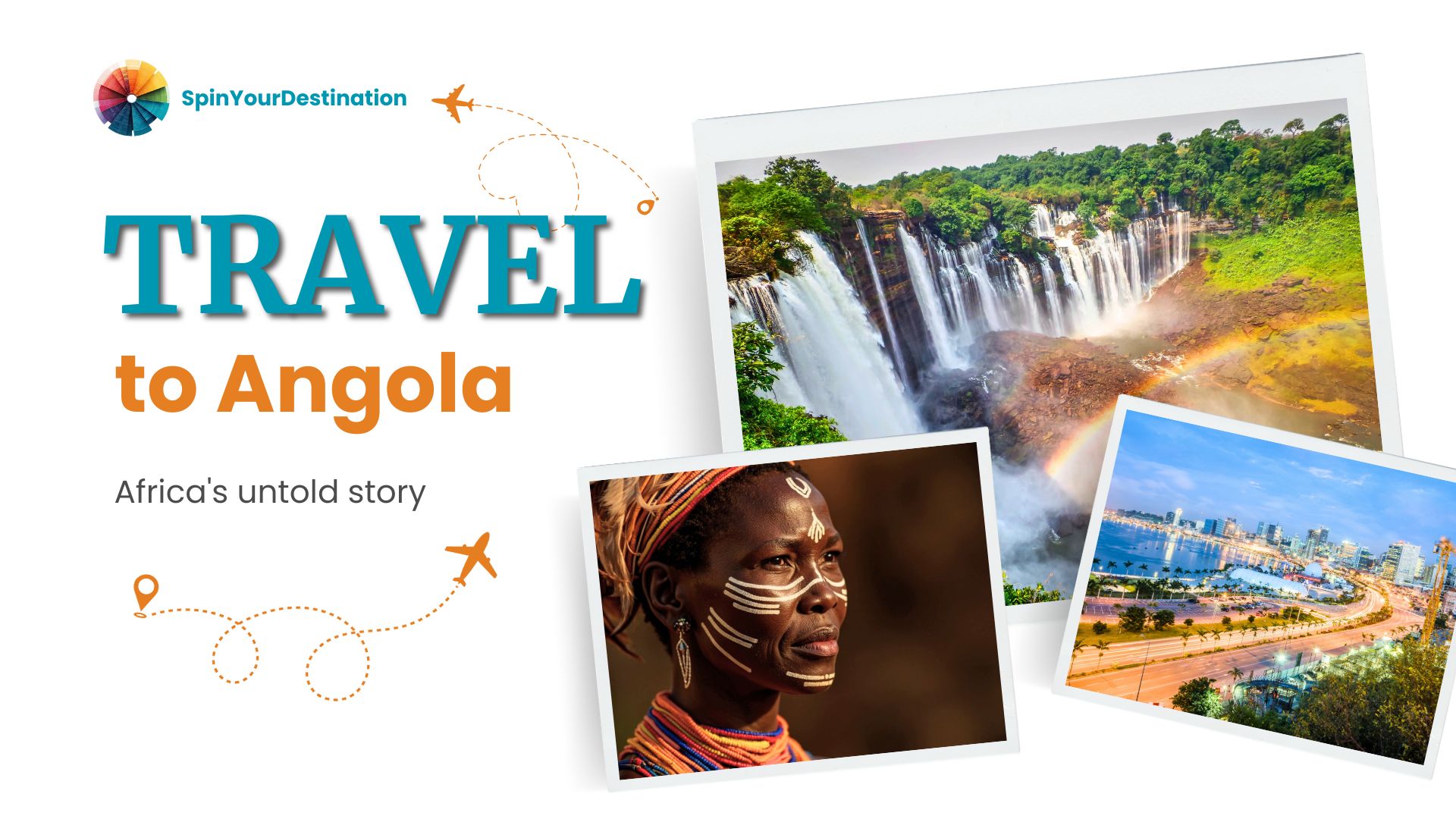
Kalandula Falls (Quedas de Kalandula) is the headline act—105 m high and roughly 400 m wide in full rainy-season flow, one of the largest waterfalls in Africa by volume. Two viewpoints: the upper rim at Pousada Kalandula and a lower trail that drops to the base. Mist, double rainbows in late afternoon, almost no other tourists.
Pedras Negras de Pungo Andongo, ninety minutes south of the falls, is the second highlight: enormous basalt monoliths rising out of flat savanna like the back of a sleeping animal. The most famous rock carries what local legend calls Queen Njinga’s footprint, a smooth depression at the summit.
Cangandala National Park, an hour further south, is the smallest and most accessible of Angola’s national parks (630 km²). It exists primarily to protect the Giant Sable Antelope (palanca negra gigante), the national animal—hunted to near-extinction during the civil war, now slowly recovering under armed protection. Sightings are rare but possible with the right ranger.
Practical: 6–8 hours’ drive each way from Luanda on the A1; you will need at least one overnight in Malanje town or Pousada Kalandula. Rainy season (October–April) makes the falls more spectacular but some side roads impassable.
The Kwanza River — rapids, fishing and Ndalatando
The Kwanza is Angola’s defining river: 960 km from the Bié plateau to the Atlantic, broad and lazy in the lowlands, narrow and rapid-strewn through Malanje. The river gives the country its currency name.
N’dalatando, the capital of Cuanza Norte province, is the natural stop on any drive east. The Jardim Botânico (botanical garden) with its rose-de-porcelana lilies makes a peaceful lunch break and has small picnic shelters under jacaranda.
Further upstream, the Kwanza River Rapids near Pungo Andongo are a striking stretch where the river squeezes through a basalt gorge. Few formal viewpoints—ask a local driver and pay a small village fee.
The lower Kwanza, an hour south of Luanda at Barra do Kwanza, is fish-rich (tarpon, threadfin, dorado) and supports the country’s only real sport-fishing lodges. River cruises and crocodile-spotting boat trips run year round.
Practical: bring binoculars. The Kwanza is a serious birding river—African fish eagle, palm-nut vulture, several kingfisher species, occasional skimmers.
Huíla highlands — cooler, greener, slower
Twelve to fourteen hours south of Luanda, Huíla is the highland province around Lubango. The plateau sits at 1,760 m, which means cool nights even in summer, jacaranda-lined streets in town, and dramatic escarpments dropping off the western edge.
The countryside around Lubango is a patchwork of small farms, eucalyptus plantations and cattle pasture worked by the Mwila (Mumíla) people—recognisable from their elaborate hairstyles and ochre necklaces. Their villages around Chibia and Huíla town remain authentic; the appropriate protocol is to visit with a local guide and ask before photographing.
Cuvango, three hundred kilometres east of Lubango on the upper Cubango (Okavango) River, is the new ecotourism frontier—a single licensed lodge runs ranches stretching across 90,000 ha of Huíla-Cubango bushveld.
Practical: Lubango has a regional airport (SDD) with daily TAAG flights from Luanda—the realistic alternative to a fourteen-hour drive. From there, hire a 4×4 with driver. Plan at least 4–5 days for the wider region.
Cabinda — the rural exclave most travelers miss
Cabinda is the small Angolan exclave wedged between the two Congos, separated from the rest of the country by a 60 km strip of DRC. Almost no tourists go. It is mostly rainforest, mangrove and palm-oil country, with one notable colonial town and a strong Bakongo cultural identity.
The Mayombe Forest in the north is one of central Africa’s last large stretches of tropical rainforest, with chimpanzee, forest elephant and a long list of endemic birds. Access is poorly developed and a permit is required.
Cabinda makes sense as an add-on for the curious traveller already in Luanda with extra days. TAAG flies daily; you do not need a separate visa.
🌟 Top Countryside Experiences
👇 Kalandula Falls Camping — Two Days from Luanda
LeluTour’s 2-day overnight package camps directly in front of the falls—mosquito-screen tents, breakfast over an open fire, and the kind of silence at 3am that only happens in rural Angola. Air-conditioned 4×4, English- or Portuguese-speaking guide, departure 6:00 AM from Luanda. From around $455 per person in a group of two or more. More info →
🌲 Pungo Andongo Black Rocks — Malanje Overnight
Small-group Viator tour that pairs Kalandula Falls with the basalt monoliths of Pungo Andongo and an overnight at Pousada de Kalandula. Two days, six people maximum, all transport, accommodation, meals and Ndalatando botanical garden stop included. Best for travelers who want both highlights without driving themselves. More info →
🦊 Cangandala National Park — 3-Day Interior Tour
Angola Travel and Tours’ deeper interior expedition adds Cangandala National Park — home of the critically endangered giant sable antelope (palanca negra) — to Kalandula and Pungo Andongo. Three days, two nights in Malanje town, a serious option for wildlife-focused travelers. More info →
🏠 Mumba Lodge — Huíla Countryside Retreat
The newest and most polished rural lodge in the south. Twenty-three rooms on the banks of the Cubango River in the Cuvango municipality, on a 90,000 ha working farm. Buggy rides, horseback through the savannah, dinner on the river deck, visits to Manengo village. Roughly 300 km from Lubango—remote on purpose. More info →
🌿 Ndalatando, Pungo Andongo & Kwanza Rapids — 3 Days
Gotaze’s small-group countryside loop combines the Ndalatando botanical garden with the Kwanza River rapids and Pungo Andongo. Two nights in Pousada de Kalandula or Hotel Portugália, departure from Luanda. Different rhythm to the Viator overnight—more time in villages, less pressure. More info →
💡 Insider Tips
- 🚚 4×4 only. The A1 to Malanje is paved but pot-holed in stretches; side roads to Pungo Andongo and Cangandala require high clearance. Sedans get stuck—don’t even try.
- ⛰ Fuel discipline. Petrol stations get sparse east of N’dalatando. Fill up in Luanda, top up at Cacuso, carry a 20 L jerry can if heading to Cangandala.
- 💵 Cash only outside towns. The Pousada Kalandula and most village vendors are cash-only in kwanza. ATMs work in Malanje town but not reliably—bring $53 to $106 in small notes per day.
- 🍳 Eat at the source. The roadside grilled fish at Cacuso, the funje served at Pousada Kalandula’s open kitchen, and the bean stew (feijão de óleo de palma) at any village restaurant are all worth the stop.
- 📷 Photo etiquette. Always ask before photographing people in villages. A small purchase from a market stall opens conversations far better than a camera in someone’s face.
- 📅 When to go: May to September is the dry season—cooler, easier driving, less mosquito pressure. The waterfalls are smaller in volume but the surrounding savanna is golden and the skies are clear.
- 🛡 Health: Malaria is present year round in the interior. Take prophylaxis seriously and sleep under a net at the pousadas, which are basic.