
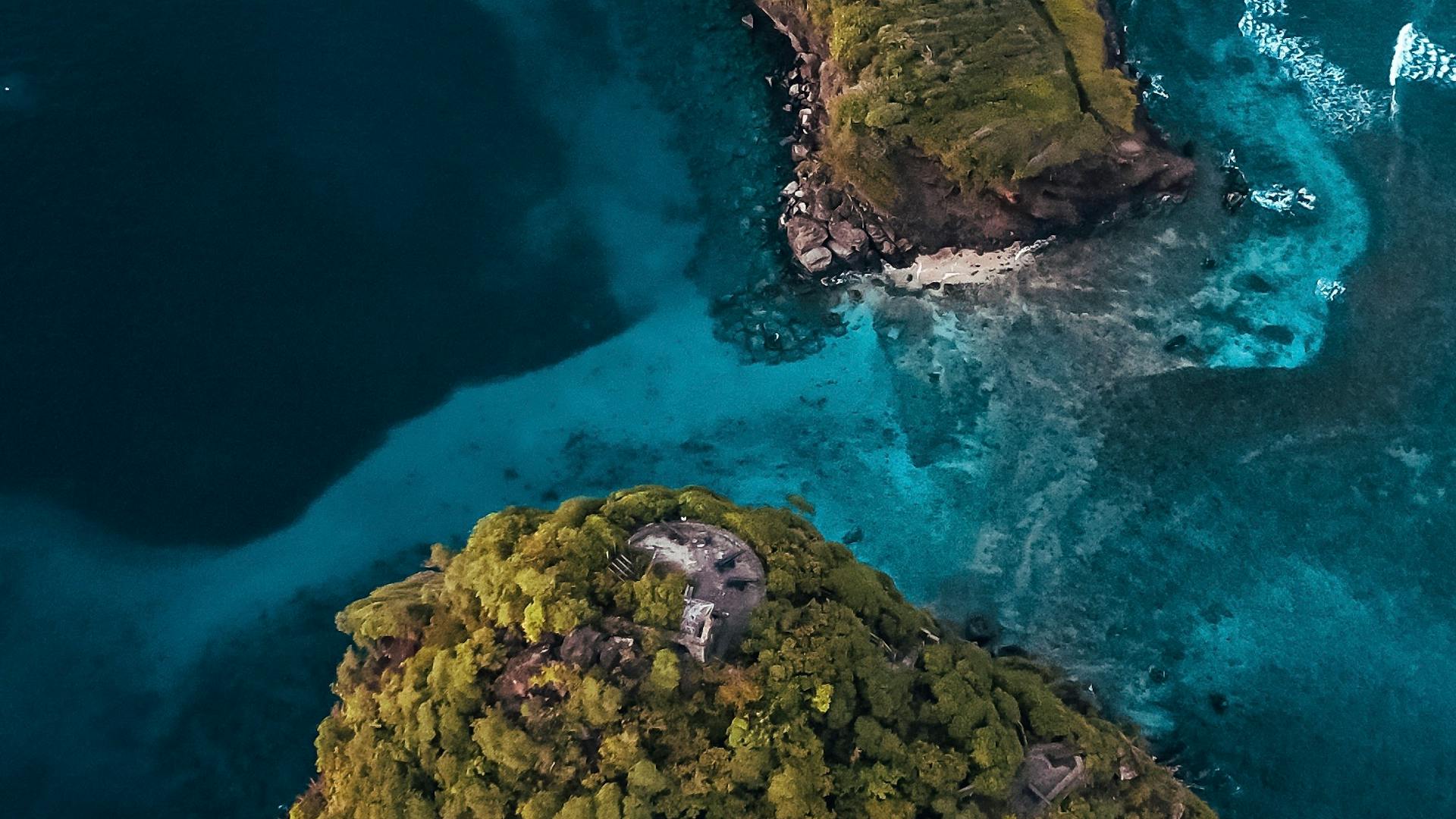
Saint Vincent is the largest and most rugged island in the chain, and most visitors who fly into Argyle International Airport on the east coast either stay a few nights or transit straight onto a ferry south to Bequia. The island rewards those who do stay: it is genuinely undeveloped, the interior is pure rainforest, and the cultural life of the country runs through Kingstown.
La Soufrière dominates the northern third of the island. The active stratovolcano stands at 1,234 metres (4,048 feet) and is one of the youngest volcanoes in the Caribbean. After 40 years of dormancy, it returned to explosive activity in April 2021—ash columns rose 8 kilometres into the sky, around 16,000 people were evacuated from the volcanic zone, and the trail closed for two years. The summit hike re-opened in 2023. The standard route is the windward (eastern) trail from the Rabacca trailhead near Georgetown, a 4-mile climb that takes around two hours up and ninety minutes down. A guide is mandatory for foreign visitors, and the summit is cold, often clouded, and worth carrying an extra layer for.
Wallilabou Bay on the leeward (west) coast was the principal Caribbean filming location for all four original Pirates of the Caribbean films, shot here between 2002 and 2011. The bay was transformed into the fictional Port Royal of Jamaica for the on-screen story. Two decades after filming ended, the set has been preserved—rather than dismantled—by the family that runs Wallilabou Anchorage. The wooden customs office, the period buildings, and props including the original mast from the Jolly Mon ship are still there, set against the bay’s natural stone arch and black-sand beach. There is no admission fee for the public set; the on-site restaurant serves local seafood under a roof of palm thatch.
Buccament Bay, on the same leeward coast about 30 minutes north of Kingstown, is one of the better black-sand beaches on the island. The valley behind it leads inland to the Vermont Nature Trail, a two-hour loop through montane rainforest that is the most reliable place in the country to see the Saint Vincent parrot. The bird—the country’s national emblem and an endemic species—was reduced to a few hundred wild individuals in the 1980s before a serious conservation programme reversed the decline. Spotting one feeding in the upper canopy, with its violet head and bronze-green body, is one of the quiet privileges of the island.
Kingstown itself is small, working, and unrenovated—a port town built around a deep-water harbour at the foot of steep hills. The Saturday morning market on Bay Street sells callaloo, breadfruit, christophene, dasheen, golden apple and saltfish, and is the easiest single way to meet local Vincentians without a guide. Botanical Gardens on the north edge of the city, founded in 1765 and the oldest in the Western Hemisphere, hold a breadfruit tree grown from a cutting brought to the Caribbean by Captain Bligh in 1793. The cathedral nearby, in a strange grey volcanic-stone Gothic, is worth the ten minutes it takes to look around.
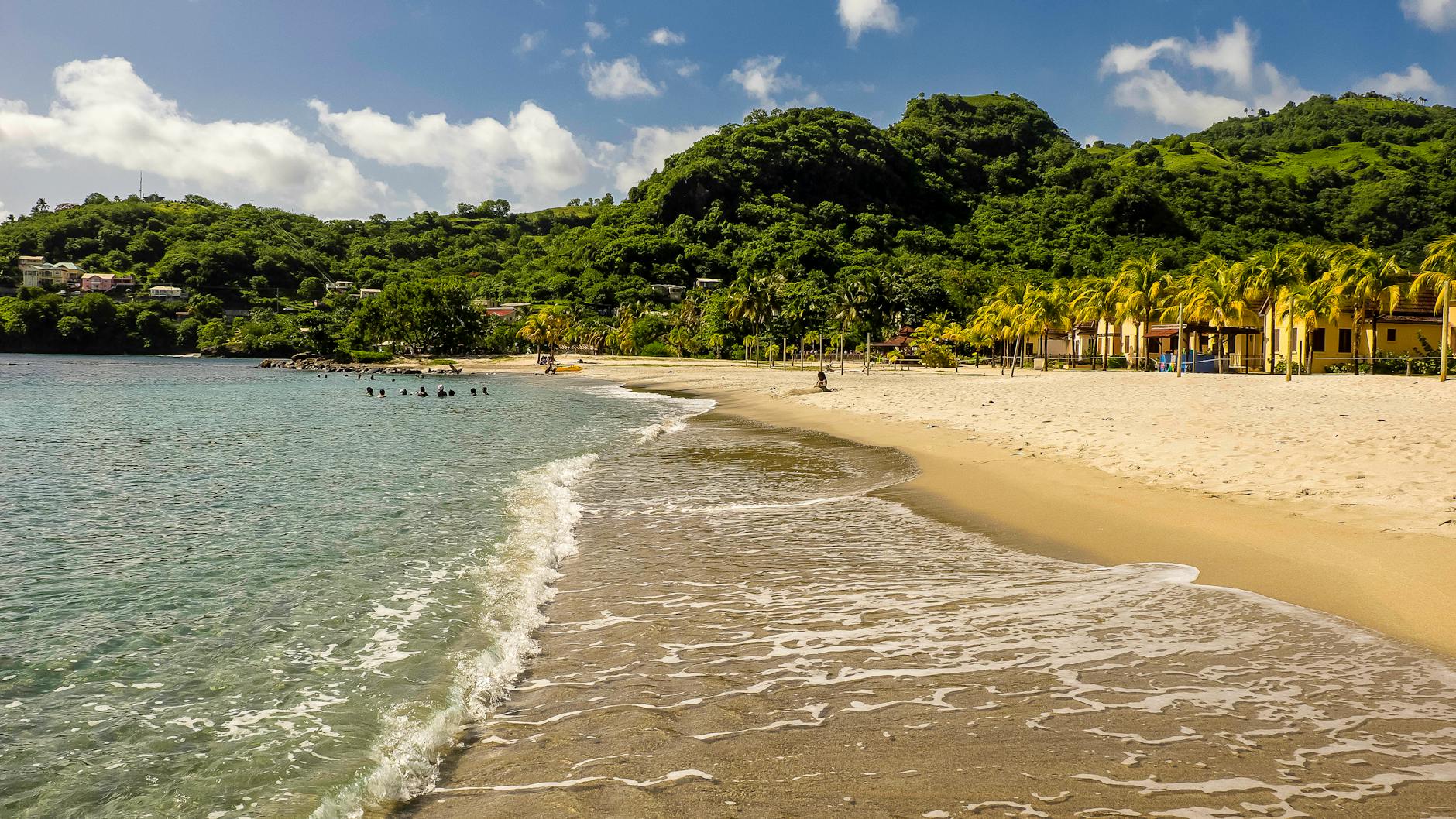
Bequia (pronounced “beck-way”) is the second-largest island in the Grenadines and the one most visitors stay on if they want a base that isn’t Saint Vincent. The island is 18 square kilometres in total, has just under 6,000 residents, and runs at the slow pace that defined the Caribbean before the cruise ships arrived. There is no airport runway long enough for international flights—you arrive by fast ferry from Kingstown in an hour, or by small SVG Air plane in 12 minutes from Argyle.
Port Elizabeth is the only town and runs along Admiralty Bay, one of the great natural harbours of the Eastern Caribbean. The bay fills with sailing yachts most weeks of the year. The Belmont Walkway, a footpath that hugs the south side of the bay from town to Princess Margaret Beach, is built directly over the rocks and runs past beachfront restaurants where dinner gets you a sunset over the water. Princess Margaret Beach—named for the British princess who first visited in 1958—is a long curve of pale sand backed by sea-grape trees, with calm water for swimming.
The Old Hegg Turtle Sanctuary on the east coast at Park Bay is run by Orton “Brother” King, a former fisherman who has been raising hawksbill turtles from hatchling to release age since 1995. It is small, low-key, and entirely hands-on; visitors meet the turtles, hear how the project began, and see hatchlings being weighed and tagged. A small donation is the only entrance fee.
Mustique sits 11 kilometres south of Bequia and is something different entirely. The whole island—1,400 acres of land—is privately owned and managed by the Mustique Company on behalf of homeowners. There are around 120 private villas, a population of about 500 year-round residents, and one hotel, the Cotton House. Princess Margaret was given a ten-acre plot here as a wedding present in 1960, built the villa Les Jolies Eaux, and in doing so seeded the island’s status as the most discreet luxury destination in the Caribbean. Mick Jagger, David Bowie, Kate Moss and Tommy Hilfiger have owned villas here since. Day visits are possible by yacht or the once-weekly mail boat, and Basil’s Bar on Britannia Bay is famously open to anyone willing to walk in.
Canouan, the next island south, is now divided between a quiet local village in the north and a private estate that includes a Jim Fazio championship golf course and the Mandarin Oriental hotel in the south. Visitors are welcome at the Mandarin’s public beach club; the rest of the southern estate is gated. The contrast on a single small island—between the village fishing dock and the helipad of the resort—is striking and slightly uncomfortable to look at directly.
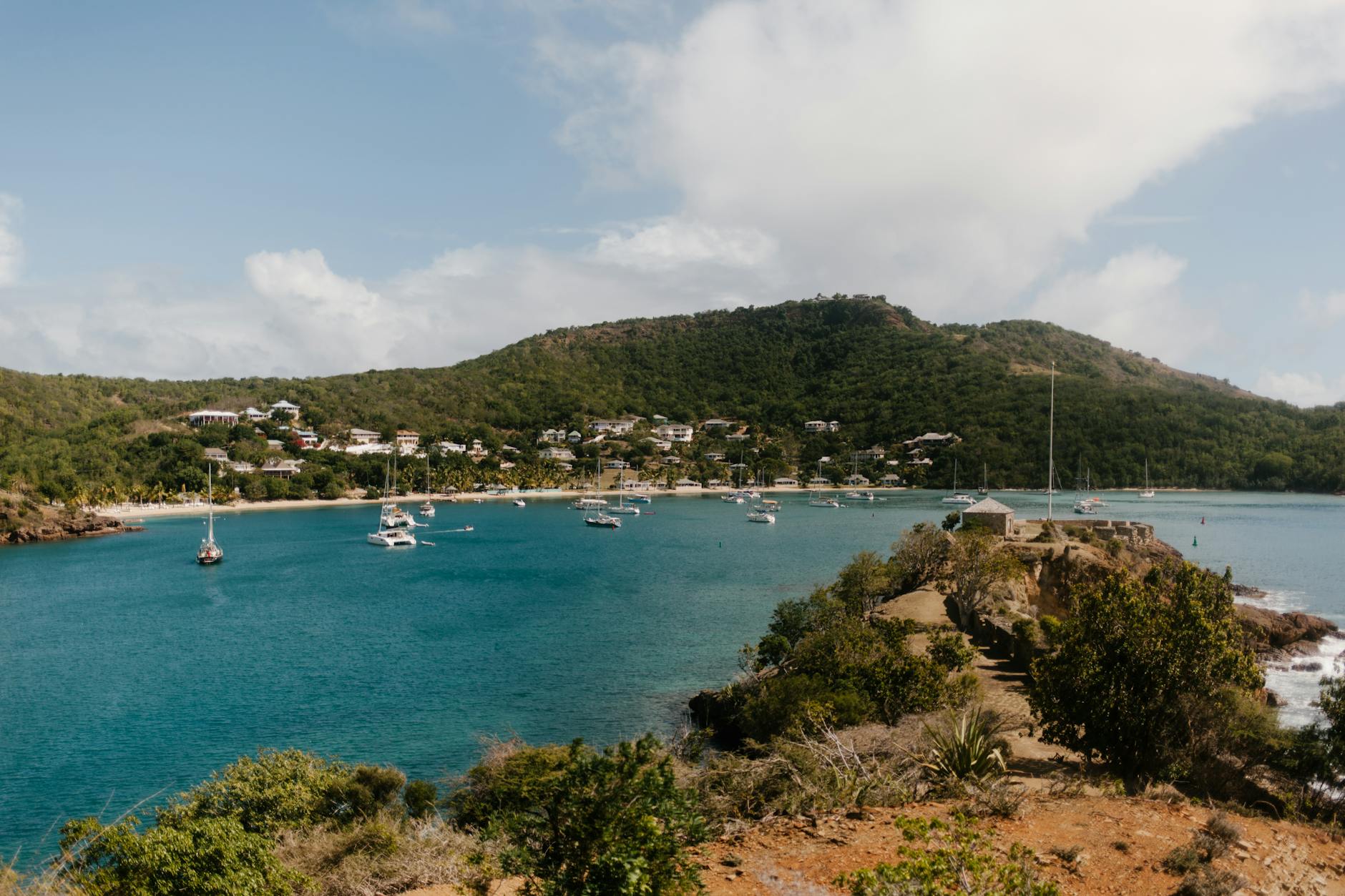
The Tobago Cays Marine Park is the centrepiece of the southern Grenadines and the single most photographed sailing destination in the Eastern Caribbean. Five tiny uninhabited islands—Petit Rameau, Petit Bateau, Baradal, Petit Tabac and Jamesby—sit inside a horseshoe-shaped reef that breaks the swell of the open Atlantic. The protected lagoon covers 50 square kilometres of sheltered, sand-bottomed water in shades of blue that look digitally enhanced.
The Baradal Turtle Sanctuary is a no-anchor, no-fishing zone where green and hawksbill turtles graze on seagrass. Snorkellers swim out from a marked area and almost always find turtles within a few minutes. Horseshoe Reef itself runs along the eastern side of the lagoon and offers some of the easiest, most rewarding snorkelling in the Caribbean—coral heads, parrotfish, eagle rays, and reef sharks at depth. The cays are wildlife reserves: no fishing, no jet skis, no anchoring of dinghies on the reef. A modest park fee is paid on arrival.
Mayreau, just west of the Cays, is the smallest inhabited island in the country with under 300 residents and a single road from the harbour up to the village at the top of the hill. Saltwhistle Bay on Mayreau’s northern tip is a curve of white sand barely 100 metres wide separating the calm Caribbean from the wild Atlantic side. The bar on the beach—a wooden shack run by a local family—serves cold beer and grilled fish to whoever arrives by boat or by foot.
Union Island, further south, is the country’s southern entry point and the staging base for most Grenadines yacht charters. Clifton, the main town, has the airport and the Customs office where boats clear in or out of the country. The Anchorage Yacht Club has been the social hub of southern Grenadines sailing for fifty years. The view from the top of Mount Taboi (304 metres), the highest point on Union, takes in Carriacou and the Grenadian islands to the south on clear days.
Palm Island and Petit Saint Vincent (PSV) are private resort islands at the southern end of the chain, each occupying its own atoll. Both run on the same low-key model: a few dozen cottages, no televisions, no roads, no other guests beyond the islands’ capacity. PSV uses bamboo flagpoles outside each cottage—raise a yellow flag for breakfast, a red one for “please do not disturb”. It is the kind of detail that explains why people return year after year.