This is your destination guide for Austria.
This is your destination guide for Innsbruck
📍 Part of AustriaThe city where a medieval old town sits under a 2,000-metre ridge you can ride to before your coffee's cold.

The reality: Innsbruck does a trick no other city quite manages. You can stand in a 500-year-old arcaded old town, under the gilded Golden Roof, looking straight up at the Nordkette — a wall of rock rising to 2,300 metres directly behind the rooftops. Then you walk five minutes, ride a funicular and two cable cars, and twenty minutes later you're on that ridge, above the city, with a coffee and a 360° of the Alps. City below, high mountains above, and almost no gap between them.
That combination is the whole pitch. Innsbruck is the capital of the Tyrol, a proper university city with a baroque old town, imperial history and a nightlife — and it's hosted the Winter Olympics twice, so the sporting infrastructure is serious. But it isn't a resort. There's no purpose-built village, no single high street of ski hire; there's a real city that happens to have world-class mountains bolted to its edge.
Use both halves. Do the old town, the Golden Roof and the imperial sights in a morning, then spend the afternoon up the Nordkette or out in a Tyrolean valley — Stubai, Zillertal, Ötztal — and back for dinner in town. Innsbruck is the rare place where you don't choose between a city break and a mountain trip; you get both in one day.
Innsbruck's landscape is the join between a city and a mountain wall — and the thing to grasp is how little distance is between them.
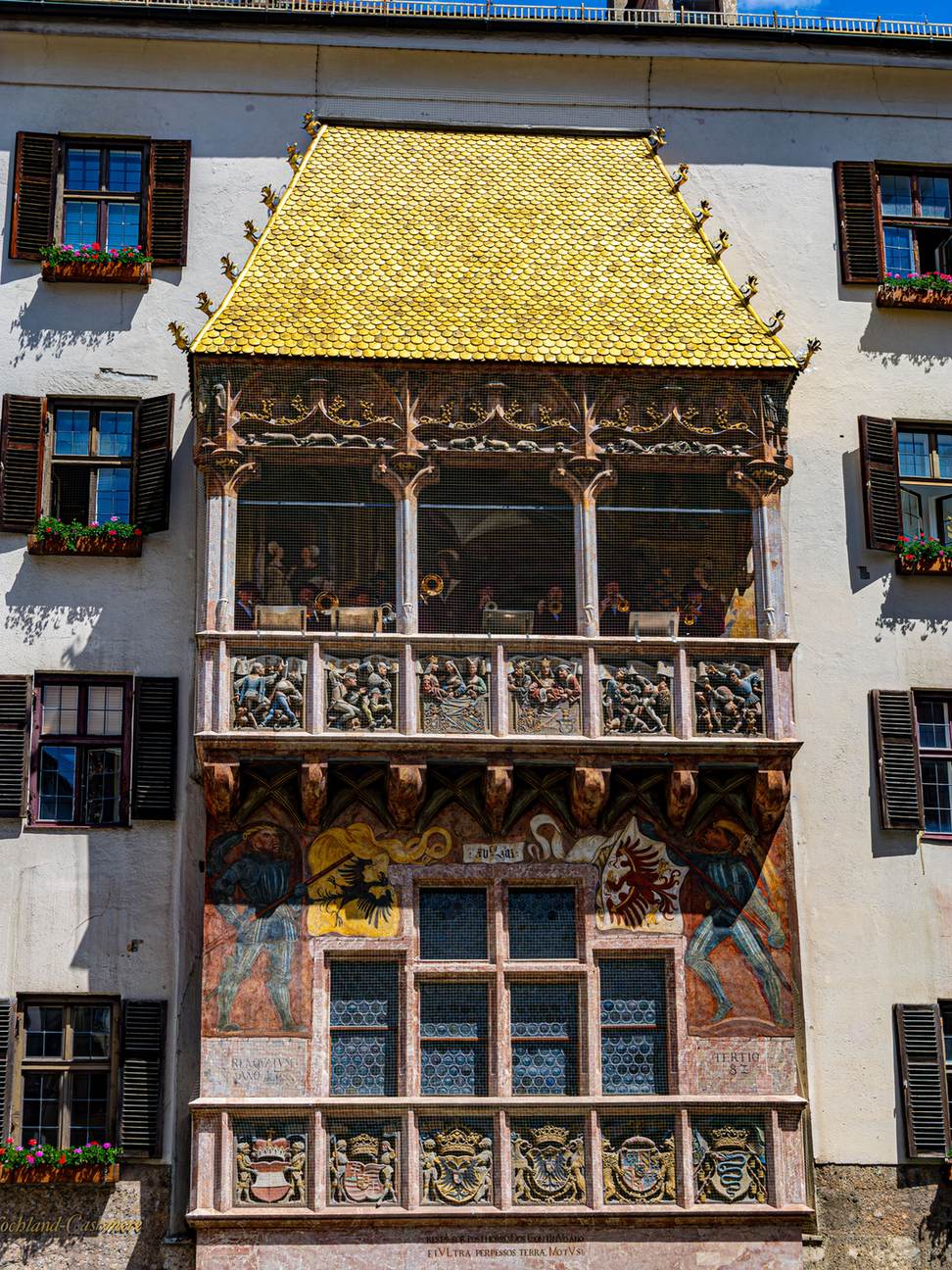
Start in the old town (Altstadt): arcaded medieval lanes leading to the Golden Roof (Goldenes Dachl), a loggia roofed with 2,657 gilded copper tiles that Emperor Maximilian I put up in 1500 to watch the square below. Around it sit the Hofburg imperial palace and the Hofkirche, with Maximilian's black-bronze tomb guarded by 28 larger-than-life statues.
Then the trick: from the Congress station in town, the Hungerburgbahn — a funicular with sleek stations designed by Zaha Hadid — glides up the hillside, where cable cars carry on to Seegrube (1,905 m) and the Hafelekar ridge (2,256 m).
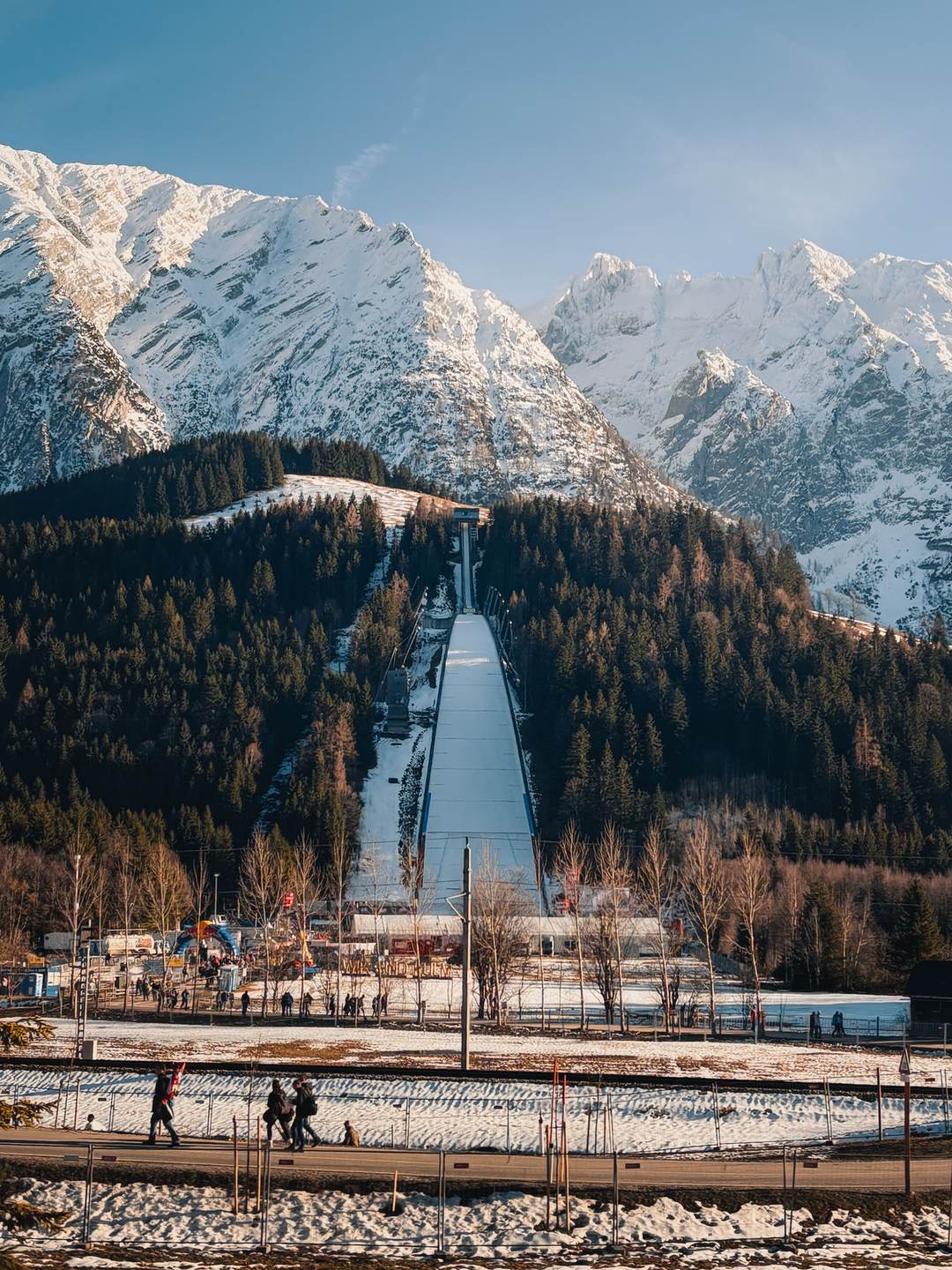
Twenty minutes, and the whole city, the Inn valley and the Alps are laid out under your feet. Also from town: the Bergisel ski jump, another Hadid design, with a viewing deck and café at the top of the run.
Innsbruck sits at the mouth of a fan of famous valleys, each a short train or bus away, each a different Tyrol.

The Stubaital ends at the Stubai Glacier, the biggest glacier ski area in Austria and a year-round snow-and-viewpoint trip (the "Top of Tyrol" platform at 3,210 m). The Zillertal is the big, lively ski-and-hike valley with the Hintertux glacier at its head. The Ötztal runs up to Sölden (glacier skiing, and the "007 Elements" Bond museum at 3,000 m) and the village of Obergurgl.
Closer in, Igls and the Patscherkofel give an easy village-and-cable-car afternoon, and Hall in Tirol, ten minutes east, is a preserved medieval salt town with none of Innsbruck's crowds. On the hillside above, Swarovski Crystal Worlds at Wattens is the glossy, divisive crystal attraction.
A city whose mountains start at the last tram stop.
Two Olympics' worth of infrastructure, glacier skiing within an hour, and hiking straight off a cable car — Innsbruck's whole appeal is how quickly the effort begins.
Tyrolean food is mountain-farmer hearty — dumplings, cured speck, fried and filling — with Innsbruck's cafés and student bars on top.
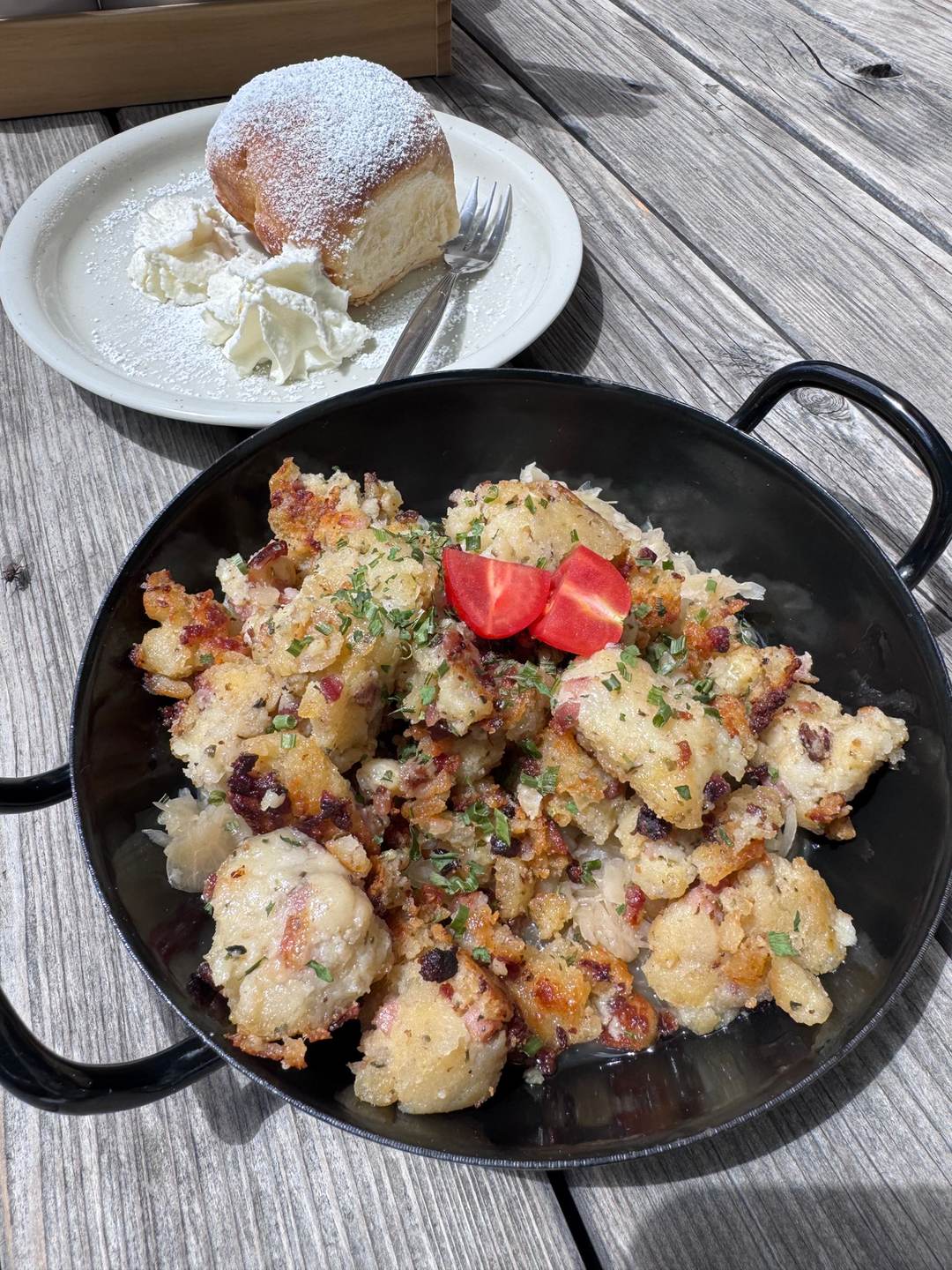
The Tyrol runs on the Knödel (dumpling): Speckknödel (with cured bacon) in broth, and the local hero Kaspressknödel, a flattened, fried cheese dumpling, best eaten at a mountain hut after a walk. Start with a board of Tiroler Speck (the region's air-dried, cold-smoked ham, a protected specialty) and mountain cheese; finish with Kaiserschmarrn or Tiroler Gröstl (the pan-fry of potato, onion and beef under a fried egg).
Drink a Zillertal beer, a Zirbenschnaps (pink, resiny, from Tyrolean stone pine), or a Stubai herbal liqueur. The Adlers and Lichtblick rooftop bars put the Nordkette in your glass; for tradition, the old-town Stiftskeller and the hut kitchens up the cable cars.
Innsbruck is a true two-season base — and, unusually, it's excellent in both.

June to September is hiking season: the cable cars run, the ridge trails and valleys are open, the city sits at a comfortable 22–28°C while the tops stay cool. December to March is ski season, with the Nordkette above town and the glaciers within an hour; the old town does a good Christmas market run under snow.
The shoulders — late April/May and November — are the quiet weeks when the ski lifts have closed and the high trails may still hold snow, so pick lower walks then. One local note: the Föhn, a warm down-valley wind, can bring startlingly mild, clear spells in winter. The mountains make their own weather — check the Nordkette webcam before you commit to the ridge.
Innsbruck is a walk-and-ride city with the mountains wired into the transport map.
The old town is compact and pedestrian — you walk it. The genius bit is that the Nordkettenbahnen (funicular + cable cars) start from Congress station in the centre, so the mountain is on the city transport network, not a drive away. Trams and buses reach the valleys' feet and the Bergisel; regional trains run up the Stubai and Zillertal and along the Inn to Hall.
Fast intercity trains reach Munich in under two hours and Salzburg/Vienna beyond. A car helps only for the deeper valleys (Ötztal, Sölden) — in the city it's a nuisance. The Innsbruck Card bundles the cable cars, buses, Bergisel and museums and pays off fast on a mountain-plus-sights day.
Compact city, so it's really old-town-versus-hillside, plus the option to sleep out in a valley.
In or beside the old town — the Golden Roof, the cafés and the Nordkette funicular station all within a walk; the convenient, characterful pick.
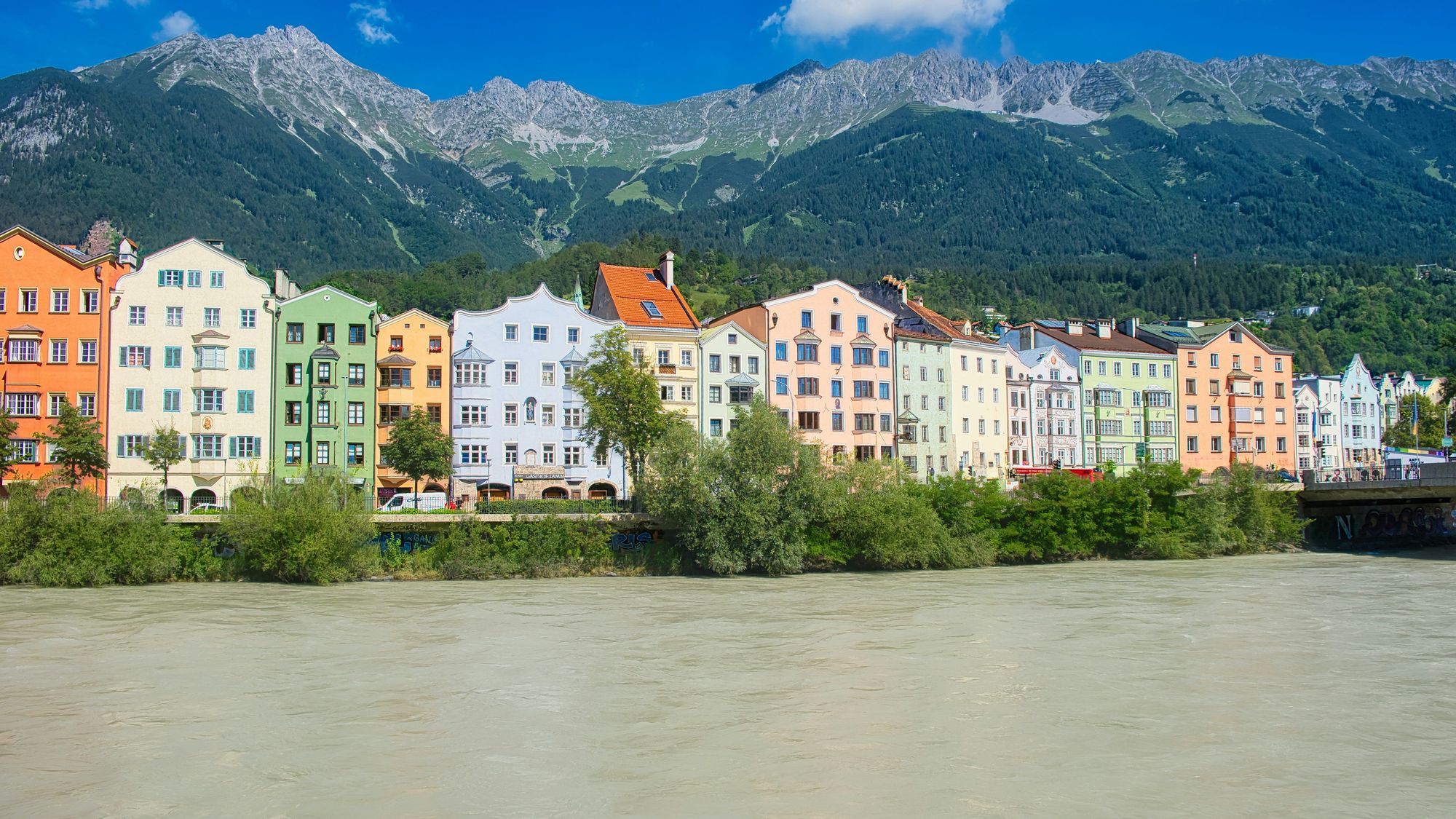
Across the Inn (Mariahilf/St. Nikolaus) — the pastel row facing the old town, a couple of minutes over the bridge, quieter, with the classic photo of the coloured houses under the mountains.
Near the station — the budget-and-transport choice.
Igls / Mutters or a valley — a mountain base with tram or rail access, if the mountains are the main event.
Innsbruck is mid-range Austrian and a clear step below the Swiss Alps — a city-plus-mountain day here costs a fraction of a Zermatt or St. Moritz equivalent, which is a large part of its appeal. Ski passes and glacier trips are the priciest lines; the city itself is an ordinary Austrian city bill.
Prices in 2026 euros. The Innsbruck Card pays for itself the moment you add the Nordkette return to a museum or two; shoulder seasons cut room rates further.
Go if you want a real city and real mountains in the same day — a medieval old town under a ridge you ride to in twenty minutes, glaciers within an hour, and Tyrolean hut food at the end of a walk. Skip if you came for a purpose-built resort's après scene, or you want flat, gentle days rather than mountains that start at the tram stop.
Found this useful? Share it.
Still planning?
We don’t stop at “here’s the country.” Real places to stay, what to do, apps that matter, even how to find someone to travel with — plus guides for whatever vibe you’re after, from beach days to wine country to slow weekends. All up top. Spin for somewhere new when you’re done with this one.