This is your destination guide for France.
This is your destination guide for French Riviera
📍 Part of FranceA coastal train linking Nice, Monaco and Menton, perched stone villages, and the most expensive stretch of sea in the Med.


The reality: You're on the coastal train out of Nice, windows down. Villefranche slides past — a deep blue harbour stacked with ochre houses. Then Cap Ferrat, Beaulieu, Monaco's high-rises, Menton's lemon-yellow old town, and twenty minutes later you're in Italy. A few euros, no parking, no stress. This is the Riviera most people forget exists, because the postcards only show the yachts.
Because the Côte d'Azur has two faces. One is the playground — Monaco's casino, Saint-Tropez's beach clubs, the superyachts in Cannes harbour, prices that make Mallorca look like a bargain. The other is everyday Mediterranean France: chickpea socca eaten standing up in Vieux Nice, a perched village like Èze, a free swim off the rocks below a millionaire's garden. Both are real. You choose how much of each you can afford.
Base yourself in Nice — it's the cheapest, best-connected and most alive of the lot — and let the train do the work. Markets and Matisse in the morning, a coastal path round Cap Ferrat at midday, a perched village or a glass of rosé in the evening. Save the one extravagant day for Saint-Tropez or Monaco, and don't pretend the sand is soft. It's pebbles. Bring the right shoes and you won't care.
First, the honest bit: Nice's beach is pebbles — smooth grey stones, not sand. Half the coast is like that. The sandy beaches exist, but you have to know where, and the best-positioned ones are private clubs.

Antibes — the sandy exception. Plage de la Salis and Plage de la Garoupe on the Cap are proper soft sand, with public stretches. Juan-les-Pins next door is sandier still.
Pampelonne (Saint-Tropez) — the famous one: 5 km of sand lined with beach clubs (Club 55 the legend). There are free public sections between the paid ones — walk past the loungers.
Paloma & Passable (Cap Ferrat) — small pebble-and-shingle coves under the pines, reached on the coastal path. Passable looks straight across at Villefranche.

Plage de la Mala (Cap d'Ail) — a hidden cove below the cliffs between Nice and Monaco, a stairway down from the coastal path. Clear water, two restaurants, no road.
The Esterel coves — red porphyry rock dropping into the sea between Saint-Raphaël and Théoule. Small, wild, reachable by car, boat or coastal path. The opposite of a Croisette sunbed.
Île Sainte-Marguerite (Lérins) — a 15-minute ferry from Cannes to a pine-and-eucalyptus island with quiet swimming spots and the fort that held the Man in the Iron Mask.
This is the heart of the Riviera. They sit along one train line, so you can sample several in a few days.

Nice — the base. A long pebble bay (the Baie des Anges) under the Promenade des Anglais, the ochre maze of Vieux Nice with the Cours Saleya market, and up in Cimiez the Matisse and Chagall museums. Cheapest, liveliest and best-connected city on the coast. Start here.
Cannes — yachts, the Croisette, and the Film Festival in mid-May (avoid those dates unless you booked a year ago). Climb to Le Suquet, the old town above the port, for the version of Cannes that existed before the red carpet. Ferries to the Lérins islands leave from here.

Antibes — the most liveable of the lot. A walled old town (Vieil Antibes) with the daily Marché Provençal, the Picasso museum in the seafront château, sandy beaches, and Cap d'Antibes for the coastal walk. Juan-les-Pins is the beach-and-jazz half next door.
Villefranche-sur-Mer — a deep natural harbour ten minutes from Nice, ochre houses dropping to the water, a genuinely pretty old town with a vaulted medieval street (Rue Obscure). The calm, photogenic stop.
Èze — a perched stone village clinging to a crag above the sea, with a cactus garden at the top and the Nietzsche path zig-zagging down to the shore. Touristy by day, magical at opening time. Half a day.
Menton — the last town before Italy, and it shows: lemon-yellow and apricot façades, Italian-leaning food, sub-tropical gardens, and the Lemon Festival each February. Quieter and cheaper than the rest.
The two you'll be asked about: Saint-Tropez sits off to the west — beach-club and superyacht territory, best reached by boat from Sainte-Maxime or Saint-Raphaël rather than the gridlocked road; worth one day if that's your thing. Monaco is technically its own country — same train, same euro, no border fuss — and worth a day for the casino, the oceanographic museum and the old town, even if you're just window-shopping the other half-percent's lifestyle.
The Riviera's idea of "active" is a coastal walk, a boat, and a museum — not a training camp.
You don't come here for a workout. But the coast walks are some of the best in the Med, and the art is half the point.
Niçoise food is its own cuisine — Mediterranean, Italian-influenced, built on chickpeas, olive oil, anchovies and vegetables.
Socca — a thin chickpea-flour pancake, blistered in a wood oven, torn up and eaten hot with pepper and a glass of rosé. Standing up, from a stall in Vieux Nice. The defining Riviera street food.
Salade niçoise — the real one has no potato and no cooked vegetables: tomato, egg, anchovy or tuna, olives, raw veg. Locals are firm on this. Argue at your peril.
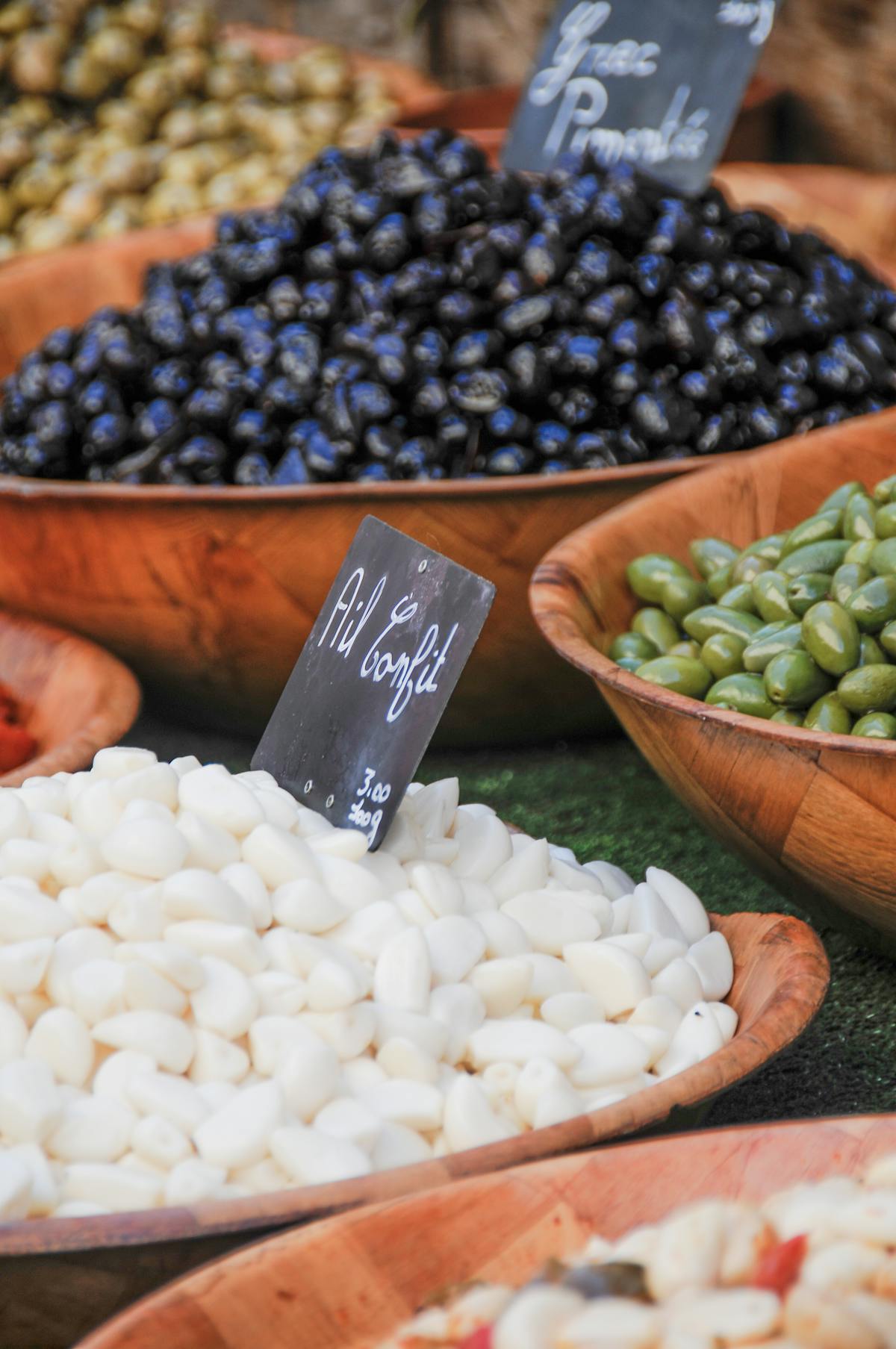
Pissaladière — a flatbread of slow-cooked onions, anchovies and black olives. Pan bagnat is salade niçoise stuffed into a round bread, the perfect beach lunch.
Petits farcis — small vegetables stuffed with meat and herbs. Beignets de fleurs de courgette (fried courgette flowers) are the summer treat. In Menton, everything ends with a tarte au citron.
Where to eat: the Cours Saleya market in Nice for produce and socca; tiny niçoise institutions like La Merenda in the old town (no phone, cash only, book by walking in). On the Lérins, the monks of Saint-Honorat make wine you can taste at the abbey.
Wine & drinks: this is rosé country — pale, dry Côtes de Provence and the more serious Bandol just to the west. Pastis is the apéritif ritual; a cold beer or a Côtes de Provence rosé is the lunch default.
May–June and September are the sweet spot: 22–27°C, warm sea (Jun onward), everything open, before and after the August crush.
Watch the calendar, though — a handful of events spike prices and fill every room: the Nice Carnival (Feb), the Menton Lemon Festival (Feb), the Cannes Film Festival (mid-May), and the Monaco Grand Prix (late May). Brilliant to witness, brutal to book around.
July and August — hot, packed and at peak prices, with all of France on holiday in August. The coast road jams; the beaches fill.
Winter — mild on the coast and cheap, with the mimosa out and Menton's lemons in February. Many beach restaurants close, but Nice, Cannes and Menton stay open year-round, and the light is the one the painters came for.
Take the train, not a car. This is the rare Mediterranean destination where a car is a liability — parking is scarce and dear, and the coast road crawls in summer. The coastal TER (Cannes–Nice–Monaco–Menton–Ventimiglia) runs roughly every 30 minutes, costs a few euros a hop, and delivers you to the middle of each town with sea views the whole way. A Zou / Azur multi-day pass covers train, tram and bus across the Alpes-Maritimes and Monaco.
Boats fill the gaps: the Lérins ferry from Cannes (15 min), and the seasonal Saint-Tropez boat (Apr–Oct) that saves you the worst drive on the coast.
If you do drive — only really worth it for the perched villages and the back country. The three Corniches between Nice and Monaco are the famous cliff roads (the Grande Corniche up top is the scenic one). For the interior, the Train des Pignes (Nice–Digne) and Train des Merveilles (Nice–Tende) are attractions in themselves.
Monaco is a day-trip on the same coastal train — its own country, but no border friction and the same euro.
Base by budget and pace — then let the train connect the rest.
Nice — the smart all-rounder. Cheapest, most connected, most to do; the natural base for everything east and west.
Antibes / Juan-les-Pins — for sandy beaches and an old town with daily life. Good for families.
Villefranche-sur-Mer or Beaulieu — prettier and calmer than Nice, mid-priced, perfectly placed between Nice and Monaco.
Menton — quietest and cheapest, Italian-leaning, gardens and lemons. For a slower week.
Cannes — for the glamour and the Croisette; pricey, peaks during the festival.
Saint-Tropez — the splurge: beach clubs, yachts, sky-high summer rates, and you'll want a car or a boat. West of the rest.
This is the expensive end of the Mediterranean — the coast Mallorca, Corsica and the Italian Riviera all get measured against. Nice and Menton are doable mid-range; Saint-Tropez, Cap Ferrat and Monaco are where money goes to be seen.
Prices in 2026 euros. Nice and Menton run far cheaper than Saint-Tropez, Cap Ferrat or Monaco; off-season knocks 30–40% off hotels — except during the festival and Grand Prix weeks, when everything spikes.
Go if you want the Mediterranean's most glamorous coast done smart — the coastal train instead of the car, socca and rosé in Vieux Nice, a coastal walk round Cap Ferrat, and one splurge day in Saint-Tropez or Monaco. Skip if you came for soft empty sand on a budget — this coast is pebbles, private clubs, and the bill everyone else gets compared to.
Found this useful? Share it.
Still planning?
We don't stop at "here's the country." Real places to stay, what to do, apps that matter, even how to find someone to travel with — plus guides for whatever vibe you're after, from beach days to wine country to slow weekends. All up top. Spin for somewhere new when you're done with this one.