

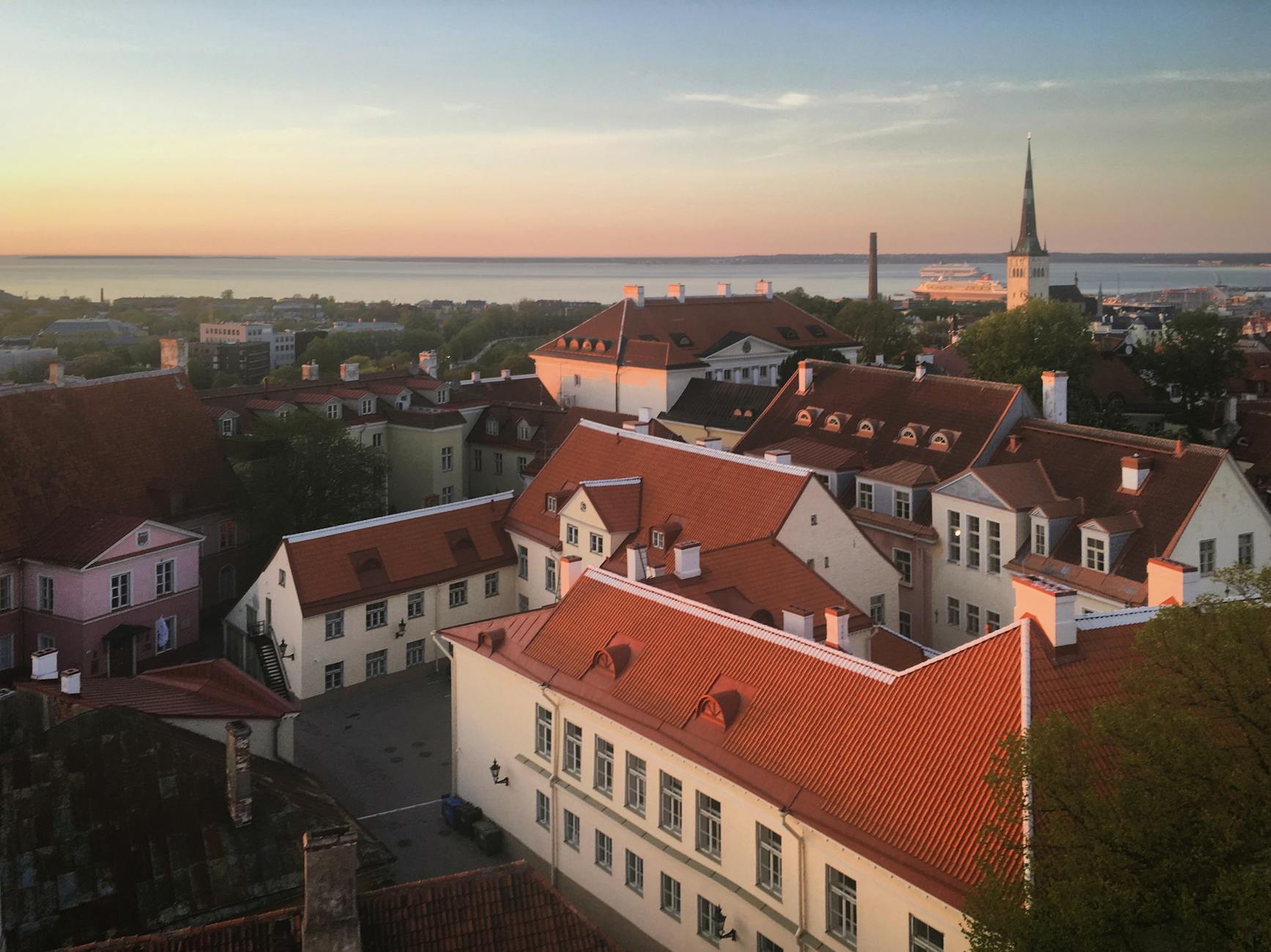
Tallinn's Old Town is one of Europe's best-preserved medieval centers. UNESCO-listed since 1997. The city walls, towers, and street layout date from the 13th-16th centuries when Tallinn thrived as a Hanseatic League trading hub.
Town Hall Square anchors the lower town. Northern Europe's oldest town hall (13th century) dominates the square. Europe's oldest continuously operating pharmacy—600 years old—still serves customers here.
Toompea Hill rises above the old town. Climb to the viewing platforms for panoramic views over red roofs and church spires. Alexander Nevsky Cathedral's onion domes contrast with Lutheran spires.
Medieval festivals, Christmas markets, and summer concerts fill the square. But step into the side streets and courtyards—that's where the old town reveals its quieter character.
Tallinn works perfectly for a long weekend. Compact. Walkable. Beautiful.

Estonia is the world's most digitally advanced society. Not Silicon Valley. Not Tokyo. Estonia.
99% of government services are online. Estonians file taxes in under 5 minutes. Digital prescriptions. Digital signatures. Digital voting since 2005.
E-residency allows anyone globally to start an EU-based company online. Digital nomads can live here, work remotely, and enjoy fast internet everywhere—even in forests.
Skype was created here. TransferWise (now Wise) started here. Bolt (ride-hailing) is Estonian. The country punches above its weight in tech.
This digital infrastructure makes travel remarkably smooth. Everything just works.
Lahemaa National Park covers 725 km² of northern Estonia, just 70 kilometers east of Tallinn. It was the Soviet Union's first national park, established in 1971.
The name means "Land of Bays." Four large peninsulas separated by four bays create a deeply indented coastline. Forests cover 70% of the park. Ancient raised bogs, some 7,000 years old, dot the landscape.
The coast features both rocky shores and sandy beaches. Europe's largest deposit of erratic boulders—transported by Ice Age glaciers from Finland—lines the beaches.
Four historic manors lie within the park boundaries. Palmse, Sagadi, Vihula, and Kolga manors date from the 18th-19th centuries. Traditional fishing villages like Käsmu and Altja preserve maritime heritage.
Wildlife includes moose, wild boar, brown bears, and lynx. It's Estonia's most accessible nature experience.

Estonia has over 2,000 islands. Most are small, uninhabited, and forested. The two largest—Saaremaa and Hiiumaa—offer a slower pace and well-preserved traditions.
Saaremaa features windmills, thatched roofs, and Kuressaare Castle, one of the Baltic's best-preserved medieval fortresses. The island's spa tradition dates back centuries.
The Baltic coastline stretches for hundreds of kilometers. Sandy beaches, pine forests, and small fishing villages define the coast. Summer brings surprisingly warm water—by Baltic standards.
Pärnu, Estonia's summer capital, draws beach-goers from across the Baltics. Wide sandy beaches, shallow water, and Art Nouveau architecture make it popular with families.
Estonian summers are short and treasured. Locals make the most of every sunny day at the coast.