
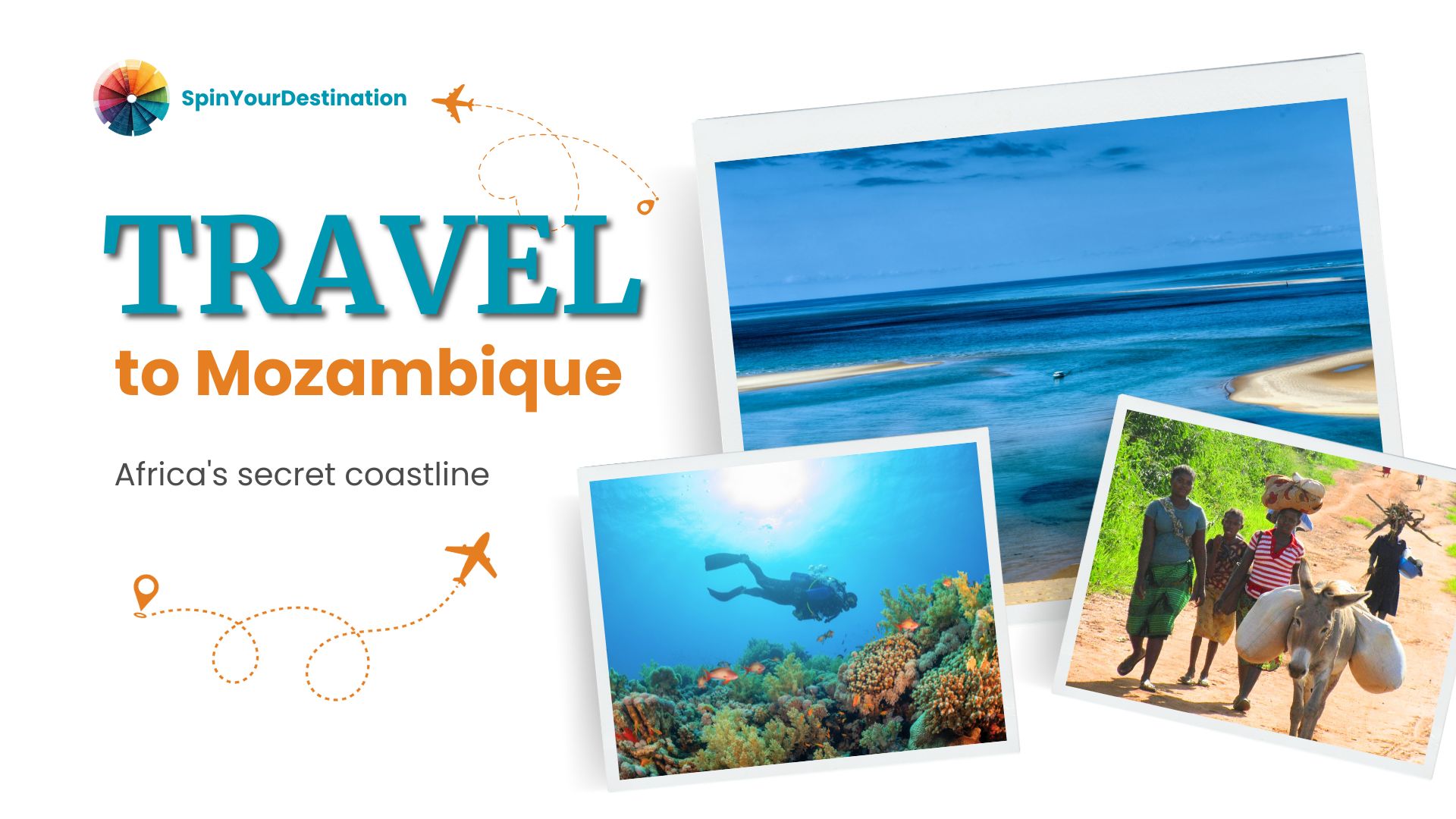
Food & Culture Mozambique
Your complete guide to Mozambican cuisine, markets, and cultural heritage
The waiter sets down a plate of tiger prawns the size of your fist, grilled over coals with piri-piri sauce and served with xima — a stiff maize porridge that makes the sauce make sense. This is the meal Mozambique is known for. It's as good as the reputation suggests.
Mozambican cuisine is one of Africa's most distinctive — shaped by Portuguese colonialism, the spice trade from India and Arabia, the Indian Ocean's extraordinary seafood, and the agricultural traditions of the interior. The result is a kitchen that's simultaneously familiar and surprising: prawns that dwarf anything available in Europe, coconut-based curries of seafood and cassava leaves, stews of crab and groundnut, and everywhere the dry heat of piri-piri.
Beyond food, Mozambique's cultural life is richer than most visitors expect. Maputo has a sophisticated contemporary art scene. The marrabenta music tradition is nationally distinct. The traditional weaving and textile crafts — particularly in the north — produce work of real quality. And the country's layered history — Arab trading ports, Portuguese forts, Indian merchant families — has left cultural deposits that reward careful attention.
Piri-Piri Prawns & Seafood — The National Dish
The Mozambican prawn is not the same as a prawn elsewhere. Langoustines and tiger prawns from the Maputo Bay and the Mozambique Channel are among the finest in the world — large, sweet, and with a quality of flesh that reflects the cold-current-influenced waters of the southern Mozambique coast.
Piri-piri (peri-peri) chilli sauce — a Portuguese-African invention perfected in Mozambique — is the standard accompaniment. It ranges from mildly warm to genuinely incendiary. Order it on the side if unsure. The best prawn restaurants are along the Costa do Sol strip in Maputo (a 5km stretch north of the city centre) and at the beach restaurants of Tofo and Vilanculos.
Other essential seafood: caril de caranguejo (coconut crab curry), bacalhau (salt cod — Portuguese influence), amêijoas (clams cooked in garlic and white wine), and caldeirada (mixed seafood stew with potato and tomato). Portions are large. Beer (Dois M or Laurentina) is the standard pairing.
Matapa, Xima & Traditional Cuisine
Away from the tourist seafood restaurants, Mozambican home cooking is defined by different flavours. Matapa is the country's most celebrated traditional dish: cassava leaves pounded and cooked slowly in coconut milk with garlic and peanuts, served with rice or xima. It is mild, rich, and unlike anything else.
Xima — stiff maize porridge — is the starch of the interior, eaten with beans, vegetables, or meat stews. In the south, xima appears alongside prawns and fish sauces. In the north, it's accompanied by matapa or beans. Every region cooks it slightly differently.
Galinha à zambeziana (chicken in coconut milk, lime, and garlic) comes from Zambézia province and is found on restaurant menus throughout the country. Frango à cafreal (grilled chicken with herb and chilli marinade) reflects the Portuguese-African synthesis that defines Mozambican cooking.
Markets, Crafts & Cultural Life
Maputo's Mercado Central is one of Africa's great markets — fish and shellfish from the bay, pyramids of tropical fruit, dried goods, spices, fabric, cashews (Mozambique is one of the world's largest cashew producers), and craft objects. Go early (7–10am) for the freshest fish section.
The FEIMA crafts market in Maputo (on Av. 25 de Setembro) sells Mozambican woodcarving, weaving, ceramics, and textile work. The Núcleo de Arte gallery represents Mozambique's most significant contemporary artists. Makonde woodcarving — from the northern Cabo Delgado province — is internationally regarded and widely available.
Mozambican music is a serious cultural export. Marrabenta — the national popular music — originated in Maputo's working-class neighbourhoods in the 1940s and reflects the city's Portuguese-African sonic synthesis. Live marrabenta plays on weekends at dedicated venues; ask locally for current listings.
⭐ Top Food & Culture Experiences
🦐 Piri-piri prawns — Maputo waterfront
Tiger prawns grilled over coals with piri-piri sauce on the Costa do Sol strip. The defining Mozambican meal. Order whole prawns (not frozen), a cold Dois M, and xima on the side. Expect to pay USD 20–40 for a full platter. More info →
🍨 Matapa cooking experience
A traditional Mozambican meal prepared the old way — cassava leaves pounded by hand, slow-cooked in coconut milk and peanut. Learn to make it at a community cooking project in Maputo or with local families. Ask your hotel to arrange. More info →
🌹 Mercado Central — Maputo
One of Africa's great urban markets. Fresh fish, tropical fruit, spices, cashews, fabric, and household goods. The fish section (western end) is busiest 7–9am. Budget USD 5–10 for snacks and sampling. Go on a weekday. More info →
🥬 Cashew & local products tour
Mozambique produces 15% of the world's cashews. Processing facilities near Nampula and in the interior offer tours. See the nut from raw to roasted, taste local varieties, and buy direct. Combine with a visit to local agricultural communities. More info →
🍯 Fresh seafood — Tofo Beach
The fish landed on Tofo Beach each morning ends up grilled at the beach bars by lunchtime. Tuna, barracuda, and reef fish straight off the boat. The simplest version of Mozambican coastal cooking at its most direct. Budget USD 8–15. More info →
🎶 Marrabenta music — live in Maputo
Mozambique's national popular music genre, born in Maputo's working-class neighbourhoods. Live performances on Friday and Saturday evenings at venues in the Baixa district. Ask hotel staff for current listings — the best spots rotate. More info →
💡 Insider Tips
- 🍸 Mozambican beer: Dois M (2M) is the national lager — light, cold, and exactly right with seafood. Laurentina Preta is the local dark beer. Both are cheap (USD 1–2 at local bars, USD 2–4 at tourist restaurants).
- 👑 At the Mercado Central, bargain respectfully. Prices for tourists are set higher — asking for “preco justo” (fair price) in Portuguese usually produces a better deal without creating friction.
- 🍲 Machamba de Prânia and the Costa do Sol strip are the best areas for seafood in Maputo. Avoid tourist-facing restaurants near the main hotels — the best food is where locals eat.
- 🌁 Cashew wine (licor de caju) is made from the cashew apple — the fruit attached to the nut — and is intensely flavoured, slightly fermented, and found everywhere in rural Mozambique during cashew season (August–September).
- 📆 The FEIMA crafts market in Maputo is open weekends. For Makonde woodcarving, verify the piece is genuinely carved locally — mass-produced import copies have flooded the market. Original pieces have tool marks and imperfections.