
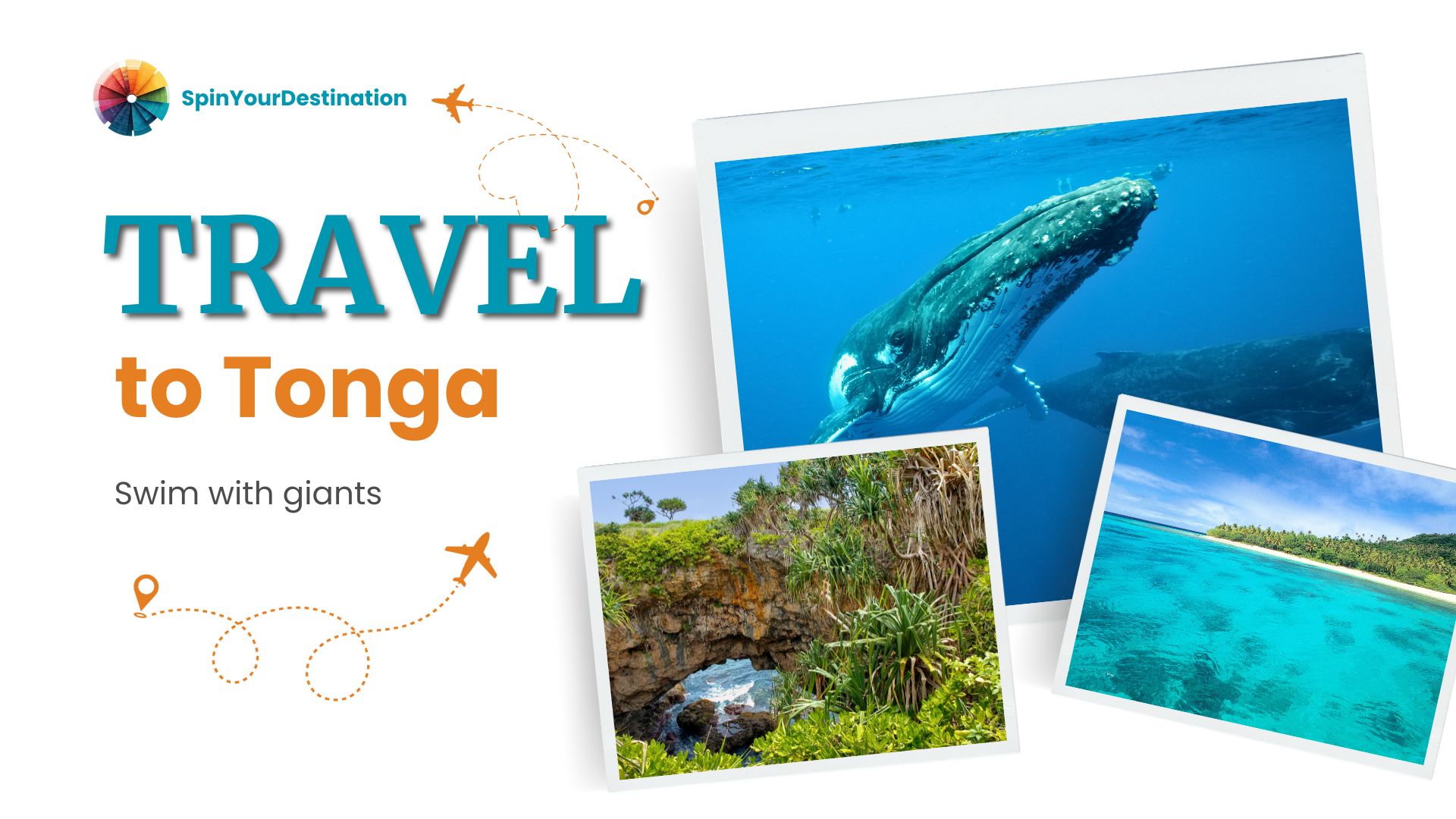
Countryside Tonga
Your complete guide to Tonga’s villages, plantations, and rural islands
The smell hits you first. Drive twenty minutes east of Nuku‘alofa and the air changes—sweet from rotting breadfruit, sharp from a kava root someone is grinding outside a fale, smoky from a coconut-husk fire that’s been burning all morning under a tin pot. A pig walks across the road in front of the car. The road is the only piece of asphalt for kilometers, and it threads between square plots of taro, kape (giant taro the size of small trees), and pineapples planted in straight rows by hand.
This is the Tonga that 99 percent of Tongans actually live in. The country has only one real city—Nuku‘alofa—and one real town, Neiafu, in Vava‘u. Everything else is village. Most villages have between fifty and four hundred people, a single Wesleyan church (its concrete walls usually painted the brightest color in the settlement), a school, a co-op shop, and a long line of small plantations stretching out behind the houses into bush. People know each other’s grandparents.
Tonga is the only Pacific Island nation never to have been colonized. That fact runs through every village you visit. The language, the customs, the social structures, the land tenure, the pace of daily life—none of these were broken and rebuilt by an outside power, and the deference shown to the king and to chiefs is genuine, not nostalgic. Sundays are sacred and quiet by constitutional law. Plantations are tended by hand. Cooking is done in earth ovens (’umu) set into the ground. To travel through Tonga’s countryside is to encounter all of this not as performance but as plain reality.
Tongatapu’s east—the ancient capitals and the cave
Drive east from Nuku‘alofa along the king’s road and the landscape opens out into Tonga’s richest agricultural belt. Plantations of taro, yam, kape, and squash run for kilometers. Most are still worked the same way as a century ago: cleared with bush knife, planted by hand, weeded by hand. The squash crop, harvested between September and November for export to Japan, has become Tonga’s biggest agricultural revenue stream and changes the look of entire villages during harvest.
About half an hour out you reach Mu‘a—the country’s ancient capital from roughly 1200 to 1850 AD. Twenty-eight royal langi (stepped stone tombs) sit clustered around the village. Some are over 800 years old. The largest, Paepae ‘o Tele‘a, has facing stones cut to weigh twenty tonnes each, ferried across the lagoon from coral reefs by men using ropes and rolling logs. Visitors walk freely between them; there is no entry fee, no formal interpretation, just the tombs themselves sitting in cropped grass.
A further fifteen minutes east, at Niutoua, stands the Ha‘amonga ‘a Maui trilithon—three coral-limestone slabs raised in a portal shape around 1200 AD by the eleventh Tu‘i Tonga, Tu‘itatui. Each upright weighs more than thirty tonnes. The locals call it the Stonehenge of the Pacific. The site is open day and night, marked only by a low fence and a small interpretation panel. There is rarely anyone else there.
The east-coast cave at ‘Anahulu (a 400-meter karst cave with a freshwater swimming pool inside) and the small beach 50 meters from its entrance round out the main historical circuit. Most visitors do this whole loop in a single half-day with a local driver-guide.
Tongatapu’s west—blowholes, sacred bats, plantations
The western half of Tongatapu is more open and more rural. The drive from Nuku‘alofa to the west coast at Kanokupolu takes about forty minutes through farming villages that have been growing the same crops for generations: cassava, taro, breadfruit, papaya, plantain, and the spectacular kape with leaves the size of dining tables. Many roadside stands sell fruit on the honor system—a small stack of mangoes for $2.1, an empty jar to leave the coins in.
Halfway along, at the village of Houma, the Mapu’a ‘a Vaea blowholes spread out for five kilometers along a flat coral platform. When the swell is up, several hundred jets fire skyward at once—some seven meters high—in a continuous low roar. Local kids walk between the holes timing the spray. There is no fee, no fence, just the platform and the ocean.
At Kolovai, a colony of several thousand flying foxes (Tongan fruit bats) roosts permanently in the ironwood trees lining the village road. The bats are sacred to the royal family and only members of the royal household are permitted to hunt them. Twice daily—at dawn and dusk—the colony lifts off in a slow, soft, kilometer-wide cloud and flaps inland to feed. It is one of the great Pacific wildlife spectacles, and it happens in the middle of an ordinary village.
The road continues to Abel Tasman’s landing site at Ha‘atafu, the spot where the Dutch navigator put ashore in January 1643. The west-coast beaches and reef pass at Ha‘atafu mark the end of the main road; from here on, the only way west is by boat.
‘Eua—Tonga’s national-park island
‘Eua sits 18 kilometers southeast of Tongatapu—a 10-minute flight or a 2-hour ferry crossing—and is the country’s only island with proper highlands. Its limestone backbone rises to 312 meters and the eastern flank drops in a sequence of cliffs and sea caves to the open ocean. The whole eastern interior is protected as ‘Eua National Park, the only national forest park in Tonga, established in 1992 and covering 4.5 square kilometers of untouched tropical rainforest.
The park is home to species that exist nowhere else on earth, including the ‘Eua koki parrot, the ‘Eua forest gecko, and the red shining-parrot. Walking trails run through banyan-tree groves so dense that mid-afternoon feels like dusk. The Soldier’s Grave at the highest point honors a New Zealand soldier killed during the Pacific War in 1943. Most trails are walkable independently with offline GPS, but the more remote ones require a local guide—typically arranged through your accommodation for around $50 for a half-day or $96 for a full day.
Outside the park, ‘Eua’s villages are some of the most traditional in Tonga. The pace is markedly slower than even rural Tongatapu. There are perhaps 5,000 people on the whole island; one ATM in the main settlement at Pangai-‘Eua; one paved road; and almost no traffic. The southern coastal cliffs at Lakufa’anga and the ‘Ana ‘Ahu (Smoking Cave)—an almost bottomless sinkhole with a misty waterfall—rival anything on the main islands. Few visitors make the short flight south.
Ha‘apai and Vava‘u—the rural archipelagos
Both outer island groups are essentially countryside in their entirety. Ha‘apai’s 62 islands have a combined population of around 6,500 across just ten inhabited islands, and the regional capital, Pangai (on Lifuka), is barely larger than a typical village. Plantations on Foa Island grow vanilla, papaya, and pineapple in volcanic soil; women weave pandanus mats outside their houses every afternoon; pigs wander the village paths.
Vava‘u, despite hosting Tonga’s second town at Neiafu (population around 4,000), is also overwhelmingly rural. The island group’s 61 islands include three of Tonga’s major commercial vanilla plantations—the islands have around 500 hectares of vanilla under cultivation. Vanilla here is grown on small family plots, hand-pollinated each morning during the brief flowering season in October and November. The cured pods sell to international buyers for some of the highest prices paid for Pacific vanilla anywhere.
Mt Talau, just outside Neiafu, is the easiest rural walk in Vava‘u: a steep 15-minute climb through forest to two viewing decks above the Port of Refuge harbor. The descent passes through three village lanes where the rooster-and-pig traffic noticeably outweighs the human kind. Open daily except Sundays, and free.
For visitors choosing a base in either group, the small lodges scattered along the coasts function as the only real way to access the countryside. Accommodation is simple, food is local, internet is occasional. The places that thrive are the ones run by families who have been at it for thirty years and treat their guests less like customers and more like temporary neighbors.
🌟 Top Countryside Experiences
🏙️ Anahulu Cultural Tour—Tongatapu
Half-day guided tour with Teta Tours covering Tongatapu’s royal-cultural circuit: Royal Palace, Royal Tombs, Captain Cook’s Landing, Mu‘a’s ancient royal langi, the Ha‘amonga ‘a Maui trilithon, and Anahulu Cave with live demonstrations of tapa-cloth making, mat weaving, coconut-cream preparation, and a kava ceremony. From around $67 per person with hotel pickup, 4 hours total. More info →
🐠 East Coast Historical & Anahulu Tour
3-hour east-coast loop visiting Mu‘a’s 800-year-old royal tombs, Captain Cook’s Landing site, Ha‘amonga ‘a Maui (the “Stonehenge of the Pacific”), and Anahulu Cave with a swim in the freshwater underground pool. Tonga’s most popular guided tour, 4.1/5 over 70 reviews. From around $38 per person, hotel pickup included. More info →
🌵 West Coast Scenic Tour
3-hour drive through Tongatapu’s western villages: the Three-Headed Coconut tree, Mapu‘a ‘a Vaea blowholes spraying seven meters into the air for five kilometers along the coast, the Tsunami Rock, the sacred flying-fox colony at Kolovai, and Abel Tasman’s landing site. From around $36 per person with hotel pickup. More info →
🐟 ‘Eua Southside Adventure
Full-day 4-hour guided tour by Toafa Lodge through ‘Eua’s southern interior: Li’anga Huo a Maui, the legendary cliffs at Lakufa’anga, the Rock Garden with its rare hingano pandanus flower, the Smoking Cave sinkhole with its misty waterfall, and a long lunch break at Ha‘aluma Beach. Light lunch and drinks included. From around $96 per person, max 5 in the group. More info →
🌲 Toafa Lodge—‘Eua
Locally owned lodge in Pangai, ‘Eua, with 18 ensuite rooms, an onsite cafe, bicycle rentals, and a small fleet of guided day tours into the rainforest interior and southern cliffs. Garden View rooms from $75 per night, City View from $84. The default base for visitors who want to walk the national park, see the whales from shore, and live a few days at ‘Eua’s pace. More info →
🏖️ Sandy Beach Resort—Foa Island
Twelve traditional fales on the rural northern tip of Foa Island, Ha‘apai, in a tropical garden setting 400 meters from sister property Matafonua Lodge. Owner-operated, no built-up infrastructure for kilometers, fishing villages either side. Guests use free bikes and kayaks to explore the island; meals are home-cooked from local produce. Rooms NZ$420–630 per night including breakfast and an optional dinner service. More info →
💡 Insider Tips
- 🗓️ Sundays in Tonga’s villages are absolute—no shops, no taxis, no scheduled tours, no construction, no motorboats. Plan rural sightseeing for Monday to Saturday and use Sunday for a slow day at your lodge.
- 💰 Bring small TOP cash for entry fees, market produce, and roadside fruit stalls. Most rural villages have no card facilities and many honor-system fruit stands need exact change of $2.1 or $4.2.
- 👶 If you photograph people in a village, ask first—a simple gesture and a smile is usually enough. Many older Tongans are uncomfortable with cameras pointed at them, but children love it.
- 👨🍽️ A small gift of tinned fish, biscuits, or a packet of sugar to a host family or village elder is a traditional courtesy (faka’apa’apa) and goes a long way. Walking into a village empty-handed isn’t rude exactly, but doing the right thing is appreciated.
- 🚗 Renting a car on Tongatapu opens the entire countryside—a full circuit of the island takes 5–6 hours with stops. The road is paved but narrow; pigs, dogs, and children all use it; drive in the daytime only.
- 🛪️ Pack walking shoes for ‘Eua and a torch—the rainforest paths are uneven, the limestone caves are dark, and the village lights go off when the diesel generator does, around 10pm.