
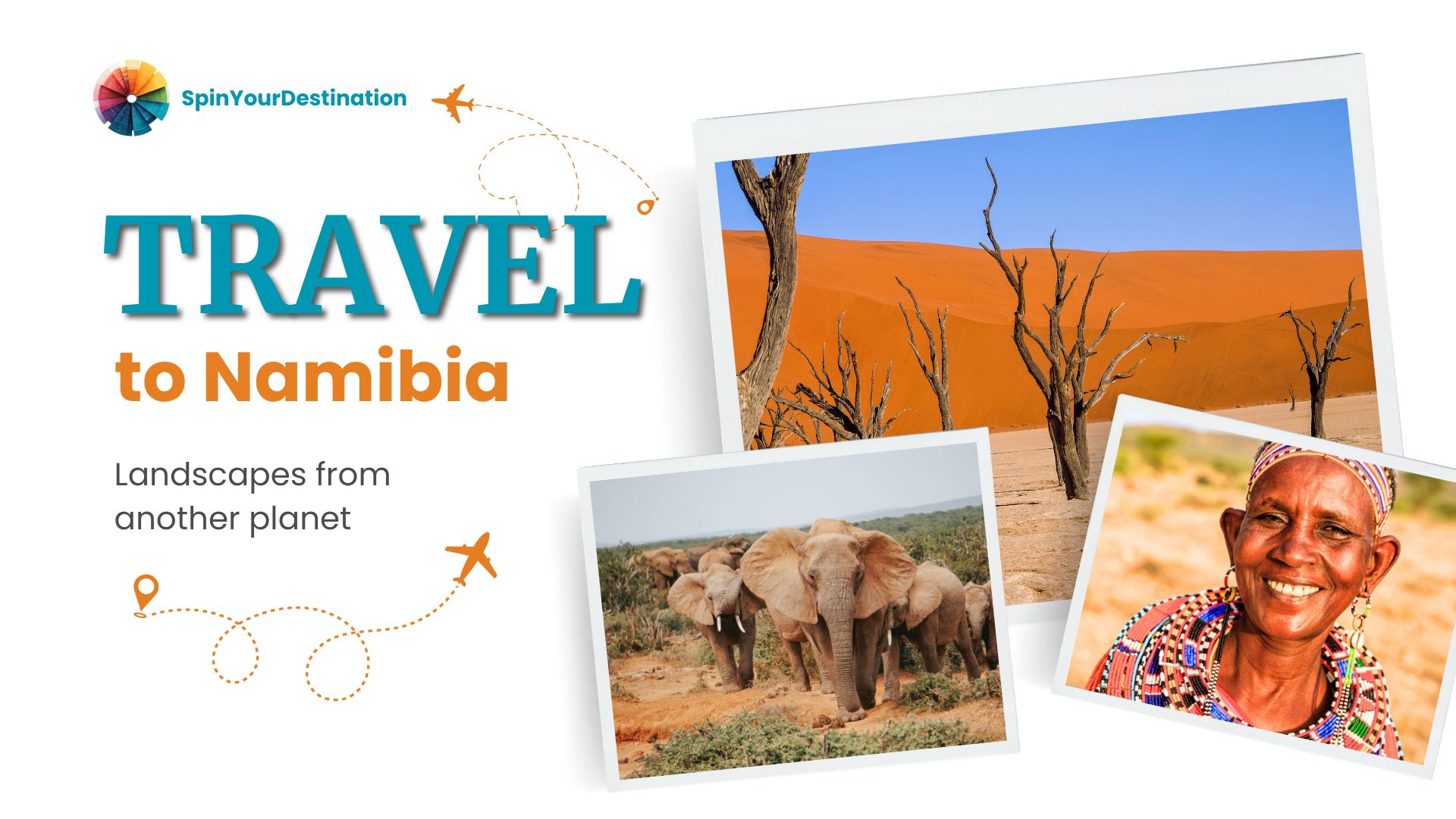
Food & Culture Namibia
Your complete guide to game meat, German heritage, Himba traditions, and the flavours of southern Africa
The plate arrives: oryx fillet, charred at the edges, rare in the middle, served with a creamy lemon sauce and wild spinach from the Kavango. You’re in a garden restaurant in Windhoek that looks like a set for a German colonial film. The owner is Namibian. The wine is South African. The cook is Ovambo. This is Namibia’s food: layers of culture on a single plate.
Namibian cuisine reflects the country’s extraordinarily diverse heritage — Ovambo, Herero, Damara, Himba, German, and Cape Malay influences all coexist. Game meat (oryx, kudu, zebra, springbok, eland) appears on menus throughout the country and is exceptionally good — lean, mineral-rich, and ethically raised on managed reserves.
The German colonial influence is most visible in Swakopmund — bakers, konditoreis, and Hofbräu-style restaurants sit alongside Namibian craft markets and San cultural centres. Windhoek’s restaurants are increasingly sophisticated, with an emphasis on local sourcing and regional heritage.
Game meat — Namibia’s defining dish
Oryx (gemsbok) is the most commonly eaten game in Namibia and arguably its finest. The meat is deep red, extremely lean, and has a clean, mineral flavour that recalls good dry-aged beef without the fat. It is served grilled, in stew, as biltong (jerky), and in pasta. Kudu is slightly milder and more tender. Zebra has a slightly sweet, dark quality. All three appear regularly on restaurant menus in Windhoek and Swakopmund.
Joe’s Beerhouse in Windhoek is the most famous game meat restaurant in the country — open since 1991, it serves zebra, springbok, oryx, kudu, crocodile, and ostrich from an outdoor covered restaurant decorated with taxidermy, Namibian art, and old vehicles. The portions are enormous. Tables fill by 7:30pm — book ahead or arrive early. Cost: NAD 200–350 for a main course.
Biltong is the snacking tradition that unites Namibians regardless of background — dried, spiced meat sold in every petrol station, farm stall, and supermarket. Oryx biltong from a farm stall outside Windhoek costs around NAD 100 for 200g and is one of the great road-trip provisions. The dried wors (sausage) variant is equally good.
German colonial heritage — pastries, beer, and konditorei
Swakopmund’s German bakery tradition is alive and genuine — not a tourist recreation but an ongoing culinary lineage. Café Anton, operating since 1970, serves freshly baked Streuselkuchen, Black Forest cake, apple strudel, and hand-rolled croissants from a garden café on Bismarck Strasse. The coffee is proper filter, the portions are old-fashioned German generous, and the garden fills with both locals and visitors from mid-morning onwards.
Raith’s Bakery is the other pillar of Swakopmund’s German pastry scene — breads, pretzels, and deli goods that attract a regular local clientele. Windhoek’s Hofbräu Steakhouse and Gustav Voigts shopping centre both reference the colonial heritage, though the most authentic expressions are in Swakopmund.
Windhoek Lager, Namibia’s national beer, is brewed according to the German Reinheitsgebot (purity law) with water from the Khomas Highland. It is lighter and cleaner than most African lagers, and served cold from the tap in virtually every establishment in the country. The Windhoek Draught (on tap) is preferable to the bottled version. Cost: NAD 30–45 per 500ml.
Himba and indigenous culture
The Himba people of the Kunene Region in northwest Namibia are among the most visually distinct cultures in Africa — women cover their bodies in otjize (a mixture of red ochre, butterfat, and herbs) and wear intricate leather jewellery. Their semi-nomadic pastoral culture has survived largely intact in one of Africa’s harshest environments.
Visiting a Himba village requires cultural sensitivity and ideally a guide who speaks OtjiHimba. Otjikandero Himba Orphan Village near Kamanjab offers structured visits that support the community directly. Guides explain the significance of the sacred fire, the ancestral traditions, the role of cattle in Himba society, and the meaning of the different headpieces and jewellery that indicate marital status and social position.
Authentic Himba village visits in the Opuwo area (capital of Kunene Region) are possible independently but benefit enormously from local guide support. The Himba economy is based on cattle and crafts — purchasing jewellery directly from the village supports the community and ensures the income goes to the makers rather than to intermediaries in curio shops.
Craft markets and local shopping
The Namibia Craft Centre in Windhoek’s Old Breweries Complex houses over 50 independent craft vendors — the largest collection of Namibian-made goods in the country. Carved wood, woven baskets, beaded jewellery, batik fabric, wire sculptures, and semi-precious stone work are all available. Quality varies but the higher-end stalls carry genuinely exceptional work. Allow 1–2 hours to browse properly.
The Swakopmund Craft Market operates from a dedicated building near the seafront — smaller than Windhoek’s Craft Centre, with a focus on coastal crafts including shell work, quartz crystal pieces, and Himba-inspired jewellery. Prices are sometimes negotiable in the afternoon. A good place to buy genuine San basketwork, which takes weeks to produce and is worth the asking price.
The Open Market at Katutura, Windhoek’s main township, sells fresh food, second-hand goods, and local produce in a completely non-tourist environment. Go for the experience rather than for shopping — the grilled meats, fresh kapana (street meat), and sociable atmosphere are the draw. Bring small cash and go with a guide if it’s your first visit.
⭐ Top Food & Culture Experiences
🍜 Joe’s Beerhouse — Windhoek
Namibia’s most famous restaurant — game meat (oryx, zebra, kudu, crocodile), outdoor garden setting, enormous portions. Open since 1991. Windhoek Lager on tap, live music most evenings. NAD 200–350 per main. Book ahead for Friday and Saturday evenings — fills up fast. Corner of Nelson Mandela Ave and Robert Mugabe Ave. More info →
☕ Café Anton — German Konditorei Swakopmund
Swakopmund’s beloved German bakery since 1970. Black Forest cake, apple strudel, Streuselkuchen, and proper filter coffee in a shaded garden. Opens 8am daily. Located on Bismarck Strasse, 2 minutes from the seafront. NAD 80–150 for cake and coffee. The most authentic European café experience between Cape Town and Nairobi. More info →
🎁 Namibia Craft Centre — Windhoek
50+ craft vendors in the Old Breweries Complex. Carved wood, woven baskets, beaded jewellery, San basketwork, batik, wire sculpture. The country’s best selection of genuinely Namibian-made goods. Allow 1–2 hours. Open Mon–Sat 8am–5:30pm. Located on Independence Ave in central Windhoek. More info →
🥷 Otjikandero Himba Orphan Village
Community-run Himba village near Kamanjab offering structured cultural visits. Guides explain the sacred fire, ancestral traditions, and role of cattle. Jewellery and crafts sold directly by the makers. Near the Cheetah Conservation Fund — combine both for a full day in the northwest. Advance booking recommended. More info →
🍟 Roof of Africa Restaurant — Windhoek
Windhoek restaurant specialising in Namibian cuisine — game medallions, local seafood from Lüderitz, traditional stews, and regional produce. Relaxed atmosphere, excellent wine list sourced from South African and Namibian producers. NAD 180–320 per main. Located in the city centre — reliable quality, good for a first night in Namibia. More info →
🎁 Swakopmund Craft Market
Coastal craft market near the Swakopmund seafront. Shell work, quartz crystals, Himba-inspired jewellery, San basketwork. Smaller than Windhoek’s Craft Centre but well-curated. Open daily. Afternoon prices are more flexible. The San woven baskets are the standout buy — weeks of work and genuinely traditional technique. More info →
💡 Insider Tips
- 🍜 Order oryx rather than kudu at game restaurants — the cut matters enormously. Ask for the fillet, request it medium-rare, and don’t add sauce. The flavour of well-prepared oryx fillet is one of the great arguments for Namibian cuisine.
- ☕ Windhoek Lager Draught (on tap) is measurably better than the bottled version — brewed to the German Reinheitsgebot and served very cold. Available in virtually every bar and restaurant in Namibia from NAD 28–45 per 500ml.
- 🎁 At the Namibia Craft Centre, the quality improves at the back stalls — the first vendors near the entrance tend to stock more tourist-facing items. The most authentic Himba jewellery and San basketwork is usually at the smaller specialist stalls deeper in the complex.
- 🥷 Himba village visits work best with a local guide who speaks OtjiHimba. The cultural exchange is richer when you can ask questions through a knowledgeable interpreter. Most lodges in the Kunene Region can arrange this through the nearest community conservancy.
- 🍟 Kapana — grilled beef on a roadside stand — is Namibia’s street food. The Katutura Open Market in Windhoek has the best kapana. Arrive at lunchtime (12–2pm) when the stands are busiest and the coals are hottest. Cost: NAD 20–50 per portion.