

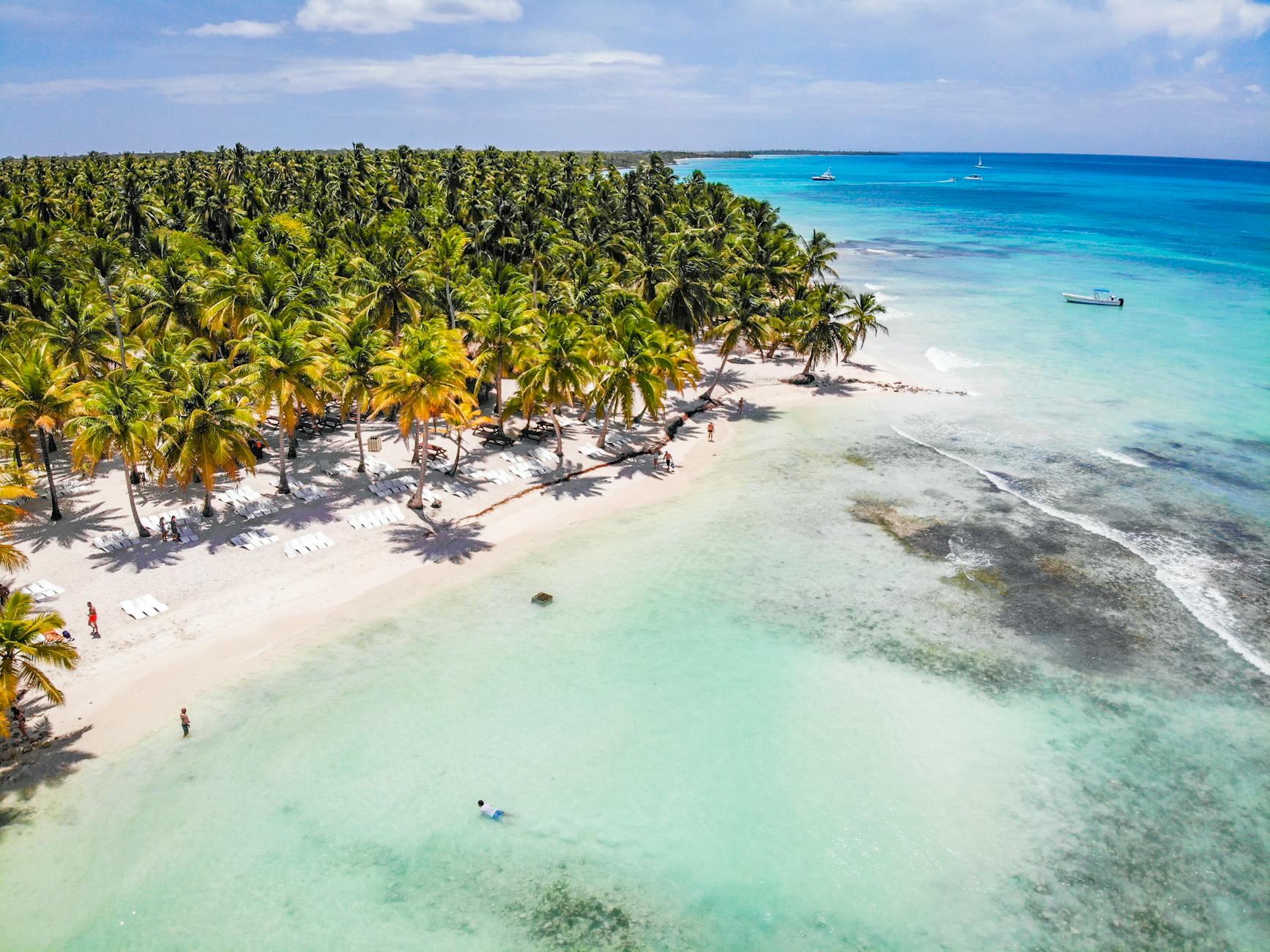
Punta Cana is purpose-built for sun and sea. Hotels line a 45km stretch of white sand backed by coconut palms. The water is bath-warm and crystal clear.
Bávaro Beach is the most visited stretch—wide, calm, protected by reef. Snorkeling the shallows, you spot parrotfish, sea turtles, and starfish flats at Isla Saona.
The resort zone has grown into a proper destination. Cap Cana to the south has a championship golf course and a marina with sport-fishing boats chasing blue marlin.
Prices run the full spectrum. All-inclusive packages from the US start around $150 per night. High-end resorts charge $500 and up. Most Europeans fly direct with TUI or Condor.
Beyond the gates, local colmados (corner stores) sell cold Presidente beer for 60 Dominican pesos. The contrast is part of the experience.
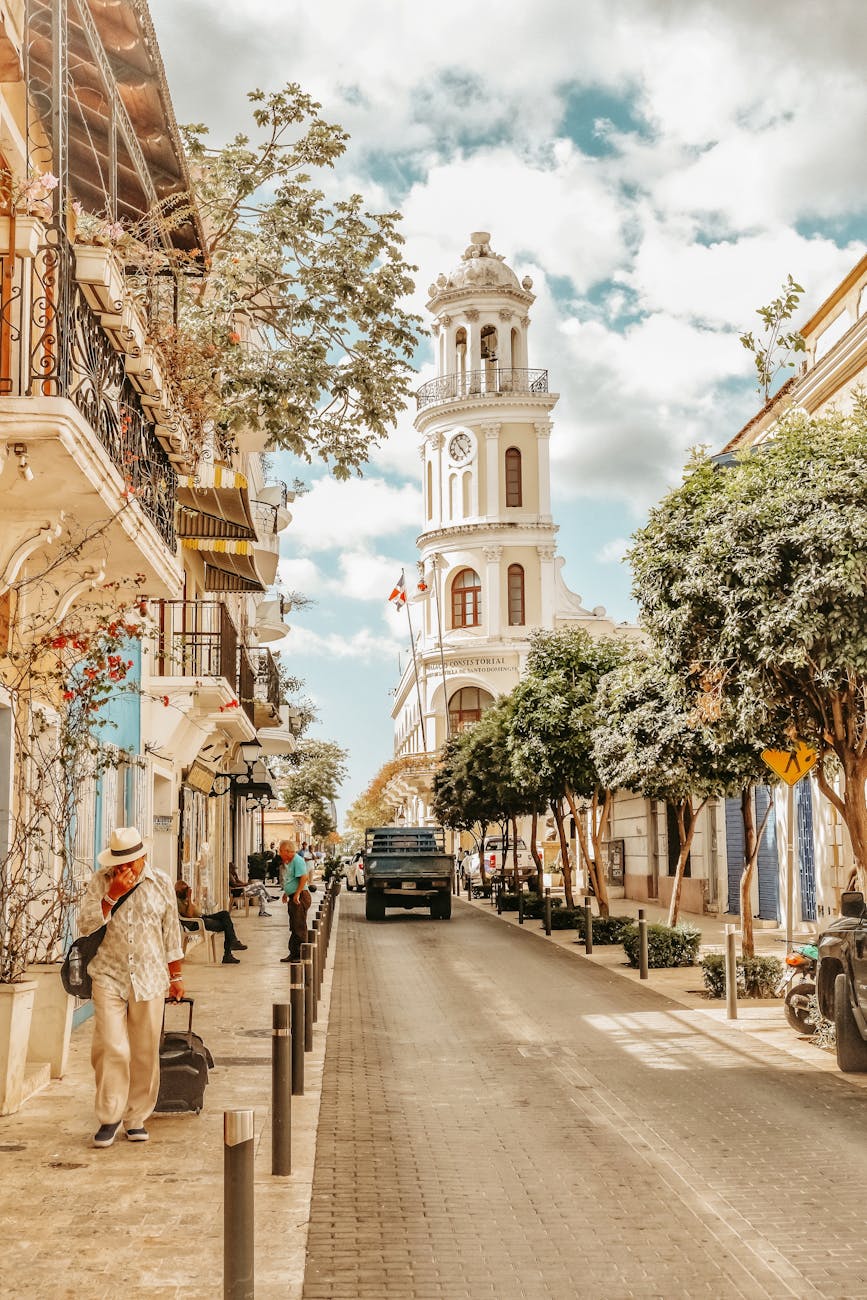
Santo Domingo’s Zona Colonial is a UNESCO World Heritage Site—the first cathedral, the first university, the first hospital built in the Americas all stand here.
The Alcázar de Colón, Diego Columbus’s 16th-century palace, overlooks the Rio Ozama. Inside: original furniture, Flemish tapestries, and a view over the harbor that hasn’t changed much in 400 years.
Calle El Conde is the main pedestrian drag. Ice-cold jugos (fruit juices) cost 50 pesos at roadside stands. At night, the zone fills with music spilling from bars and restaurants.
The Mercado Modelo sells Haitian paintings, amber jewelry, and Dominican cigars. Quality varies. Bargain hard.
The city of 3 million is loud, chaotic, and genuinely Dominican—a world away from the resort bubble two hours east.
Every January through March, some 3,000 humpback whales arrive in Bahía de Samaná to breed. It is one of the largest whale-watching events in the world.
Victoria Marine runs whale-watching trips from Santa Barbára de Samaná. A half-day tour runs around $50 per person. On good days, males breach repeatedly within 50 metres of the boat.
Las Terrenás is the town of choice for French and Italian expats who never quite left. Good restaurants, chill beaches, and a pace nothing like Santo Domingo.
El Limon waterfall drops 52 metres into a jungle pool accessible on horseback or on foot. The hike takes around 45 minutes each way. Bring cash for the local guides.
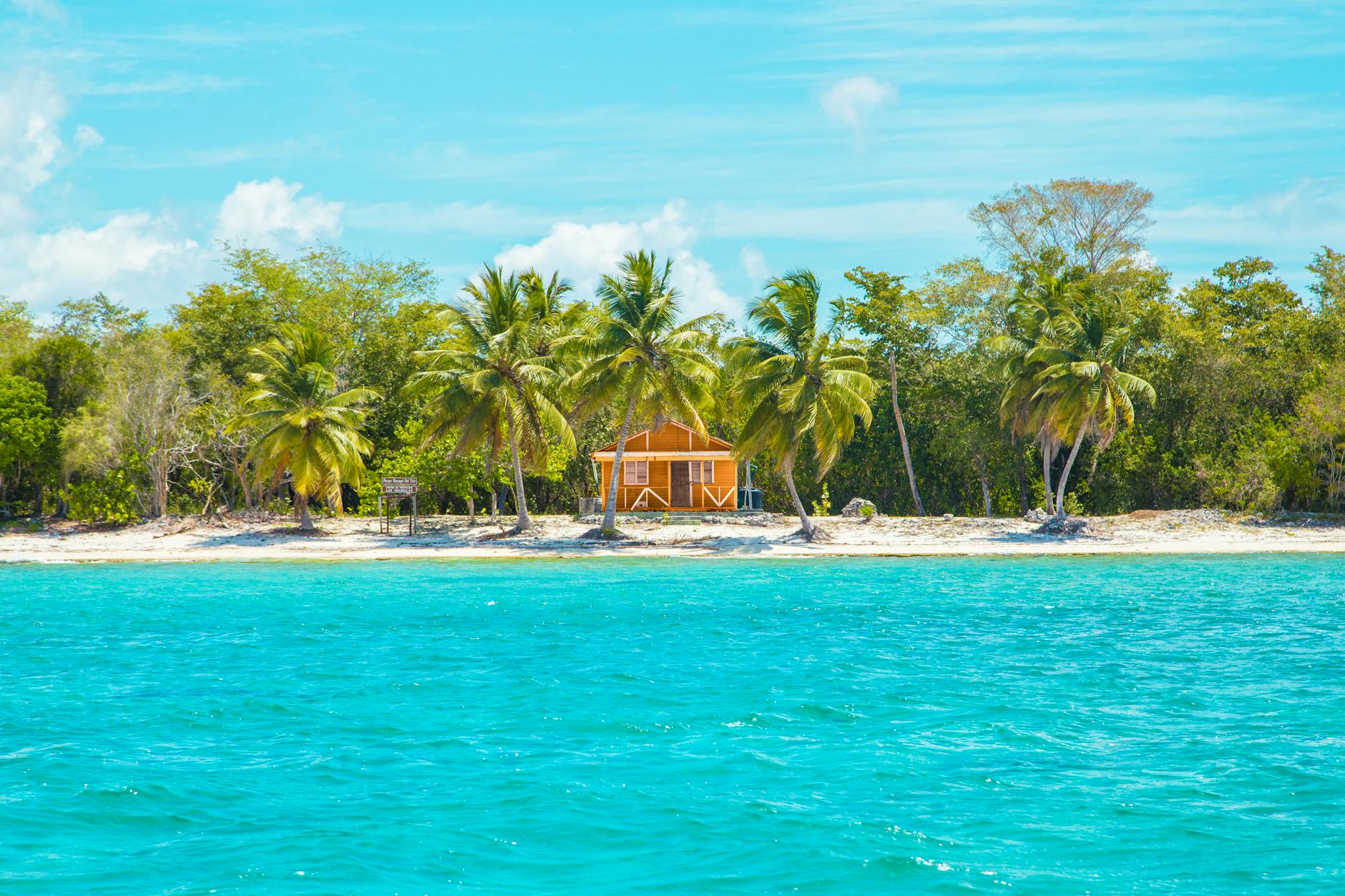
Playa Rincón, regularly rated among the Caribbean’s finest beaches, has no hotels directly on it. You arrive by boat from Las Galeras—turquoise water, empty sand, one wooden beach shack serving grilled fish.
The Cordillera Central rises sharply from the coast. Jarabacoa, at 530m elevation, is cool enough for sweaters in December—a shock after the beach heat.
Pico Duarte, the Caribbean’s highest peak at 3,098m, requires a two-to-three day trek from La Cienénega. Local guides are mandatory and cost around $60 per day. The summit views stretch to Haiti.
The Río Yaque del Norte offers some of the Caribbean’s best whitewater rafting. Grade III–IV rapids run from December through May when water levels are highest. Rancho Baiguate in Jarabacoa organises full-day trips for around $80.
The Cibao Valley produces the Dominican Republic’s best coffee and cacao. Santiago de los Caballeros, the country’s second city, has a cigar-making tradition that fills entire streets with the smell of curing tobacco.
The interior is almost entirely off the tourist circuit. Fewer English speakers, more genuine encounters, prices a fraction of the resort coast.